
Historical · U.S. Department of Justice
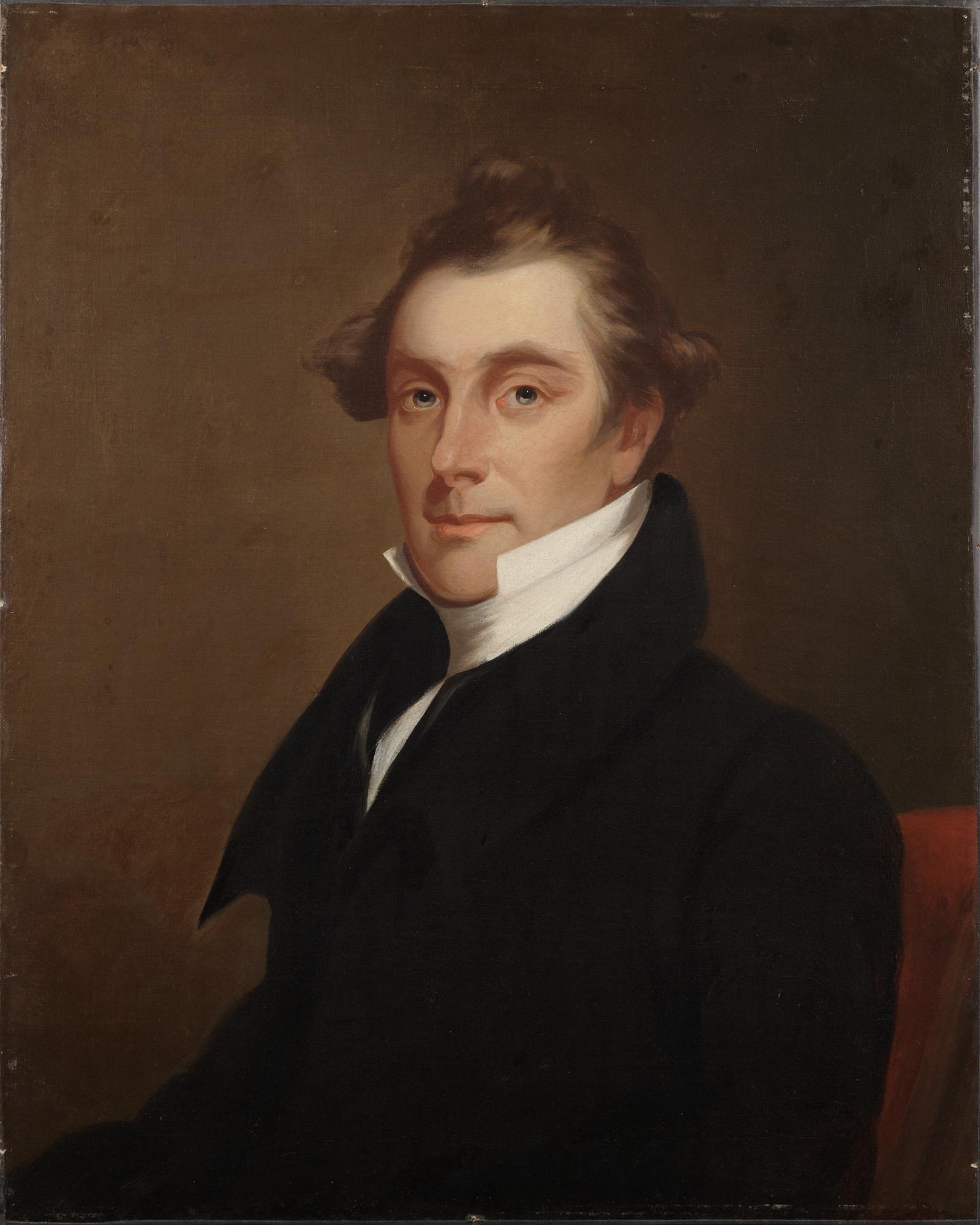
Benjamin Franklin Butler
Former United States Attorney General · U.S. Department of Justice · 1833–1838
Benjamin Franklin Butler served as United States Attorney General (1833–1838). The page below collects sourced biographical facts, the appointment record, and provenance for Butler.
Key facts
- Full name
- Benjamin Franklin Butler
- Department
- U.S. Department of Justice
- Office
- United States Attorney General
- Status
- Former secretary
- Appointment
- Senate-confirmed
- Tenure
- 1833–1838
- Confirmed
- —
- Born
- 1795
- Died
- 1858
- First year in office
- 1833
- Dataset version
- 1.20260703
Appointment & service record
United States Attorney General · 1833–1838
- Department
- U.S. Department of Justice
- Appointment
- Senate-confirmed
- Appointing president
- —
- Confirmed
- —
Department, appointment type (Senate-confirmed, acting, recess, or designated), appointing president, confirmation status, and service dates are drawn from Wikidata and the White House Cabinet roster.[1][2][3]
Sources
- [1]https://www.wikidata.org/wiki/Q817486Wikidata · retrieved 2026-07-03
- [2]https://www.whitehouse.gov/administration/cabinet/whitehouse.gov · retrieved 2026-07-03
- [3]https://www.wikidata.org/wiki/Q639738wikidata-cabinet · retrieved 2026-07-03
Biographical narrative
912 words · sourced from the Wikipedia REST extract
Benjamin Franklin Butler was a prominent New York lawyer who served as the United States Attorney General from 1833 to 1838. He built his legal reputation through partnership with future President Martin Van Buren, and he played an influential role in shaping early American jurisprudence. In addition to his federal service, Butler contributed to the development of higher education in New York, helping found New York University and serving as a regent for the State’s university system. His career spanned public office, private practice, and civic engagement until his death in Paris in 1858.
Early life and career
Born on December 17, 1795, Benjamin Franklin Butler was the son of Medad Butler and Hannah Tylee Butler in Kinderhook Landing, Columbia County, New York. He received his early education at Hudson Academy in Hudson, New York, before pursuing legal studies under Martin Van Buren. The apprenticeship with Van Buren proved formative; after completing his reading of law, Butler was admitted to the bar in 1817 and entered into a professional partnership with Van Buren.
Butler’s reputation as an effective trial lawyer developed rapidly. Contemporary accounts describe him as one of the most successful cross‑examiners of his era, a skill that earned him recognition among peers and contributed to his ascent within New York’s legal community. His early career also involved significant public service: he served as district attorney for Albany County from 1821 to 1825, during which time he handled a variety of criminal prosecutions and gained experience in the administration of justice at the county level.
In 1825, Butler was appointed one of three commissioners tasked with revising New York State statutes. This role required him to review existing laws, identify inconsistencies, and propose amendments—a responsibility that underscored his growing influence within state legal circles. The following year he represented Albany County in the New York State Assembly, further expanding his legislative experience.
Butler’s involvement in boundary negotiations came in 1833 when he served as a commissioner for New York to adjust the border with New Jersey. This assignment placed him at the intersection of federal and state interests, reinforcing his reputation as a capable negotiator and legal strategist.
Cabinet tenure
On November 15, 1833, President Andrew Jackson appointed Butler as United States Attorney General, a position he held until 1838. The Senate confirmed his appointment, allowing him to oversee the Department of Justice during a period marked by significant federal legal challenges. While specific policy initiatives or case outcomes from his tenure are not detailed in the available records, his role would have involved supervising federal prosecutions and advising the executive branch on matters of law.
After concluding his term as Attorney General, Butler returned to private practice while maintaining public responsibilities. From 1838 to 1841 and again from 1845 to 1848, he served as United States Attorney for the Southern District of New York. In this capacity, he represented the federal government in civil and criminal cases within one of the country’s most active jurisdictions.
Beyond his official duties, Butler remained engaged in national politics. He was a prominent participant in the 1844 Democratic National Convention, where he led the New York delegation and advocated for Martin Van Buren’s candidacy while opposing the two‑thirds rule for nominations. Although his efforts did not secure the nomination, he ultimately announced that the delegation would support James K. Polk, who won the presidency. Following Polk’s election, Van Buren recommended Butler for a cabinet position; however, Butler declined offers of Secretary of War and Treasury, stating he would only accept the offices of State or Treasury.
In 1848, Butler attended the Free Soil Convention, contributing to the drafting of the party platform. His participation in these conventions illustrates his continued involvement in shaping national political discourse, even though no formal party affiliation is attributed to him in this context.
Legacy
Butler’s impact extended beyond his legal and governmental roles into education and civic development. He served as a regent for the University of the State of New York from 1829 to 1832, overseeing educational standards across the state. His most enduring contribution to academia was his role in founding New York University in 1831; he remained actively involved with the institution throughout its early years and was appointed principal professor in 1837.
In recognition of his legal scholarship, Rutgers University conferred upon him an honorary Doctor of Laws (LL.D.) degree in 1834. His academic credentials complemented his practical experience, positioning him as a respected figure in both theoretical and applied law.
Butler’s personal life intersected with notable families through marriage and progeny. In 1818 he married Harriet Allen; their children included William Allen Butler, who pursued a career in law, and Lydia Allen Butler, who married Alfred Booth. Lydia was the mother of Sir Alfred Allen Booth, 1st Baronet, linking Butler’s lineage to prominent figures in commerce and industry.
He died on November 8, 1858, while visiting Europe; his body was interred at Woodlawn Cemetery in The Bronx. A fort constructed as part of the Cherokee removal efforts during the Trail of Tears—Fort Butler—was named in his honor, reflecting a recognition of his service that extended into federal infrastructure projects.
Butler’s legacy is multifaceted: he served as Attorney General and U.S. Attorney for a major district, contributed to state legal reform, participated in national political conventions, and helped establish one of the United States’ leading universities. His career exemplifies the interconnected nature of law, politics, and education in early nineteenth‑century America.
Sources & provenance
Every quantitative or attributable claim above carries a per-section [N] marker that resolves to the corresponding URL below. Each entry records the upstream provider, the canonical URL, and the timestamp at which the underlying source was retrieved.
Key facts
- https://www.wikidata.org/wiki/Q817486Wikidata · retrieved 2026-07-03
- https://www.whitehouse.gov/administration/cabinet/whitehouse.gov · retrieved 2026-07-03
- https://www.wikidata.org/wiki/Q639738wikidata-cabinet · retrieved 2026-07-03
Biographical narrative
- https://en.wikipedia.org/wiki/Benjamin_Franklin_Butler_(lawyer)Wikipedia · retrieved 2026-07-03
Explore the Cabinet
The Cabinet includes the Vice President and the heads of the 15 executive departments. Browse the full roster of current and former secretaries, or explore how the Cabinet fits into the federal government.