
Historical · U.S. Department of Justice
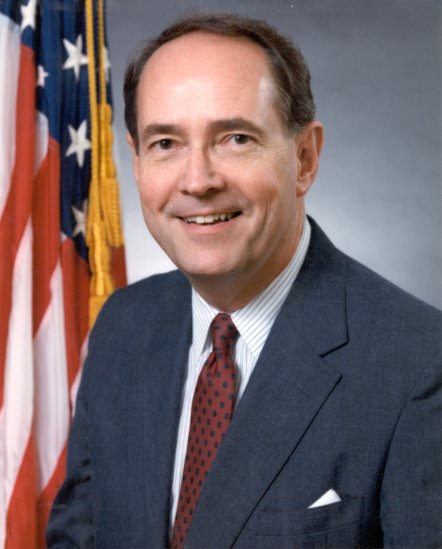
Dick Thornburgh
Former United States Attorney General · U.S. Department of Justice · 1988–1991
Dick Thornburgh served as United States Attorney General (1988–1991). The page below collects sourced biographical facts, the appointment record, and provenance for Thornburgh.
Key facts
- Full name
- Dick Thornburgh
- Department
- U.S. Department of Justice
- Office
- United States Attorney General
- Status
- Former secretary
- Appointment
- Senate-confirmed
- Tenure
- 1988–1991
- Confirmed
- —
- Born
- 1932
- Died
- 2020
- First year in office
- 1988
- Dataset version
- 1.20260703
Appointment & service record
United States Attorney General · 1988–1991
- Department
- U.S. Department of Justice
- Appointment
- Senate-confirmed
- Appointing president
- —
- Confirmed
- —
Department, appointment type (Senate-confirmed, acting, recess, or designated), appointing president, confirmation status, and service dates are drawn from Wikidata and the White House Cabinet roster.[1][2][3]
Sources
- [1]https://www.wikidata.org/wiki/Q885091Wikidata · retrieved 2026-07-03
- [2]https://www.whitehouse.gov/administration/cabinet/whitehouse.gov · retrieved 2026-07-03
- [3]https://www.wikidata.org/wiki/Q639738wikidata-cabinet · retrieved 2026-07-03
Biographical narrative
1,140 words · sourced from the Wikipedia REST extract
Richard Lewis Thornburgh was an American lawyer who served as the United States Attorney General from 1988 to 1991, a period that spanned the final years of President Ronald Reagan’s administration and the first term of President George H. W. Bush. Prior to his federal appointment, he had been the governor of Pennsylvania for two consecutive terms and had held several key legal positions within the Department of Justice. Thornburgh passed away on December 31, 2020.
Early life and career
Thornburgh was born in Pittsburgh, Pennsylvania, on July 16, 1932 to Alice (Sanborn) and Charles Garland Thornburgh, an engineer by profession. He received his secondary education at Mercersburg Academy before enrolling at Yale University, where he earned a degree in engineering in 1954. He then pursued legal studies at the University of Pittsburgh School of Law, graduating with a law degree in 1957; during that time he served as an editor for the university’s Law Review.
In 1959 Thornburgh joined the Pittsburgh‑based law firm Kirkpatrick & Lockhart, where he practiced privately for several years. His early legal career was marked by a series of public appointments: in 1966 he ran unsuccessfully for the U.S. House of Representatives against William S. Moorhead; from 1967 to 1968 he served as an elected delegate to Pennsylvania’s Constitutional Convention, where he advocated reforms in the judiciary and local government.
In 1969 President Richard Nixon appointed Thornburgh as the United States Attorney for the Western District of Pennsylvania. In that role he earned a reputation for a firm stance against organized crime. A notable case during his tenure was the prosecution of Pittsburgh steel companies in 1971 on charges related to river pollution, based on an 1899 Refuse Act; this action predated many later environmental statutes and demonstrated Thornburgh’s willingness to pursue enforcement in emerging areas of law.
In 1975 President Gerald Ford named Thornburgh Assistant Attorney General for the Criminal Division of the Department of Justice. After two years in that position he returned to private practice in Pittsburgh, where he also began a campaign for state office.
Thornburgh married Ginny Hooton; together they had three sons: John, David and Peter. In 1960 Ginny was killed in an automobile accident, leaving the family with the youngest son, Peter, who would later be recognized as having both physical and intellectual disabilities. The tragedy prompted Thornburgh and his wife to become active advocates for people with disabilities. In 1963 he remarried, this time to Ginny Judson, a former schoolteacher from New York; they had another son, Bill, in 1966. Throughout the family’s life, the Thornburghs were noted for their commitment to disability rights and were honored as “Family of the Year” by an organization that recognized families with significant contributions to the community.
The couple’s advocacy extended into public speaking engagements: both Dick and Ginny Thornburgh addressed the Vatican Conference on Disabilities in Rome in November 1992, and they received the Henry B. Betts Award together in 2003; the award proceeds funded a lecture series on disability law and policy at the University of Pittsburgh. In 2002 Thornburgh was honored with the Wiley A. Branton Award from The Washington Lawyers’ Committee for Civil Rights and Urban Affairs, acknowledging his dedication to civil rights for people with disabilities.
In addition to his legal and public service career, Thornburgh received several academic honors: he was inducted into Omicron Delta Kappa at the University of Pittsburgh in 1973 and later awarded that society’s highest honor, the Laurel Crowned Circle Award, in 1996. Over the course of his life he also earned honorary degrees from more than thirty-two colleges and universities.
Cabinet tenure
Thornburgh was confirmed by the United States Senate as Attorney General on a date not specified in the available records; he served from 1988 to 1991. His appointment placed him at the head of the Department of Justice during the concluding months of President Reagan’s administration and the early period of President George H. W. Bush’s term.
During his tenure as Attorney General, Thornburgh played a leading role in the enactment of the Americans with Disabilities Act. The legislation was a landmark federal statute that expanded civil rights protections for individuals with disabilities; Thornburgh’s leadership within the Department of Justice helped shape its development and implementation. His work on disability law continued to be recognized after his service, as evidenced by the awards he received in the early 2000s.
Beyond disability policy, Thornburgh’s time in office was characterized by a focus on maintaining federal law enforcement standards and overseeing the Department of Justice’s broad portfolio of legal matters. While specific initiatives or policy outcomes from this period are not detailed in the available references, his confirmation by the Senate and service under two presidents underscore the confidence placed in him to lead the nation’s principal law‑enforcement agency.
Legacy
Thornburgh’s legacy spans several domains: environmental enforcement, anti‑corruption efforts, economic development, higher education reform, emergency response, and civil rights for people with disabilities. As governor of Pennsylvania (1979–1987), he is credited with initiating a crackdown on government corruption that had plagued the state in the preceding administration; his campaign promises to address widespread indictments resonated with voters and contributed to his election and subsequent re‑election.
His tenure as governor also coincided with the Three Mile Island nuclear accident of 1979. Thornburgh was widely described by observers as a calm voice during the crisis, overseeing emergency response operations and coordinating funding for cleanup efforts. His leadership in that context earned him recognition from both state and national audiences.
In economic terms, Thornburgh’s administration is noted for fostering business growth: during his two terms Pennsylvania saw the creation of approximately 50,000 new businesses and 500,000 private‑sector jobs. He also established the Ben Franklin Partnership to stimulate industrial development and implemented welfare reform programs aimed at reducing dependency on state assistance.
Higher education reforms under Thornburgh included consolidating all state‑owned colleges and universities into a unified Pennsylvania State System of Higher Education, as well as creating Governor’s Schools—summer programs designed for gifted high school students. These initiatives were intended to streamline administration and enhance educational opportunities across the Commonwealth.
Thornburgh’s personal commitment to disability advocacy left an enduring mark on federal policy. His leadership in advancing the Americans with Disabilities Act, combined with his family’s public engagement on disability issues, helped shape a more inclusive legal framework for individuals with disabilities nationwide. The awards he received in the 2000s—particularly the Henry B. Betts Award and the Wiley A. Branton Award—reflect the lasting impact of his civil‑rights work.
He died on December 31, 2020, at the age of 88. His career is remembered for its breadth: from local legal practice to state governance, federal leadership, and sustained advocacy for marginalized communities. Thornburgh’s contributions continue to influence contemporary discussions about law enforcement, public policy, and civil rights in the United States.
Sources & provenance
Every quantitative or attributable claim above carries a per-section [N] marker that resolves to the corresponding URL below. Each entry records the upstream provider, the canonical URL, and the timestamp at which the underlying source was retrieved.
Key facts
- https://www.wikidata.org/wiki/Q885091Wikidata · retrieved 2026-07-03
- https://www.whitehouse.gov/administration/cabinet/whitehouse.gov · retrieved 2026-07-03
- https://www.wikidata.org/wiki/Q639738wikidata-cabinet · retrieved 2026-07-03
Biographical narrative
- https://en.wikipedia.org/wiki/Dick_ThornburghWikipedia · retrieved 2026-07-03
Explore the Cabinet
The Cabinet includes the Vice President and the heads of the 15 executive departments. Browse the full roster of current and former secretaries, or explore how the Cabinet fits into the federal government.