
Historical · U.S. Department of Justice
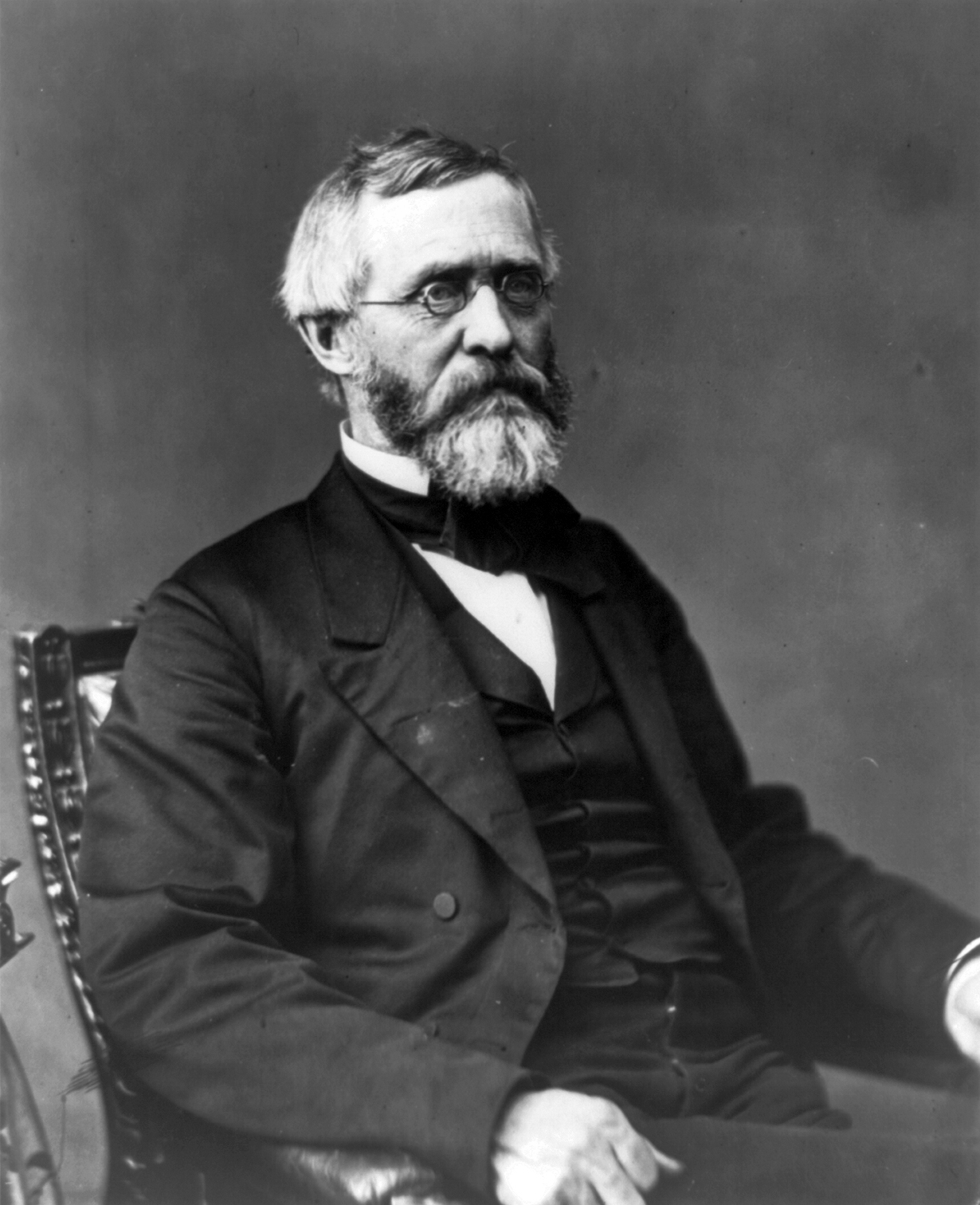
Ebenezer R. Hoar
Former United States Attorney General · U.S. Department of Justice · 1869–1870
Ebenezer R. Hoar served as United States Attorney General (1869–1870). The page below collects sourced biographical facts, the appointment record, and provenance for Hoar.
Key facts
- Full name
- Ebenezer R. Hoar
- Department
- U.S. Department of Justice
- Office
- United States Attorney General
- Status
- Former secretary
- Appointment
- Senate-confirmed
- Tenure
- 1869–1870
- Confirmed
- —
- Born
- 1816
- Died
- 1895
- First year in office
- 1869
- Dataset version
- 1.20260703
Appointment & service record
United States Attorney General · 1869–1870
- Department
- U.S. Department of Justice
- Appointment
- Senate-confirmed
- Appointing president
- —
- Confirmed
- —
Department, appointment type (Senate-confirmed, acting, recess, or designated), appointing president, confirmation status, and service dates are drawn from Wikidata and the White House Cabinet roster.[1][2][3]
Sources
- [1]https://www.wikidata.org/wiki/Q724521Wikidata · retrieved 2026-07-03
- [2]https://www.whitehouse.gov/administration/cabinet/whitehouse.gov · retrieved 2026-07-03
- [3]https://www.wikidata.org/wiki/Q639738wikidata-cabinet · retrieved 2026-07-03
Biographical narrative
1,063 words · sourced from the Wikipedia REST extract
Ebenezer Rockwood Hoar was an American lawyer, judge, and public servant who played a prominent role in the federal government during the Reconstruction era. Born in Concord, Massachusetts, he pursued a legal career that led him to serve as a state legislator, a judge on both trial and appellate courts, and ultimately as the United States Attorney General from 1869 to 1870. As the first head of the newly established Department of Justice, Hoar helped shape the early structure of federal law enforcement and contributed to significant judicial appointments and international negotiations.
Early life and career
Ebenezer R. Hoar entered the world on February 21, 1816, in Concord, Massachusetts, to parents Samuel and Sarah Hoar (née Sherman). His family lineage traced back to Puritan settlers who had arrived in America in 1640 and initially settled in Braintree, Massachusetts. From a very young age, Hoar exhibited remarkable intellectual abilities; by the time he was three years old, he could read the Bible fluently, and at four he had surpassed his older sister in literacy.
In 1831, at the age of fifteen, Hoar enrolled at Harvard University. After completing his undergraduate studies in 1835, he spent a period teaching at a girls’ school in Pittsburgh before returning to Concord. There he studied law under his father’s guidance and later resumed formal legal education at Harvard Law School for eighteen months, supplemented by six months working in the office of Emory Washburn. Hoar was admitted to the bar on September 30, 1839, earning an LL.B. from Harvard Law School. He began practicing law in 1840, first in Concord and subsequently in Boston.
Hoar’s early political engagement was rooted in anti‑slavery principles. In the 1840s he aligned with the Whig Party as a “Conscience Whig,” opposing the expansion of slavery while supporting industrial interests. Together with his father, he helped establish the Free Soil Party of Massachusetts in 1848, a group dedicated to preventing the spread of slavery into western territories.
His legal and political careers progressed rapidly. In 1846 Hoar was elected to the Massachusetts Senate. Two years later, in 1849, he was appointed Judge of the Court of Common Pleas in Boston, a position he held until 1855. The following year, in 1859, he became an associate justice of the Massachusetts Supreme Judicial Court. During his tenure on the state’s highest court, Hoar earned a reputation for rigorous scrutiny of legal arguments and for mentoring younger attorneys; among those who later rose to prominence was Oliver Wendell Holmes Jr.
After the Civil War, Hoar maintained a critical stance toward federal policies that he perceived as overreaching. He opposed the impeachment proceedings against President Andrew Johnson, reflecting his broader commitment to judicial independence and restraint in executive power.
Cabinet tenure
Hoar’s national prominence culminated with his appointment by President Ulysses S. Grant on March 5, 1869, to serve as the thirtieth United States Attorney General. The Senate confirmed his nomination, allowing him to become Grant’s principal legal advisor during a period when the president had never held elected office prior to his presidency.
As Attorney General, Hoar was instrumental in shaping the early operations of the Department of Justice, which was formally established in July 1870 to enhance federal enforcement and investigative capacities. He became the first individual to head this department, setting precedents for its organizational structure and legal responsibilities.
One of Hoar’s initial tasks involved adjudicating the appointment of a new Secretary of the Treasury. The candidate, Alexander T. Stewart, faced opposition from Senators Charles Sumner and Roscoe Conkling on grounds that he was engaged in commercial interests inconsistent with the role. Hoar advised President Grant that Stewart’s proposed renunciation of his business interests would be legally impractical, leading to the appointment of George S. Boutwell instead. This decision, however, introduced political tension within the administration, as both Boutwell and Hoar hailed from Massachusetts—a state traditionally represented by only one cabinet member at a time.
In December 1869, President Grant nominated Hoar for an associate justice seat on the United States Supreme Court created by the Judiciary Act of 1869. The nomination sparked controversy due to concerns that Hoar had not consulted senators before recommending judicial candidates and because of his positions on patronage reform and opposition to Johnson’s impeachment. The Senate Judiciary Committee ultimately recommended against confirmation, and on February 3, 1870, the full Senate rejected Hoar by a vote of 24–33.
Despite this setback, Hoar continued to influence federal appointments. He advised Grant in selecting William Strong and Joseph P. Bradley for two associate justice vacancies that arose after the retirement of Robert C. Grier and the brief nomination of Edwin Stanton. Both nominations were confirmed without significant opposition.
During his tenure, the Supreme Court issued a landmark decision in *Hepburn v. Griswold*, declaring the 1862 Legal Tender Act unconstitutional. The ruling was opposed by Hoar, President Grant, and other cabinet members, who had supported the act’s authority to issue paper money as legal tender.
In 1871, following his service as Attorney General, Hoar was appointed by President Grant to a high commission tasked with negotiating the Treaty of Washington between the United States and the United Kingdom. His role in these negotiations helped resolve longstanding disputes over the Alabama Claims, contributing to improved diplomatic relations between the two nations.
Legacy
Ebenezer R. Hoar’s career left an indelible mark on American legal history. As the first head of the Department of Justice, he established foundational practices for federal law enforcement and set a precedent for the department’s role within the executive branch. His involvement in Supreme Court nominations—both as nominee and advisor—highlighted the complex interplay between judicial appointments and political considerations during Reconstruction.
Hoar’s advocacy for anti‑slavery principles and his participation in the formation of the Free Soil Party underscored his commitment to civil liberties, while his opposition to the impeachment of Andrew Johnson reflected a broader dedication to limiting executive overreach. His work on international negotiations further demonstrated his versatility as a public servant beyond domestic policy.
Although his own nomination to the Supreme Court was ultimately rejected, Hoar’s influence persisted through the appointments he facilitated and the policies he helped shape. His legacy is reflected in the continued evolution of the Department of Justice and in the legal precedents set during his tenure, which continue to inform contemporary discussions about federal authority, judicial independence, and diplomatic engagement.
Sources & provenance
Every quantitative or attributable claim above carries a per-section [N] marker that resolves to the corresponding URL below. Each entry records the upstream provider, the canonical URL, and the timestamp at which the underlying source was retrieved.
Key facts
- https://www.wikidata.org/wiki/Q724521Wikidata · retrieved 2026-07-03
- https://www.whitehouse.gov/administration/cabinet/whitehouse.gov · retrieved 2026-07-03
- https://www.wikidata.org/wiki/Q639738wikidata-cabinet · retrieved 2026-07-03
Biographical narrative
- https://en.wikipedia.org/wiki/Ebenezer_R._HoarWikipedia · retrieved 2026-07-03
Explore the Cabinet
The Cabinet includes the Vice President and the heads of the 15 executive departments. Browse the full roster of current and former secretaries, or explore how the Cabinet fits into the federal government.