
Historical · U.S. Department of Justice
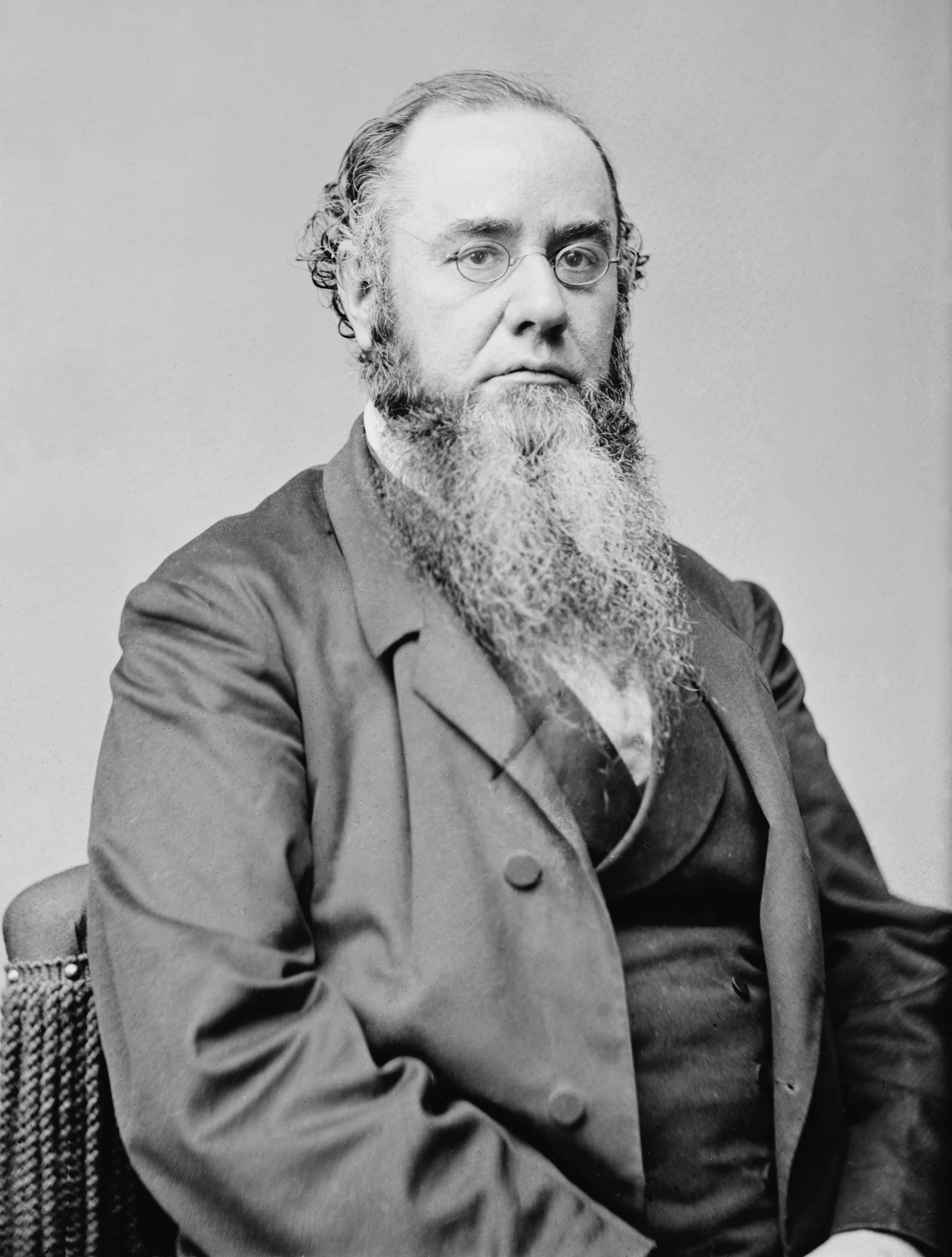
Edwin M. Stanton
Acting
Former Acting United States Attorney General · U.S. Department of Justice · 1860–1861
Edwin M. Stanton served as Acting United States Attorney General (1860–1861). The page below collects sourced biographical facts, the appointment record, and provenance for Stanton.
Key facts
- Full name
- Edwin M. Stanton
- Department
- U.S. Department of Justice
- Office
- United States Attorney General
- Status
- Former secretary
- Appointment
- Acting
- Tenure
- 1860–1861
- Confirmed
- —
- Born
- 1814
- Died
- 1869
- First year in office
- 1860
- Dataset version
- 1.20260704
Appointment & service record
United States Attorney General · 1860–1861
- Department
- U.S. Department of Justice
- Appointment
- Acting
- Appointing president
- —
- Confirmed
- Not confirmed
Department, appointment type (Senate-confirmed, acting, recess, or designated), appointing president, confirmation status, and service dates are drawn from Wikidata and the White House Cabinet roster.[1][2][3]
Sources
- [1]https://www.wikidata.org/wiki/Q448803Wikidata · retrieved 2026-07-04
- [2]https://www.whitehouse.gov/administration/cabinet/whitehouse.gov · retrieved 2026-07-04
- [3]https://www.wikidata.org/wiki/Q639738wikidata-cabinet · retrieved 2026-07-04
Biographical narrative
1,047 words · sourced from the Wikipedia REST extract
Edwin McMasters Stanton (December 19, 1814 – December 24, 1869) was an American lawyer and public servant who held several high‑level federal positions during the mid‑nineteenth century. He served as United States Secretary of War under President Abraham Lincoln for most of the Civil War and continued in that capacity after Lincoln’s assassination when Andrew Johnson assumed office. Stanton also briefly acted as United States Attorney General before his long tenure at the War Department. After leaving cabinet service, he returned to private legal practice and was nominated by President Ulysses S. Grant to the Supreme Court; he died shortly after confirmation, never taking his seat on the bench.
Early life and career
Stanton was born in Steubenville, Ohio, on December 19, 1814, to David and Lucy Stanton. His parents were descendants of Quaker families who had migrated from Massachusetts to North Carolina before the American Revolution; his grandfather, Benjamin Stanton, married Abigail Macy in 1774, and their lineage eventually settled in the Northwest Territory. The family’s early years were marked by modest means, with David practicing medicine in Steubenville and later moving into a small store run by Lucy after his death.
From an early age, Edwin received private schooling and attended a local seminary known as “Old Academy.” At ten, he transferred to a school taught by a Presbyterian minister. A lifelong asthma condition limited his participation in physical activities but encouraged a deep interest in literature and poetry. He was active in Methodist church services and Sunday school from the age of thirteen, eventually becoming a full member of that congregation.
In 1827, when David Stanton died suddenly, the family’s financial situation deteriorated sharply. Lucy opened a shop in their home to sell medical supplies, books, stationery, and groceries left by her husband. Edwin was withdrawn from formal schooling to help with the store and later worked as a clerk at a local bookshop.
He entered Kenyon College, an Episcopal institution, in 1831. While there he joined the Philomathesian Literary Society, serving on several committees and participating in debates. Financial difficulties forced him to leave after his third semester. During his time at Kenyon, Stanton’s support for President Andrew Jackson’s actions during the 1832 nullification crisis brought him into contact with Democratic circles, and his exposure to anti‑slavery arguments solidified a lifelong opposition to slavery. He also converted from Quakerism to Episcopalianism.
After leaving college, Stanton returned to Steubenville and studied law under Daniel Collier. He was admitted to the bar in 1835 and began practicing at a prominent firm in Cadiz, Ohio, led by Chauncey Dewey. In December 1836, he married Mary Ann Lamson; their wedding took place at the home of the rector of Trinity Episcopal Church after his asthma prevented him from attending services.
Stanton’s early legal career was intertwined with local politics and social reform. He partnered with Benjamin Tappan, a federal judge who later became a U.S. Senator from Ohio in 1838. The partnership extended to family ties when Stanton’s sister married Tappan’s son. In Cadiz, he served as prosecutor of Harrison County in 1837 on the Democratic ticket and worked for the town’s anti‑slavery society while editing articles for the local newspaper, the Sentinel.
When Tappan was elected to the Senate, Stanton managed his law operations in Steubenville. After completing his term as county prosecutor, he returned to Steubenville to continue private practice and remained active in civic affairs. His reputation as a competent attorney grew during this period, setting the stage for his later federal appointments.
Cabinet tenure
Stanton’s entry into national politics came with his appointment as acting United States Attorney General from 1860 to 1861, a brief but significant role that placed him within the executive branch during a turbulent pre‑war period. In early 1861, President Abraham Lincoln appointed him Secretary of War, making him the 27th individual to hold that office. Throughout most of the American Civil War, Stanton oversaw the organization and mobilization of Union military resources, coordinating logistics, recruitment, and supply chains across multiple theaters of operation.
His management style drew criticism from several Union generals who viewed him as overly cautious and inclined toward micromanagement. Despite these tensions, his administrative efforts contributed to the efficient deployment of troops and materiel that helped secure Northern victory. After President Lincoln’s assassination in April 1865, Stanton remained Secretary of War under President Andrew Johnson. In this capacity he organized the nationwide manhunt for John Wilkes Booth, the assassin of Lincoln, and continued to manage wartime affairs during the early Reconstruction era.
Stanton opposed many of Johnson’s lenient policies toward former Confederate states. When Johnson attempted to dismiss him from the War Department, Stanton’s resistance became a focal point in the broader conflict between the executive branch and Radical Republicans. The impeachment proceedings against Johnson in the House of Representatives were partly triggered by his efforts to remove Stanton, underscoring the secretary’s prominence in post‑war governance.
After concluding his cabinet service, Stanton returned to private legal practice. In 1869, President Ulysses S. Grant nominated him as an associate justice of the Supreme Court. The Senate confirmed the nomination, but Stanton died on December 24, 1869—four days after confirmation—before he could assume office. He remains the only individual confirmed for a Supreme Court seat who passed away before serving.
Legacy
Stanton’s career spanned critical periods in United States history, from pre‑civil war politics to Reconstruction. As Secretary of War, his administrative organization of Union forces is credited with sustaining Northern military efforts throughout the conflict. His involvement in the pursuit of Lincoln’s assassin and his opposition to Johnson’s Reconstruction policies positioned him at the center of pivotal national debates.
His brief tenure as acting Attorney General and subsequent nomination to the Supreme Court illustrate the breadth of his public service, even though he never served on the bench. The fact that he died before taking his seat remains a unique footnote in judicial history.
Overall, Edwin McMasters Stanton’s legacy is defined by his role in shaping federal military administration during one of the nation’s most challenging eras and by his participation in the political struggles that followed the war. His contributions to legal practice, public policy, and national governance continue to be studied as part of the broader narrative of 19th‑century American history.
Sources & provenance
Every quantitative or attributable claim above carries a per-section [N] marker that resolves to the corresponding URL below. Each entry records the upstream provider, the canonical URL, and the timestamp at which the underlying source was retrieved.
Key facts
- https://www.wikidata.org/wiki/Q448803Wikidata · retrieved 2026-07-04
- https://www.whitehouse.gov/administration/cabinet/whitehouse.gov · retrieved 2026-07-04
- https://www.wikidata.org/wiki/Q639738wikidata-cabinet · retrieved 2026-07-04
Biographical narrative
- https://en.wikipedia.org/wiki/Edwin_StantonWikipedia · retrieved 2026-07-04
Explore the Cabinet
The Cabinet includes the Vice President and the heads of the 15 executive departments. Browse the full roster of current and former secretaries, or explore how the Cabinet fits into the federal government.