
Historical · U.S. Department of Justice
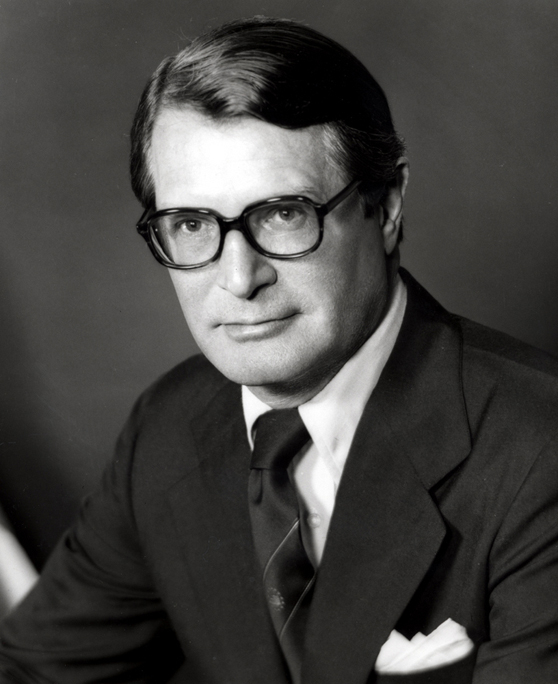
Elliot Richardson
Former United States Attorney General · U.S. Department of Justice · 1973–1973
Elliot Richardson served as United States Attorney General (1973–1973). The page below collects sourced biographical facts, the appointment record, and provenance for Richardson.
Key facts
- Full name
- Elliot Richardson
- Department
- U.S. Department of Justice
- Office
- United States Attorney General
- Status
- Former secretary
- Appointment
- Senate-confirmed
- Tenure
- 1973–1973
- Confirmed
- —
- Born
- 1920
- Died
- 1999
- First year in office
- 1973
- Dataset version
- 1.20260703
Appointment & service record
United States Attorney General · 1973–1973
- Department
- U.S. Department of Justice
- Appointment
- Senate-confirmed
- Appointing president
- —
- Confirmed
- —
Department, appointment type (Senate-confirmed, acting, recess, or designated), appointing president, confirmation status, and service dates are drawn from Wikidata and the White House Cabinet roster.[1][2][3]
Sources
- [1]https://www.wikidata.org/wiki/Q719808Wikidata · retrieved 2026-07-03
- [2]https://www.whitehouse.gov/administration/cabinet/whitehouse.gov · retrieved 2026-07-03
- [3]https://www.wikidata.org/wiki/Q639738wikidata-cabinet · retrieved 2026-07-03
Biographical narrative
865 words · sourced from the Wikipedia REST extract
Elliot Lee Richardson (July 20, 1920 – December 31, 1999) was an American lawyer who served in several high‑level positions within the United States federal government during the 1970s. His career spanned roles as a federal prosecutor, cabinet secretary under Presidents Richard Nixon and Gerald Ford, ambassador to the United Kingdom, and chief executive of the Department of Commerce. Richardson’s tenure as Attorney General is most noted for his resignation in protest of President Nixon’s attempt to remove Special Prosecutor Archibald Cox, an event that intensified the Watergate crisis and contributed to the eventual resignation of the president.
Early life and career
Richardson was born in Boston, Massachusetts, on July 20, 1920. He grew up in a family with strong ties to medicine; his father, Edward Peirson Richardson, was a physician and professor at Harvard Medical School, and several relatives held positions at Harvard Medical and Massachusetts General Hospital. His early education took place at the Park School in Brookline and Milton Academy in Milton, both located in Massachusetts.
He entered Harvard College, where he earned an A.B. degree in philosophy in 1941, graduating cum laude. While a student, he contributed to the university’s humor publication, the Harvard Lampoon, and was a member of Winthrop House. After completing his undergraduate studies, Richardson enlisted in the United States Army during World War II. He served as a combat medic with the U.S. 4th Infantry Division, participating in the Normandy invasion on June 6, 1944. During that campaign he performed actions for which he received the Bronze Star Medal and a Purple Heart with oak‑leaf cluster. Richardson was discharged from active duty in 1945 with the rank of first lieutenant.
Following his military service, Richardson enrolled at Harvard Law School. He served as president of the Harvard Law Review during his time there. After earning his law degree in 1947, he clerked for Judge Learned Hand on the United States Court of Appeals for the Second Circuit and later for Associate Justice Felix Frankfurter on the Supreme Court of the United States. These clerkships were followed by a position at the Boston firm Ropes, Gray, Best, Coolidge & Rugg (now Ropes & Gray). Richardson soon expressed a preference for public service over private practice.
In 1953, he joined the staff of U.S. Senator Leverett Saltonstall before returning to private practice. The same year, President Dwight D. Eisenhower appointed him assistant secretary for legislation in the Department of Health, Education and Welfare. In that capacity he worked on the development of the National Defense Education Act and Social Security legislation.
Eisenhower’s administration also named Richardson United States Attorney for the District of Massachusetts in 1959. As a federal prosecutor, he earned a reputation for rigor, particularly in tax‑fraud cases. He later remarked that every tax evader prosecuted during his tenure was convicted.
Richardson’s involvement in state politics continued while he served as a federal attorney. In 1964 he was elected the 62nd lieutenant governor of Massachusetts, and two years later he won election as the state’s Attorney General, becoming the last Republican to hold that office as of 2025.
Cabinet tenure
In 1969 Richardson entered the Nixon administration as United States Under Secretary of State. The following year he was promoted to a cabinet position as Secretary of Health, Education and Welfare, a role he held until January 1973. He then served briefly as Secretary of Defense before being appointed Attorney General in May 1973. His confirmation by the Senate is recorded for that year.
During his time as Attorney General, Richardson became a central figure in the Watergate investigation. When President Nixon instructed the dismissal of Special Prosecutor Archibald Cox, Richardson resigned in protest. His resignation was a significant moment in the unfolding crisis and contributed to the erosion of confidence in the administration, ultimately leading to President Nixon’s resignation.
After the conclusion of the Nixon presidency, Richardson returned to public service under President Gerald Ford. In March 1975 he was appointed United States Ambassador to the United Kingdom. The following year he assumed the position of Secretary of Commerce, a post he held until 1977.
Following his service in the Ford administration, Richardson entered private legal practice in Washington, D.C. He advised President Jimmy Carter on maritime law matters and made an unsuccessful bid for the U.S. Senate in 1984, losing the Republican primary to Ray Shamie.
Legacy
Richardson’s career is notable for its breadth across multiple branches of government and for his principled stance during a pivotal moment in American political history. His resignation as Attorney General over the Watergate scandal underscored the importance of judicial independence and the rule of law, and it played a role in the eventual transition of executive power following President Nixon’s departure.
Beyond his cabinet service, Richardson contributed to public policy through his earlier work on education and social security legislation and later through legal counsel to a sitting president. His involvement in state politics as lieutenant governor and Attorney General of Massachusetts left a lasting imprint on that state's legal landscape.
Richardson passed away on December 31, 1999. His life’s work reflects a sustained commitment to public service across multiple administrations and sectors of government.
Sources & provenance
Every quantitative or attributable claim above carries a per-section [N] marker that resolves to the corresponding URL below. Each entry records the upstream provider, the canonical URL, and the timestamp at which the underlying source was retrieved.
Key facts
- https://www.wikidata.org/wiki/Q719808Wikidata · retrieved 2026-07-03
- https://www.whitehouse.gov/administration/cabinet/whitehouse.gov · retrieved 2026-07-03
- https://www.wikidata.org/wiki/Q639738wikidata-cabinet · retrieved 2026-07-03
Biographical narrative
- https://en.wikipedia.org/wiki/Elliot_RichardsonWikipedia · retrieved 2026-07-03
Explore the Cabinet
The Cabinet includes the Vice President and the heads of the 15 executive departments. Browse the full roster of current and former secretaries, or explore how the Cabinet fits into the federal government.