
Historical · U.S. Department of Justice
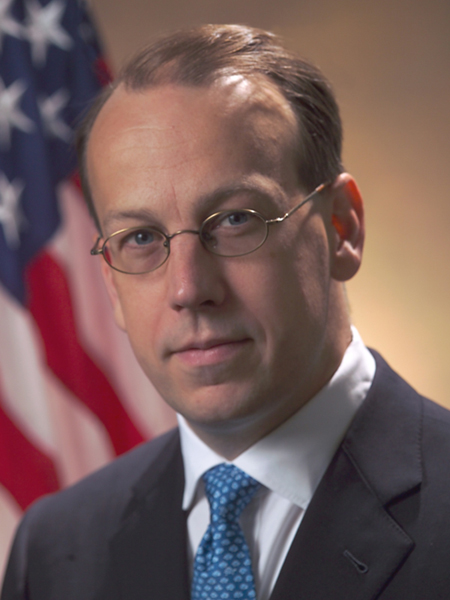
Paul Clement
Acting
Former Acting United States Attorney General · U.S. Department of Justice · 2007–2007
Paul Clement served as Acting United States Attorney General (2007–2007). The page below collects sourced biographical facts, the appointment record, and provenance for Clement.
Key facts
- Full name
- Paul Clement
- Department
- U.S. Department of Justice
- Office
- United States Attorney General
- Status
- Former secretary
- Appointment
- Acting
- Tenure
- 2007–2007
- Confirmed
- —
- Born
- 1966
- Died
- —
- First year in office
- 2007
- Dataset version
- 1.20260704
Appointment & service record
United States Attorney General · 2007–2007
- Department
- U.S. Department of Justice
- Appointment
- Acting
- Appointing president
- —
- Confirmed
- Not confirmed
Department, appointment type (Senate-confirmed, acting, recess, or designated), appointing president, confirmation status, and service dates are drawn from Wikidata and the White House Cabinet roster.[1][2][3]
Sources
- [1]https://www.wikidata.org/wiki/Q1356377Wikidata · retrieved 2026-07-04
- [2]https://www.whitehouse.gov/administration/cabinet/whitehouse.gov · retrieved 2026-07-04
- [3]https://www.wikidata.org/wiki/Q639738wikidata-cabinet · retrieved 2026-07-04
Biographical narrative
830 words · sourced from the Wikipedia REST extract
Paul Drew Clement, born on June 24, 1966, is an American attorney who has served in several high‑profile legal positions, including as Solicitor General of the United States and briefly as Acting Attorney General during the George W. Bush administration. After his public service, he returned to academia at Georgetown University Law Center and later co‑founded the law firm Clement & Murphy. His career is distinguished by a record number of arguments before the U.S. Supreme Court, representing a broad spectrum of clients on matters ranging from constitutional interpretation to federal criminal policy.
Early life and career
Clement grew up in Cedarburg, Wisconsin, as one of four children of Jean and Jerry Clement. He completed his secondary education at Cedarburg High School in 1984 before enrolling at Georgetown University’s Walsh School of Foreign Service. There he earned a Bachelor of Science degree summa cum laude in 1988. While an undergraduate, he was active in the American Parliamentary Debate Association as a member of the university’s Philodemic Society.
After Georgetown, Clement pursued graduate studies in economics at Darwin College, Cambridge, where he received a Master of Philosophy with distinction in 1989. He then entered Harvard Law School, becoming the Supreme Court editor of the Harvard Law Review and graduating magna cum laude with a Juris Doctor in 1992.
Following law school, Clement served as a clerk for U.S. Circuit Judge Laurence Silberman on the United States Court of Appeals for the District of Columbia Circuit from 1992 to 1993. He continued his judicial experience by clerking for Supreme Court Justice Antonin Scalia from 1993 to 1994.
Clement’s early private‑practice career began as an associate in the Washington, D.C., office of Kirkland & Ellis. He later joined King & Spalding, where he headed the firm’s appellate practice. In addition to his work in private practice, Clement contributed to legal education as an adjunct professor at Georgetown University Law Center from 1998 to 2004, teaching a seminar on separation of powers.
Cabinet tenure
In February 2001, Clement entered the United States Department of Justice. He served first as Principal Deputy Solicitor General and then became Acting Solicitor General on July 11, 2004 following Theodore Olson’s resignation. In this capacity, he argued more than one hundred cases before the Supreme Court, including notable decisions such as *McConnell v. FEC*, *Tennessee v. Lane*, *Rumsfeld v. Padilla*, and *Hamdi v. Rumsfeld*. His arguments covered a wide range of issues, from campaign finance to national security.
On August 27, 2007, President George W. Bush announced that Clement would assume the role of Acting Attorney General upon the resignation of Alberto Gonzales. Clement entered office at 12:01 am on September 17, 2007, and served for approximately twenty‑four hours before Peter Keisler was appointed as the next Acting Attorney General pending a permanent nominee.
Clement’s brief tenure as Acting Attorney General coincided with continued legal challenges to Bush administration policies. He defended the Controlled Substances Act under the Commerce Clause and represented the administration in matters concerning the treatment of terrorism suspects. His service concluded when he resigned from the Department of Justice on May 14, 2008, effective June 2, 2008, after which he returned to Georgetown University Law Center as a senior fellow.
Legacy
After leaving public office, Clement rejoined King & Spalding in 2008 as a partner within its appellate litigation practice. He represented the National Rifle Association in *McDonald v. Chicago* on March 2, 2010, among other high‑profile cases. His advocacy extended beyond the Supreme Court; he was part of legal teams representing NBA players during the 2011 lockout and advised NFL players during a potential labor dispute that spring.
In 2022, Clement left Kirkland & Ellis to co‑found the law firm Clement & Murphy with former partner Erin Murphy. The firm focuses on appellate litigation and other areas aligned with Clement’s expertise. As of April 2026, he had argued 124 cases before the Supreme Court, a record for any advocate in the history of the court.
Clement’s career is notable not only for its volume but also for its breadth. He has represented clients across the ideological spectrum, including conservative causes such as opposition to gun control measures, defense of bans on federal recognition of same‑sex marriage, challenges to the Affordable Care Act, and support for Republican gerrymandering in North Carolina. In addition, he has argued cases defending the Bush administration’s policies on terrorism and drug regulation.
Beyond casework, Clement is recognized for his principle that all legal clients deserve representation, regardless of public opinion. This stance has guided him in representing a variety of clients who have challenged actions taken by successive administrations, including those from the Trump era.
Clement remains active in legal education as a distinguished lecturer at Georgetown University Law Center and continues to influence the field through his practice, teaching, and participation in appellate advocacy. His record number of Supreme Court arguments and his service across multiple branches of government underscore his enduring impact on American jurisprudence.
Sources & provenance
Every quantitative or attributable claim above carries a per-section [N] marker that resolves to the corresponding URL below. Each entry records the upstream provider, the canonical URL, and the timestamp at which the underlying source was retrieved.
Key facts
- https://www.wikidata.org/wiki/Q1356377Wikidata · retrieved 2026-07-04
- https://www.whitehouse.gov/administration/cabinet/whitehouse.gov · retrieved 2026-07-04
- https://www.wikidata.org/wiki/Q639738wikidata-cabinet · retrieved 2026-07-04
Biographical narrative
- https://en.wikipedia.org/wiki/Paul_ClementWikipedia · retrieved 2026-07-04
Explore the Cabinet
The Cabinet includes the Vice President and the heads of the 15 executive departments. Browse the full roster of current and former secretaries, or explore how the Cabinet fits into the federal government.