
Historical · U.S. Department of Justice
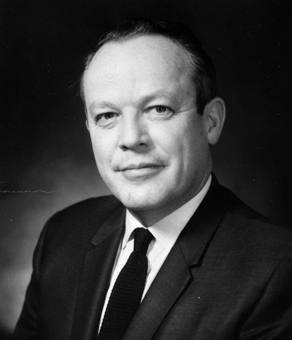
Richard Kleindienst
Former United States Attorney General · U.S. Department of Justice · 1972–1973
Richard Kleindienst served as United States Attorney General (1972–1973). The page below collects sourced biographical facts, the appointment record, and provenance for Kleindienst.
Key facts
- Full name
- Richard Kleindienst
- Department
- U.S. Department of Justice
- Office
- United States Attorney General
- Status
- Former secretary
- Appointment
- Senate-confirmed
- Tenure
- 1972–1973
- Confirmed
- —
- Born
- 1923
- Died
- 2000
- First year in office
- 1972
- Dataset version
- 1.20260703
Appointment & service record
United States Attorney General · 1972–1973
- Department
- U.S. Department of Justice
- Appointment
- Senate-confirmed
- Appointing president
- —
- Confirmed
- —
Department, appointment type (Senate-confirmed, acting, recess, or designated), appointing president, confirmation status, and service dates are drawn from Wikidata and the White House Cabinet roster.[1][2][3]
Sources
- [1]https://www.wikidata.org/wiki/Q521427Wikidata · retrieved 2026-07-03
- [2]https://www.whitehouse.gov/administration/cabinet/whitehouse.gov · retrieved 2026-07-03
- [3]https://www.wikidata.org/wiki/Q639738wikidata-cabinet · retrieved 2026-07-03
Biographical narrative
955 words · sourced from the Wikipedia REST extract
Richard Gordon Kleindienst was an American lawyer who served as the United States Attorney General during the early stages of the Watergate scandal. His tenure, appointed by President Richard Nixon, ended in resignation amid allegations of involvement in a cover‑up that would become one of the most significant political crises in modern U.S. history.
Early life and career
Kleindienst was born on August 5, 1923, in Winslow, Arizona, to parents Gladys (Love) and Alfred R. Kleindienst. He pursued higher education at the University of Arizona before enlisting in the United States Army Air Forces during World War II, where he served from 1943 until 1946. After his military service, he attended Harvard College followed by Harvard Law School, graduating with a law degree in 1950.
His early professional life combined public service and private practice. From 1953 to 1954 he represented Arizona as a member of the state House of Representatives. He then spent approximately fifteen years working as a private attorney. During this period, Kleindienst also held leadership positions within his state's Republican Party, serving twice as chairman—from 1956 to 1960 and again from 1961 to 1963.
In 1964, Kleindienst entered statewide electoral politics by running for Governor of Arizona. He was the Republican nominee in that election but was defeated by Democrat Sam Goddard, with a vote share of roughly fifty‑three percent to Goddard’s forty‑seven percent.
Kleindienst’s involvement in national politics began in early 1964 when Senator Barry Goldwater enlisted him as Director of Operations for his presidential campaign. Goldwater stipulated that the campaign be led by three trusted Republicans: Kleindienst, Denison Kitchel as Campaign Manager, and Dean Burch as Assistant Campaign Manager. Although political observers suggested a more experienced operative might have been preferable, Goldwater accepted Kleindienst’s role.
Following Nixon’s election in 1968, President-elect Richard Nixon appointed John N. Mitchell as Attorney General on the condition that Kleindienst become Deputy Attorney General. Kleindienst resigned from his private practice in 1969 to assume this federal position. In his capacity as Deputy, he handled matters such as the government’s lawsuit against International Telephone & Telegraph Corporation (ITT). Reports indicate that Nixon and aide John Ehrlichman instructed him to drop the case, a decision that raised ethical concerns regarding the influence of executive officials on legal proceedings.
Cabinet tenure
On February 15, 1972, Attorney General Mitchell resigned effective March 1 to work on Nixon’s re‑election campaign. President Nixon nominated Kleindienst as his successor. After serving in an acting capacity for approximately three and a half months, the Senate confirmed him on June 12, 1972, following a contested nomination that had been challenged by Senator Ted Kennedy over alleged involvement with ITT.
Kleindienst’s tenure coincided with the unfolding of the Watergate scandal. On June 17, 1972—five days after his confirmation—five men associated with the Committee to Re‑Elect the President (CRP) were arrested for breaking into the Democratic National Committee headquarters at the Watergate complex. The following day, Kleindienst was informed of the arrests and subsequently met with Gordon Liddy, a CRP operative who had orchestrated the burglary. Liddy claimed that Mitchell wanted the Attorney General to facilitate the release of the burglars to protect CRP’s interests. Kleindienst declined this request and directed that the investigation proceed as it would for any other criminal case.
During this period, Kleindienst did not disclose to FBI investigators or his department’s prosecutors information regarding Liddy’s admission of responsibility or claims that Mitchell was attempting to obstruct justice. His refusal to share these details became a central point in later inquiries into the scandal.
On April 30, 1973, Kleindienst resigned from office amid growing scrutiny over his conduct during the Watergate investigation. His resignation coincided with the dismissal of other senior Nixon aides, including John Dean and H.R. Haldeman, as well as the resignation of John Ehrlichman.
In 1974, Kleindienst pleaded guilty to contempt of Congress for providing false statements during Senate confirmation hearings about an antitrust investigation involving ITT that had received a substantial contribution from the Republican National Convention. His conviction was notable because it is rare for a former cabinet member to be found guilty of contempt of Congress; another Watergate figure, G. Gordon Liddy, also faced such a conviction in the same decade.
After leaving public office, Kleindienst’s legal career continued to face challenges. In 1981 he was charged with perjury concerning his knowledge of a white‑collar criminal case he had represented; he was later acquitted. The following year, the Arizona Supreme Court suspended him from practicing law for one year due to unethical conduct related to statements made during an investigation into his representation of an insurance company in 1976. In October 1982, the United States Supreme Court disbarred him, preventing him from appearing before the highest court.
Legacy
Kleindienst’s career is most closely associated with the Watergate scandal and its aftermath. His resignation as Attorney General marked a pivotal moment in the unraveling of executive misconduct during President Nixon’s administration. The legal consequences he faced—particularly his rare conviction for contempt of Congress and subsequent disbarment—highlighted the importance of accountability mechanisms within both the political and judicial systems.
His experience illustrates how conflicts between executive directives and the responsibilities of law enforcement officials can lead to ethical breaches, prompting reforms in oversight and transparency. While Kleindienst’s personal legacy is largely defined by his involvement in Watergate, his case also contributed to broader discussions about the limits of presidential power and the role of the Attorney General as an independent guardian of the rule of law.
Kleindienst died on February 3, 2000, at the age of 76 from lung cancer. His life remains a reference point for scholars studying the intersection of politics, law, and ethics during one of America’s most consequential political crises.
Sources & provenance
Every quantitative or attributable claim above carries a per-section [N] marker that resolves to the corresponding URL below. Each entry records the upstream provider, the canonical URL, and the timestamp at which the underlying source was retrieved.
Key facts
- https://www.wikidata.org/wiki/Q521427Wikidata · retrieved 2026-07-03
- https://www.whitehouse.gov/administration/cabinet/whitehouse.gov · retrieved 2026-07-03
- https://www.wikidata.org/wiki/Q639738wikidata-cabinet · retrieved 2026-07-03
Biographical narrative
- https://en.wikipedia.org/wiki/Richard_KleindienstWikipedia · retrieved 2026-07-03
Explore the Cabinet
The Cabinet includes the Vice President and the heads of the 15 executive departments. Browse the full roster of current and former secretaries, or explore how the Cabinet fits into the federal government.