
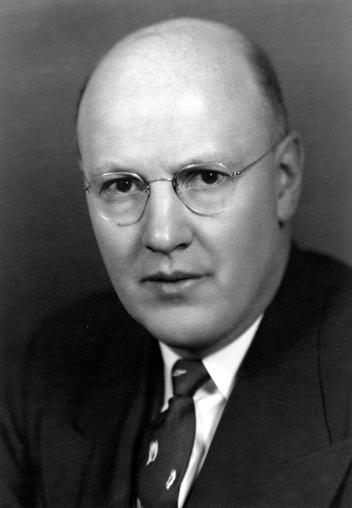
Historical · U.S. Department of Agriculture
Charles F. Brannan
Former United States Secretary of Agriculture · U.S. Department of Agriculture · 1948–1953
Charles F. Brannan served as United States Secretary of Agriculture (1948–1953). The page below collects sourced biographical facts, the appointment record, and provenance for Brannan.
Key facts
- Full name
- Charles F. Brannan
- Department
- U.S. Department of Agriculture
- Office
- United States Secretary of Agriculture
- Status
- Former secretary
- Appointment
- Senate-confirmed
- Tenure
- 1948–1953
- Confirmed
- —
- Born
- 1903
- Died
- 1992
- First year in office
- 1948
- Dataset version
- 1.20260704
Appointment & service record
United States Secretary of Agriculture · 1948–1953
- Department
- U.S. Department of Agriculture
- Appointment
- Senate-confirmed
- Appointing president
- —
- Confirmed
- —
Department, appointment type (Senate-confirmed, acting, recess, or designated), appointing president, confirmation status, and service dates are drawn from Wikidata and the White House Cabinet roster.[1][2][3][4]
Sources
- [1]https://www.wikidata.org/wiki/Q372727Wikidata · retrieved 2026-07-04
- [2]https://www.whitehouse.gov/administration/cabinet/whitehouse.gov · retrieved 2026-07-04
- [3]https://www.wikidata.org/wiki/Q639738wikidata-cabinet · retrieved 2026-07-04
- [4]https://www.usda.gov/about-usda/general-information/history/former-secretariesusda.gov former-secretaries roster · retrieved 2026-07-04
Biographical narrative
830 words · sourced from the Wikipedia REST extract
Charles Franklin Brannan served as the United States Secretary of Agriculture from 1948 until 1953, a period that followed the conclusion of World II and encompassed the early years of the Cold War. A lawyer by training who had spent much of his professional life within federal agencies focused on agricultural and rural issues, Brannan became a prominent figure in President Harry S. Truman’s Fair Deal program. After leaving the cabinet he continued to shape farm policy as general counsel for the National Farmers Union until his death in 1992.
Early life and career
Charles Franklin Brannan was born on August 23, 1903, in Denver, Colorado. He grew up in a family that traced its ancestry to Quaker settlers; his father worked professionally as an engineer, which exposed young Brannan to the practical concerns of infrastructure and technical work from an early age. He pursued higher education at the University of Denver Law School, where he earned his law degree in 1929. Three years later, in 1932, he married Eda V. Seltzer; the couple settled back in Denver, where Brannan established a private legal practice that specialized in matters related to agriculture, mining, and irrigation—a focus that would define much of his subsequent public service.
Brannan’s entry into federal government work began during the Great Depression with the Resettlement Administration, an agency created to address the plight of tenant farmers displaced by the Dust Bowl. In this capacity he provided legal assistance as part of broader efforts to relocate families and stabilize rural communities that had been devastated by environmental catastrophe and economic collapse. By 1937 his experience and reputation earned him a position as a regional attorney for the Department of Agriculture, where he oversaw the implementation of agricultural programs across several states and gained exposure to the administrative mechanisms of federal farm policy.
In 1941 Brannan joined the Farm Security Administration, an agency tasked with supporting farmers who required financial assistance and infrastructure development. He negotiated loans for water facilities and other essential services in the Mountain States, thereby contributing to improvements in irrigation systems and rural livelihoods during a period when agricultural productivity was critical to national recovery. Three years later, in 1944, he was appointed assistant secretary of agriculture under Secretary Clinton Anderson. In that role Brannan managed long‑range planning initiatives for the department, shaping strategic directions and coordinating policy development across multiple agencies.
When Secretary Anderson resigned in 1948, he recommended Brannan as a suitable successor. The recommendation carried additional weight from the president of the liberal Farmers Union, reflecting confidence in Brannan’s experience and policy orientation within agricultural circles. His appointment was part of a broader pattern of selecting individuals with deep expertise in farm law and rural affairs to guide national agricultural policy during a time of significant transition.
Cabinet tenure
President Harry S. Truman nominated Charles Brannan to serve as United States Secretary of Agriculture, and the Senate confirmed him. He held the office from 1948 until 1953, overseeing the federal department during a period marked by postwar adjustments and emerging Cold War concerns. During his tenure he championed a proposal known as the “Brannan Plan,” which was incorporated into Truman’s Fair Deal agenda. The plan sought to guarantee income for farmers while allowing market forces to determine commodity prices; it represented an attempt to balance security and economic flexibility within the agricultural sector.
The Brannan Plan did not receive congressional approval, largely because the House of Representatives was controlled by Republicans who were concentrating attention on Cold War concerns. Consequently, the proposal never entered into law or policy implementation. After President Dwight D. Eisenhower took office in 1953, Brannan departed from federal service and accepted a position as general counsel for the National Farmers Union, where he continued to advocate for farmers’ interests.
Legacy
Charles Brannan’s career bridged significant periods of American agricultural history—from the New Deal era through the early Cold War. His legal background and experience across multiple federal agencies positioned him to influence policy discussions at the highest levels. Though the Brannan Plan was not enacted, it remains a notable example of mid‑twentieth‑century attempts to secure farm income while preserving market mechanisms.
Following his cabinet service, Brannan’s role as general counsel for the National Farmers Union allowed him to remain engaged in shaping agricultural legislation and supporting rural communities. In 1956 he sought election to the United States Senate from Colorado but was defeated in the Democratic primary by John A. Carroll; this marked the end of his direct pursuit of elected office.
Charles Brannan passed away on July 2, 1992, at the age of eighty‑eight in Denver. At the time of his death he was recognized as the last surviving member of President Truman’s cabinet, a distinction that underscored his longevity and continued relevance to discussions of mid‑century American governance. His life reflects a sustained commitment to agricultural law and policy, and his contributions remain part of the historical record of federal farm administration.
Sources & provenance
Every quantitative or attributable claim above carries a per-section [N] marker that resolves to the corresponding URL below. Each entry records the upstream provider, the canonical URL, and the timestamp at which the underlying source was retrieved.
Key facts
- https://www.wikidata.org/wiki/Q372727Wikidata · retrieved 2026-07-04
- https://www.whitehouse.gov/administration/cabinet/whitehouse.gov · retrieved 2026-07-04
- https://www.wikidata.org/wiki/Q639738wikidata-cabinet · retrieved 2026-07-04
- https://www.usda.gov/about-usda/general-information/history/former-secretariesusda.gov former-secretaries roster · retrieved 2026-07-04
Biographical narrative
- https://en.wikipedia.org/wiki/Charles_F._BrannanWikipedia · retrieved 2026-07-04
Explore the Cabinet
The Cabinet includes the Vice President and the heads of the 15 executive departments. Browse the full roster of current and former secretaries, or explore how the Cabinet fits into the federal government.