
Historical · U.S. Department of Agriculture
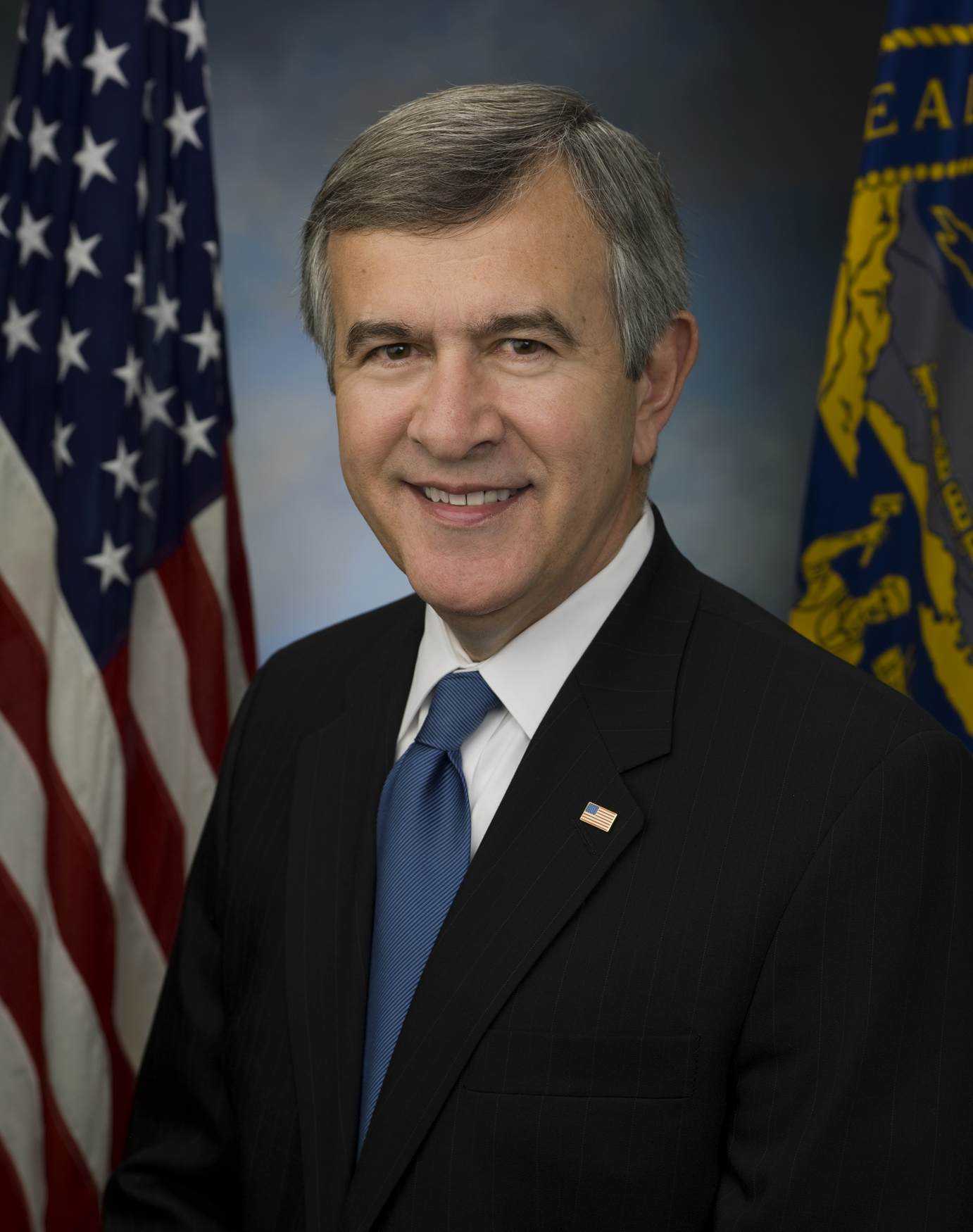
Mike Johanns
Former United States Secretary of Agriculture · U.S. Department of Agriculture · 2005–2007
Mike Johanns served as United States Secretary of Agriculture (2005–2007). The page below collects sourced biographical facts, the appointment record, and provenance for Johanns.
Key facts
- Full name
- Mike Johanns
- Department
- U.S. Department of Agriculture
- Office
- United States Secretary of Agriculture
- Status
- Former secretary
- Appointment
- Senate-confirmed
- Tenure
- 2005–2007
- Confirmed
- —
- Born
- 1950
- Died
- —
- First year in office
- 2005
- Dataset version
- 1.20260704
Appointment & service record
United States Secretary of Agriculture · 2005–2007
- Department
- U.S. Department of Agriculture
- Appointment
- Senate-confirmed
- Appointing president
- —
- Confirmed
- —
Department, appointment type (Senate-confirmed, acting, recess, or designated), appointing president, confirmation status, and service dates are drawn from Wikidata and the White House Cabinet roster.[1][2][3]
Sources
- [1]https://www.wikidata.org/wiki/Q448880Wikidata · retrieved 2026-07-04
- [2]https://www.whitehouse.gov/administration/cabinet/whitehouse.gov · retrieved 2026-07-04
- [3]https://www.wikidata.org/wiki/Q639738wikidata-cabinet · retrieved 2026-07-04
Biographical narrative
935 words · sourced from the Wikipedia REST extract
Michael Owen Johanns is an American lawyer and public servant whose career has spanned local, state, and federal government. Born in 1950, he rose from a farm upbringing in Iowa to become the United States Secretary of Agriculture under President George W. Bush, serving from 2005 until 2007. Prior to that, Johanns held key positions in Nebraska politics, including governor from 1999 to 2005 and U.S. senator from 2009 to 2015. His trajectory reflects a long‑term commitment to public service across multiple levels of government.
Early life and career
Johanns entered the world on June 18, 1950, in Osage, Iowa, as the son of Adeline Lucy (née Royek) and John Robert Johanns. The family’s farm provided the backdrop for his formative years; he grew up working alongside his parents and was exposed to agricultural life from an early age. His heritage includes German and Luxembourgish ancestry on his father’s side, while his maternal grandparents were immigrants from Poland.
After completing high school at Osage Community High School in 1968, Johanns pursued higher education at Saint Mary's University of Minnesota in Winona, where he earned a Bachelor of Arts degree in Communications in 1971. He continued his academic journey at Creighton University School of Law, obtaining a Juris Doctor and joining the Nebraska State Bar Association in 1974.
Following law school, Johanns served as a clerk for Justice Hale McCown of the Nebraska Supreme Court from 1974 to 1975. He then entered private practice, working with the firm Cronin and Hannon in O'Neill, Nebraska, during 1975–76. In 1976 he founded his own law partnership, Nelson, Johanns, Morris, Holdeman, and Titus, based in Lincoln. The firm became a significant legal presence in the state, and Johanns practiced there until 1991.
His early forays into public office began at the county level. From 1983 to 1987 he served on the Lancaster County Board as a Democrat, gaining experience in local governance. In 1988 he was elected to the Lincoln City Council; although his earlier affiliation had been Democratic, by this time he had aligned with the Republican Party and held council office from 1989 until 1991. His municipal leadership culminated when he was elected mayor of Lincoln on May 7, 1991, defeating incumbent Bill Harris. He took office on May 20, 1991, and in 1995 secured reelection without opposition—a first for a Lincoln mayor since the 1950s.
Cabinet tenure
Johanns’s statewide prominence grew when he ran for governor of Nebraska in the 1998 election. After an early start to his campaign, he traveled extensively across all 93 counties of the state, covering more than 100,000 miles and cultivating broad name recognition. The race featured several notable opponents: State Auditor John Breslow, U.S. Representative Jon Lynn Christensen, and Democrat Bill Hoppner. Despite challenges—including controversies surrounding Christensen’s personal life and a contentious public‑access cable broadcast that Johanns sought to regulate—Johanns emerged victorious in the Republican primary with 40% of the vote and subsequently won the general election against Hoppner.
Assuming office as Nebraska’s governor on January 5, 1999, Johanns served until January 7, 2005. During his governorship he chaired the Midwestern Governors Association in 2002, a role that positioned him among peers from neighboring states to discuss regional policy issues. In 2002 he was reelected as governor, defeating insurance executive Stormy Dean.
In 2005 President George W. Bush nominated Johanns to serve as United States Secretary of Agriculture. The Senate confirmed his appointment, and he became the department’s 38th secretary, serving from 2005 until 2007. His tenure marked the fourth time a Nebraskan had held that federal office. While the specifics of his policy initiatives during this period are not detailed here, his role placed him at the helm of national agricultural policy, overseeing programs related to farming, food safety, and rural development.
Following his cabinet service, Johanns returned to electoral politics. In 2008 he won the Republican nomination for U.S. Senate in Nebraska, succeeding retiring Senator Chuck Hagel. He defeated Democratic challenger Scott Kleeb in the general election and was sworn into office on January 3, 2009. He served two terms as senator, announcing in February 2013 that he would not seek reelection. His successor, Ben Sasse, took his seat in 2015.
Legacy
Michael Owen Johanns’s career reflects a sustained engagement with public service across multiple tiers of government. Beginning with local governance on the Lancaster County Board and Lincoln City Council, he advanced to mayoral leadership before assuming statewide office as governor of Nebraska. His governorship was noted for its focus on regional collaboration, exemplified by his chairmanship of the Midwestern Governors Association.
At the federal level, Johanns’s appointment as Secretary of Agriculture placed him in charge of a major cabinet department responsible for shaping national agricultural policy and supporting rural communities. Though specific legislative achievements during his tenure are not enumerated here, his role involved oversight of programs that influence food production, safety standards, and farm economics across the United States.
Johanns’s later service in the U.S. Senate extended his influence to the federal legislative arena, where he represented Nebraska for six years. His decision not to seek a second term in 2014 marked the conclusion of an extensive public career that spanned more than three decades.
Throughout his varied roles—lawyer, local official, governor, cabinet secretary, and senator—Johanns has been recognized as a figure who bridged state and national concerns, particularly those related to agriculture and rural affairs. His trajectory illustrates how experience at the local level can inform leadership in broader governmental contexts, and his service record remains part of Nebraska’s political history and the federal administrative legacy of the early 21st century.
Sources & provenance
Every quantitative or attributable claim above carries a per-section [N] marker that resolves to the corresponding URL below. Each entry records the upstream provider, the canonical URL, and the timestamp at which the underlying source was retrieved.
Key facts
- https://www.wikidata.org/wiki/Q448880Wikidata · retrieved 2026-07-04
- https://www.whitehouse.gov/administration/cabinet/whitehouse.gov · retrieved 2026-07-04
- https://www.wikidata.org/wiki/Q639738wikidata-cabinet · retrieved 2026-07-04
Biographical narrative
- https://en.wikipedia.org/wiki/Mike_JohannsWikipedia · retrieved 2026-07-04
Explore the Cabinet
The Cabinet includes the Vice President and the heads of the 15 executive departments. Browse the full roster of current and former secretaries, or explore how the Cabinet fits into the federal government.