
Historical · U.S. Department of Agriculture
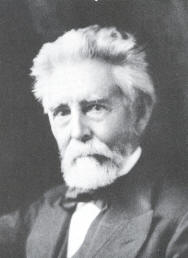
Norman Jay Colman
Acting
Former Acting United States Secretary of Agriculture · U.S. Department of Agriculture · 1889–1889
Norman Jay Colman served as Acting United States Secretary of Agriculture (1889–1889). The page below collects sourced biographical facts, the appointment record, and provenance for Colman.
Key facts
- Full name
- Norman Jay Colman
- Department
- U.S. Department of Agriculture
- Office
- United States Secretary of Agriculture
- Status
- Former secretary
- Appointment
- Acting
- Tenure
- 1889–1889
- Confirmed
- —
- Born
- 1827
- Died
- 1911
- First year in office
- 1889
- Dataset version
- 1.20260704
Appointment & service record
United States Secretary of Agriculture · 1889–1889
- Department
- U.S. Department of Agriculture
- Appointment
- Acting
- Appointing president
- —
- Confirmed
- Not confirmed
Department, appointment type (Senate-confirmed, acting, recess, or designated), appointing president, confirmation status, and service dates are drawn from Wikidata and the White House Cabinet roster.[1][2][3]
Sources
- [1]https://www.wikidata.org/wiki/Q928613Wikidata · retrieved 2026-07-04
- [2]https://www.whitehouse.gov/administration/cabinet/whitehouse.gov · retrieved 2026-07-04
- [3]https://www.wikidata.org/wiki/Q639738wikidata-cabinet · retrieved 2026-07-04
Biographical narrative
816 words · sourced from the Wikipedia REST extract
Norman Jay Colman (May 16, 1827 – November 3, 1911) was an American lawyer, educator, newspaper publisher, and public servant who briefly served as the first United States Secretary of Agriculture in 1889. His career spanned several states and roles, including positions in education, local government, state legislature, and federal agriculture policy. Colman’s work helped lay the groundwork for modern agricultural research institutions and contributed to the establishment of the Department of Agriculture.
Early life and career
Norman Jay Colman was born on May 16, 1827, in Richfield Springs, New York, to Hamilton Coleman and Nancy (Sprague) Coleman. In his youth he relocated to Kentucky, where he pursued a career in education before turning to law. While living in Louisville, he enrolled at the University of Louisville Law School and earned his law degree in 1849, marking the beginning of his professional journey.
In 1850 Colman moved westward to Greenville, Indiana, accepting the position of first principal at the newly opened Floyd County Seminary. The seminary had been established through a community effort: residents raised $2,000, supplemented by an additional $800 from local contributions, enabling the construction of a two‑story brick building on land donated by Isaac Redman. During his tenure as principal, Colman oversaw a student body that paid tuition ranging from four to eight dollars per semester and received board and lodging in Greenville homes at one dollar per week. The seminary’s operation reflected the educational aspirations of a growing frontier community.
The passage of Indiana’s public school legislation in 1852 led to the closure of county seminaries such as Floyd County Seminary. Under the new law, these institutions were dissolved, and their assets transferred to the emerging public school system. This legislative change brought an end to Colman’s teaching career. In 1851 he married Clara Porter, daughter of Daniel Porter—a prominent local businessman known for Porter's Public House in Greenville. The couple had two children: Laura Kate Colman (born 1860) and Francis Porter Colman (born 1862).
Seeking new opportunities, Colman moved to Missouri, where he initially engaged in farming. His involvement in local affairs soon expanded; he was elected Alderman for St. Louis City’s 5th Ward in 1854 and again in 1855. In the same year, he founded the Valley Farmer newspaper, a publication that positioned him as an influential voice within Missouri’s agricultural community. The Civil War interrupted his editorial work, but after the conflict he launched another periodical, Colman’s Rural World.
Colman’s growing prominence in agriculture and local politics paved the way for higher office. He served in the Missouri House of Representatives and later was elected Lieutenant Governor of Missouri, holding that position from 1875 to 1877. Throughout his career, he maintained active engagement with agricultural issues, both at the state and national levels.
Cabinet tenure
In 1885, President Grover Cleveland appointed Colman as Commissioner of Agriculture. During his tenure in this federal role, Colman coordinated a coalition of land‑grant agricultural colleges to draft proposals for establishing agricultural experiment stations. The lobbying efforts of this group contributed to the passage of the Hatch Act in 1887, which authorized federal support for such research institutions.
Colman also advocated for the creation of a dedicated U.S. Department of Agriculture. When Cleveland’s term concluded at the end of February 1889, Colman was appointed as the department’s inaugural Secretary. He served in this capacity from February 15 to March 6, 1889—a period of eighteen days—before the position was filled by a Senate‑confirmed successor. Colman’s appointment did not receive confirmation from the United States Senate, so his tenure remained that of an acting secretary.
After completing his brief cabinet service, Colman returned to St. Louis, where he resumed management of his newspaper ventures. He continued to participate in state public service for two decades and also devoted time to horse breeding activities.
Legacy
Norman Jay Colman's contributions to American agriculture are reflected in several enduring institutions and policies. His leadership as Commissioner of Agriculture helped secure federal funding for agricultural experiment stations through the Hatch Act, a foundational element of modern agricultural research infrastructure. By championing the establishment of the Department of Agriculture, he played a role in institutionalizing federal oversight and support for farming practices across the nation.
Beyond his federal service, Colman’s early work as an educator in Indiana and later as a newspaper publisher in Missouri helped shape public discourse on agriculture during a formative period in U.S. history. His involvement in local government and state politics demonstrated a commitment to integrating agricultural concerns into broader civic governance.
Colman passed away on November 3, 1911, at the age of 84 while traveling by train to St. Louis after suffering a stroke the day before. He was interred in Bellefontaine Cemetery in St. Louis. His life exemplifies a blend of legal training, educational leadership, journalistic influence, and public service that collectively advanced agricultural policy and practice in the United States.
Sources & provenance
Every quantitative or attributable claim above carries a per-section [N] marker that resolves to the corresponding URL below. Each entry records the upstream provider, the canonical URL, and the timestamp at which the underlying source was retrieved.
Key facts
- https://www.wikidata.org/wiki/Q928613Wikidata · retrieved 2026-07-04
- https://www.whitehouse.gov/administration/cabinet/whitehouse.gov · retrieved 2026-07-04
- https://www.wikidata.org/wiki/Q639738wikidata-cabinet · retrieved 2026-07-04
Biographical narrative
- https://en.wikipedia.org/wiki/Norman_Jay_ColmanWikipedia · retrieved 2026-07-04
Explore the Cabinet
The Cabinet includes the Vice President and the heads of the 15 executive departments. Browse the full roster of current and former secretaries, or explore how the Cabinet fits into the federal government.