
Historical · U.S. Department of Agriculture
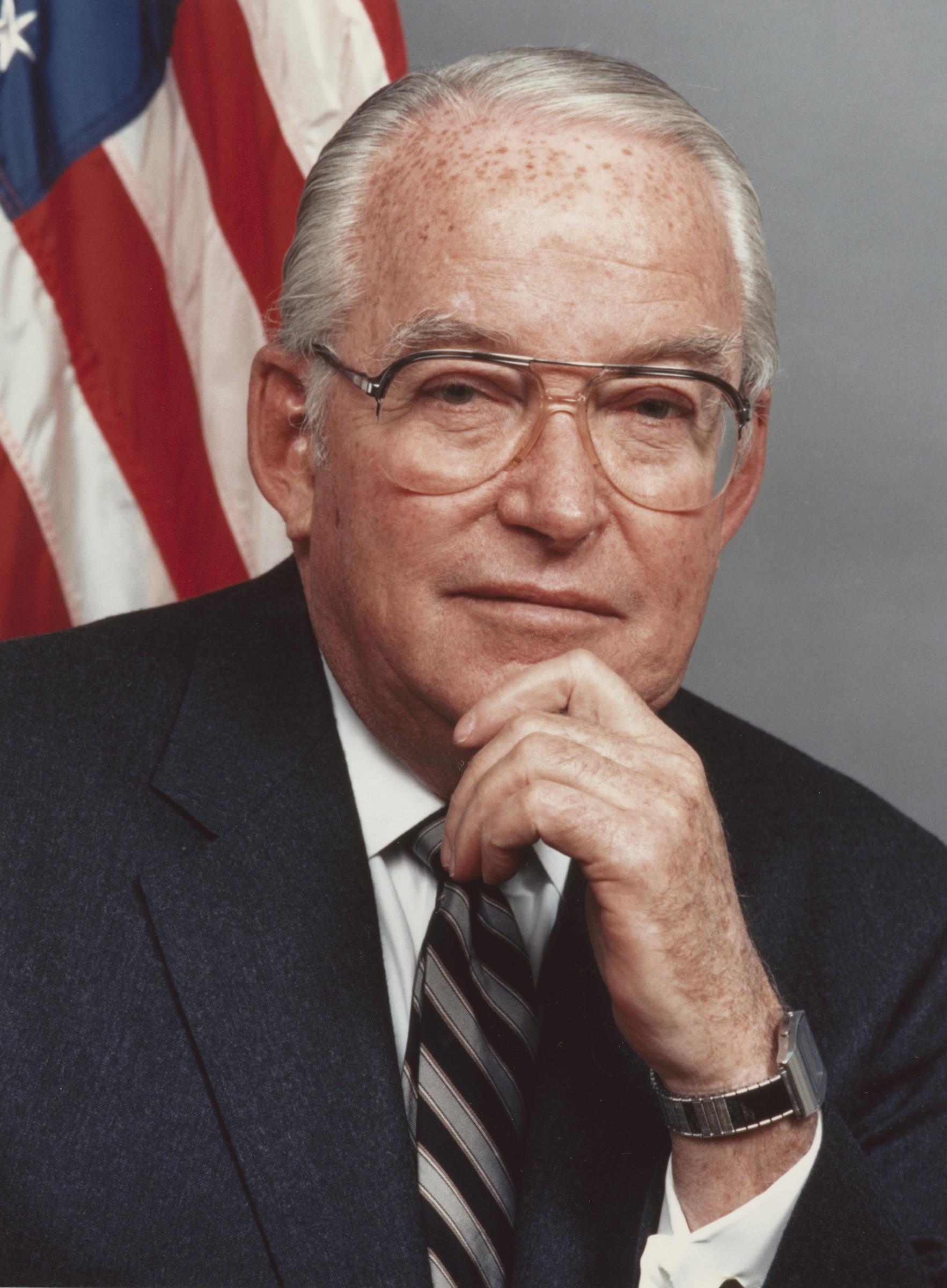
Richard Edmund Lyng
Former United States Secretary of Agriculture · U.S. Department of Agriculture · 1986–1989
Richard Edmund Lyng served as United States Secretary of Agriculture (1986–1989). The page below collects sourced biographical facts, the appointment record, and provenance for Lyng.
Key facts
- Full name
- Richard Edmund Lyng
- Department
- U.S. Department of Agriculture
- Office
- United States Secretary of Agriculture
- Status
- Former secretary
- Appointment
- Senate-confirmed
- Tenure
- 1986–1989
- Confirmed
- —
- Born
- 1918
- Died
- 2003
- First year in office
- 1986
- Dataset version
- 1.20260703
Appointment & service record
United States Secretary of Agriculture · 1986–1989
- Department
- U.S. Department of Agriculture
- Appointment
- Senate-confirmed
- Appointing president
- —
- Confirmed
- —
Department, appointment type (Senate-confirmed, acting, recess, or designated), appointing president, confirmation status, and service dates are drawn from Wikidata and the White House Cabinet roster.[1][2][3]
Sources
- [1]https://www.wikidata.org/wiki/Q376348Wikidata · retrieved 2026-07-03
- [2]https://www.whitehouse.gov/administration/cabinet/whitehouse.gov · retrieved 2026-07-03
- [3]https://www.wikidata.org/wiki/Q639738wikidata-cabinet · retrieved 2026-07-03
Biographical narrative
933 words · sourced from the Wikipedia REST extract
Richard Edmund Lyng was a prominent American public servant who served as the United States Secretary of Agriculture from 1986 to 1989. Born in San Francisco, California, he spent his early years immersed in the agricultural business that would shape his career. After completing his education and serving in World War II, Lyng returned to the family enterprise, eventually leading it into a national presence within the seed and bean processing industry. His expertise in agriculture and food production led to leadership roles in major industry associations before he entered federal service under President Ronald Reagan. During his tenure as Secretary of Agriculture, he oversaw the department’s operations during a period of significant policy shifts and continued to influence the sector through post‑government recognition.
Early life and career
Richard Edmund Lyng was born on June 29, 1918, in San Francisco, California. He grew up in an environment centered around farming and food production, as his father, Edmund John Lyng, had founded a company that specialized in agricultural products, and his mother, Sara Cecilia (McGrath), supported the family’s business endeavors. The early exposure to the practical aspects of agriculture instilled in him an understanding of both the challenges and opportunities inherent to the industry.
Lyng pursued higher education at the University of Notre Dame, where he completed his studies before enlisting for military service. He served in the United States Army during World War II, a period that provided him with experience in leadership and logistics under demanding conditions. The discipline and organizational skills developed during this time would later inform his approach to business management and public administration.
After the war, Lyng entered the family business, eventually becoming president of Ed. J. Lyng Co., a company engaged in seed and bean processing. Under his guidance, the firm expanded its operations and established itself as a significant player within the agricultural supply chain. His success in this role positioned him for further leadership opportunities beyond the private sector.
In 1973, Lyng was appointed President of the American Meat Institute, an industry association that represents meat producers and processors across the United States. He held this position until 1979, during which time he represented the interests of the meat industry at national forums and contributed to discussions on production standards, trade issues, and regulatory matters. His tenure helped shape the organization’s direction and reinforced its role as a key stakeholder in the nation’s food system.
Lyng’s transition into federal service began in 1980 when he was appointed Deputy Secretary of Agriculture. In that capacity, he assisted the Secretary in managing the day‑to‑day operations of the Department of Agriculture and helped coordinate policy initiatives across various agencies within the department. His experience in both private enterprise and industry advocacy provided a broad perspective on the needs of producers, processors, and consumers alike.
Cabinet tenure
In 1986, President Ronald Reagan nominated Lyng to serve as United States Secretary of Agriculture. The Senate confirmed his appointment, allowing him to assume the role of chief executive officer of the U.S. Department of Agriculture. During his term, which lasted until 1989, Lyng was responsible for overseeing a broad portfolio that included food safety, crop production, animal health, and rural development programs.
Lyng’s background in both agricultural business and industry advocacy informed his approach to departmental leadership. He worked with stakeholders across the sector—farmers, processors, and policymakers—to address issues related to market access, research funding, and regulatory compliance. His tenure coincided with a period of evolving trade relationships and domestic policy debates concerning agriculture subsidies and environmental stewardship.
In addition to managing day‑to‑day operations, Lyng guided the department through initiatives aimed at improving efficiency within its programs and enhancing collaboration among its constituent agencies. He also oversaw efforts to maintain the integrity of the nation’s food supply chain during a time when public concern about food safety was growing. His leadership helped ensure that the Department of Agriculture continued to serve as a central coordinating body for national agricultural policy.
After completing his service in 1989, Lyng stepped down from the cabinet position. He was succeeded by another appointee who continued to manage the department’s responsibilities under subsequent administrations. Throughout his tenure, he maintained a focus on balancing the interests of producers with the needs of consumers and the broader public interest.
Legacy
Lyng’s contributions to the agricultural sector were formally recognized after his death when he was selected as one of the charter members of the Meat Industry Hall of Fame in 2009. This honor reflected his long‑standing influence on meat production and processing, acknowledging both his leadership within the American Meat Institute and his broader impact on industry standards.
Beyond formal recognition, Lyng’s career exemplified a trajectory that bridged private enterprise, industry representation, and federal governance. His experience as a business leader informed his perspective on agricultural policy, while his service in the Department of Agriculture allowed him to apply that knowledge at the national level. The combination of these roles positioned him as an influential figure within the U.S. food system during the late twentieth century.
On February 1, 2003, Lyng passed away in Modesto, California, after complications related to Parkinson’s disease. He was survived by his wife, Bethyl Ball—whom he had married on June 25, 1944—and their two daughters, Jeannette Lyng Robinson and Marylin Lyng O’Connell. His wife died three years later, in 2000. Lyng’s life spanned significant developments in American agriculture, from the post‑war expansion of industrial farming to the regulatory challenges of the 1980s, leaving a legacy that continues to be acknowledged by both industry peers and historians of U.S. agricultural policy.
Sources & provenance
Every quantitative or attributable claim above carries a per-section [N] marker that resolves to the corresponding URL below. Each entry records the upstream provider, the canonical URL, and the timestamp at which the underlying source was retrieved.
Key facts
- https://www.wikidata.org/wiki/Q376348Wikidata · retrieved 2026-07-03
- https://www.whitehouse.gov/administration/cabinet/whitehouse.gov · retrieved 2026-07-03
- https://www.wikidata.org/wiki/Q639738wikidata-cabinet · retrieved 2026-07-03
Biographical narrative
- https://en.wikipedia.org/wiki/Richard_LyngWikipedia · retrieved 2026-07-03
Explore the Cabinet
The Cabinet includes the Vice President and the heads of the 15 executive departments. Browse the full roster of current and former secretaries, or explore how the Cabinet fits into the federal government.