
Historical · U.S. Department of Commerce
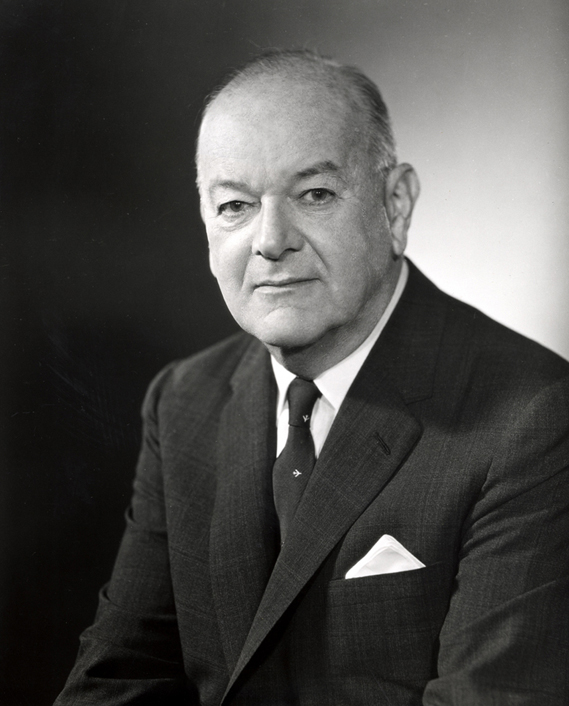
C. R. Smith
Former United States Secretary of Commerce · U.S. Department of Commerce · 1968–1969
C. R. Smith served as United States Secretary of Commerce (1968–1969). The page below collects sourced biographical facts, the appointment record, and provenance for Smith.
Key facts
- Full name
- C. R. Smith
- Department
- U.S. Department of Commerce
- Office
- United States Secretary of Commerce
- Status
- Former secretary
- Appointment
- Senate-confirmed
- Tenure
- 1968–1969
- Confirmed
- —
- Born
- 1899
- Died
- 1990
- First year in office
- 1968
- Dataset version
- 1.20260703
Appointment & service record
United States Secretary of Commerce · 1968–1969
- Department
- U.S. Department of Commerce
- Appointment
- Senate-confirmed
- Appointing president
- —
- Confirmed
- —
Department, appointment type (Senate-confirmed, acting, recess, or designated), appointing president, confirmation status, and service dates are drawn from Wikidata and the White House Cabinet roster.[1][2][3]
Sources
- [1]https://www.wikidata.org/wiki/Q1148985Wikidata · retrieved 2026-07-03
- [2]https://www.whitehouse.gov/administration/cabinet/whitehouse.gov · retrieved 2026-07-03
- [3]https://www.wikidata.org/wiki/Q639738wikidata-cabinet · retrieved 2026-07-03
Biographical narrative
1,024 words · sourced from the Wikipedia REST extract
Cyrus Rowlett Smith was a prominent American businessman and public servant whose career spanned aviation, military logistics, and federal commerce policy. Born in the late nineteenth century, he rose from modest beginnings to become the chief executive of one of the world’s largest airlines, served as a major general in the Army Air Forces during World War II, and was appointed United States Secretary of Commerce by President Lyndon B. Johnson for a brief period in the late 1960s.
Early life and career
Cyrus Rowlett Smith entered the world on September 9, 1899, in Minerva, Texas, a small community within Milam County. His parents were Roy Edgerton Smith and Marion Burck. Although he did not complete high school, Smith pursued higher education at the University of Texas, where he studied before leaving to enter the workforce. His first professional role was as an accountant with the firm Peat Marwick Mitchell, a position that introduced him to the intricacies of business finance and record‑keeping.
After his accounting stint, Smith diversified his entrepreneurial interests. He managed a Western apparel store and later operated a company that supplied state records concerning new mothers to manufacturers of baby products. These early ventures provided him with experience in both retail operations and specialized data services.
Smith’s aviation career began in 1928 when Texas industrialist Alva Pearl Barrett established Texas Air Transport (TAT), which would evolve into Southern Air Transport. Smith joined TAT as a vice president in 1929, and through subsequent mergers the company became part of American Airlines. His adept management of the Southern operation caught the attention of E. L. Cord, then owner of American Airlines, who appointed him to oversee the airline’s nationwide network. In 1934, Smith was named president of American Airlines, a position he would hold for more than three decades.
During his tenure as chief executive, Smith cultivated an informal yet decisive leadership style. He favored direct communication, often issuing personally typed one‑page memos that addressed operational matters and strategic initiatives. Colleagues noted his ability to forge close relationships with both executives and employees; it was said he knew many of the airline’s staff by name even after years in office. His management approach emphasized results over ceremony, earning him a reputation for being able to secure large contracts on the strength of personal trust.
Smith’s influence extended beyond internal operations. He cultivated a strong partnership with Douglas Aircraft, which facilitated American Airlines’ adoption of the Douglas DC‑3 and later the DC‑6. In addition, he was an early advocate for what would become LaGuardia Airport in New York City, recognizing its strategic importance for trans‑Atlantic travel. His commitment to safety was publicly demonstrated in 1934 when he published an advertisement titled “Why Dodge This Question: Afraid To Fly?”—a pioneering effort that openly addressed airline safety concerns at a time when the topic was largely avoided.
In 1946, Smith helped break Pan American’s monopoly on international air travel by establishing American Overseas Airlines. He also introduced the Admirals Club, the first member‑only lounge system in the airline industry, providing passengers with exclusive amenities. The 1950s saw Smith steering American Airlines into the jet age; he selected the Boeing 707 for domestic service before competitors adopted the Douglas DC‑8. His lobbying efforts led to the Federal Aviation Administration’s implementation of a mandatory retirement age of sixty for commercial pilots—a policy that remained in effect until it was revised in 2007.
Smith also expanded American’s presence in media and technology. In 1953, he created the radio program Music ‘Til Dawn, which aired on major CBS stations during overnight hours and attracted millions of listeners over its fifteen‑year run. That same year, a meeting with an IBM representative resulted in the development of SABRE, one of the first computerized ticketing systems used by airlines worldwide.
After stepping down from American Airlines in 1968 to accept a federal appointment, Smith returned briefly to the company in 1973 for six months during a period of corporate mismanagement. He retired permanently after that stint, remarking that the industry had evolved beyond his own experience.
Cabinet tenure
Smith’s transition from aviation executive to public office was facilitated by longstanding political connections, particularly within Texas. His friendship with prominent figures such as Lyndon B. Johnson, Jesse Jones, and Sam Rayburn positioned him for federal service. In 1968, President Lyndon B. Johnson appointed Smith as United States Secretary of Commerce, a role he held until 1969. The Senate confirmed his appointment, although the specific vote tally and confirmation date are not recorded in the available sources.
During his brief tenure, Smith brought to the Department of Commerce his extensive experience in large‑scale operations, logistics, and international trade—skills honed during his time leading a major airline and serving as a senior officer in the Army Air Forces. His appointment reflected the administration’s interest in leveraging private sector expertise within federal agencies.
Legacy
Cyrus Rowlett Smith’s impact on American aviation is widely recognized. He guided American Airlines from a regional carrier to an international powerhouse, pioneering innovations such as early jet service, passenger lounges, and computerized reservation systems. His emphasis on safety communication helped shift public perception of air travel during the 1930s. The mandatory retirement age policy he championed influenced pilot training and health standards for decades.
Beyond aviation, Smith’s military service contributed to the efficient operation of the Air Transport Command during World II, a critical component of Allied logistics. His leadership style—characterized by directness, personal engagement, and a focus on results—served as a model for both corporate executives and public officials.
Smith’s brief period in federal office underscored his versatility, demonstrating that expertise gained in the private sector could be applied to national economic policy. Although his time as Secretary of Commerce was short, it reflected a broader trend of appointing industry leaders to government positions during the mid‑twentieth century.
Cyrus Rowlett Smith passed away on April 4, 1990, leaving behind a legacy that continues to influence airline management practices, aviation safety standards, and the integration of private sector experience into public service. His career exemplifies how leadership across multiple domains can shape national industries and policies over time.
Sources & provenance
Every quantitative or attributable claim above carries a per-section [N] marker that resolves to the corresponding URL below. Each entry records the upstream provider, the canonical URL, and the timestamp at which the underlying source was retrieved.
Key facts
- https://www.wikidata.org/wiki/Q1148985Wikidata · retrieved 2026-07-03
- https://www.whitehouse.gov/administration/cabinet/whitehouse.gov · retrieved 2026-07-03
- https://www.wikidata.org/wiki/Q639738wikidata-cabinet · retrieved 2026-07-03
Biographical narrative
- https://en.wikipedia.org/wiki/C._R._SmithWikipedia · retrieved 2026-07-03
Explore the Cabinet
The Cabinet includes the Vice President and the heads of the 15 executive departments. Browse the full roster of current and former secretaries, or explore how the Cabinet fits into the federal government.