
Historical · U.S. Department of Commerce
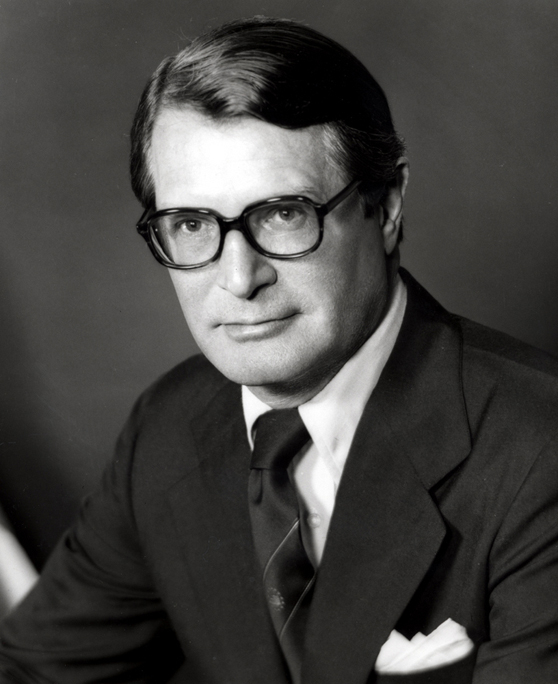
Elliot Richardson
Former United States Secretary of Commerce · U.S. Department of Commerce · 1976–1977
Elliot Richardson served as United States Secretary of Commerce (1976–1977). The page below collects sourced biographical facts, the appointment record, and provenance for Richardson.
Key facts
- Full name
- Elliot Richardson
- Department
- U.S. Department of Commerce
- Office
- United States Secretary of Commerce
- Status
- Former secretary
- Appointment
- Senate-confirmed
- Tenure
- 1976–1977
- Confirmed
- —
- Born
- 1920
- Died
- 1999
- First year in office
- 1976
- Dataset version
- 1.20260703
Appointment & service record
United States Secretary of Commerce · 1976–1977
- Department
- U.S. Department of Commerce
- Appointment
- Senate-confirmed
- Appointing president
- —
- Confirmed
- —
Department, appointment type (Senate-confirmed, acting, recess, or designated), appointing president, confirmation status, and service dates are drawn from Wikidata and the White House Cabinet roster.[1][2][3]
Sources
- [1]https://www.wikidata.org/wiki/Q719808Wikidata · retrieved 2026-07-03
- [2]https://www.whitehouse.gov/administration/cabinet/whitehouse.gov · retrieved 2026-07-03
- [3]https://www.wikidata.org/wiki/Q639738wikidata-cabinet · retrieved 2026-07-03
Biographical narrative
886 words · sourced from the Wikipedia REST extract
Elliot Lee Richardson was an American lawyer who served in several senior positions within the United States federal government during the 1970s, including four cabinet posts and a diplomatic assignment. His career spanned both legal practice and public service, culminating in his appointment as Secretary of Commerce under President Gerald Ford from 1976 to 1977.
Early life and career
Elliot Lee Richardson was born on July 20, 1920, in Boston, Massachusetts. He grew up in a family with strong ties to the medical profession; his father, Edward Peirson Richardson, was a physician and professor at Harvard Medical School, and several of his relatives held positions at that institution or Massachusetts General Hospital. Richardson’s early education took place at the Park School in Brookline and Milton Academy in Milton, both located in Massachusetts.
He entered Harvard College in 1938, earning an A.B. degree in philosophy in 1941. While a student he lived in Winthrop House and contributed to the editorial staff of the Harvard Lampoon. After completing his undergraduate studies, Richardson enlisted in the United States Army during World War II. He served as a combat medic with the U.S. 4th Infantry Division, participating in the Normandy invasion on June 6, 1944. During that campaign he was involved in actions at Utah Beach and later earned both the Bronze Star Medal and the Purple Heart with an oak‑leaf cluster for his service. Richardson was discharged in 1945 with the rank of first lieutenant.
Following the war, Richardson attended Harvard Law School, where he served as president of the Harvard Law Review. After graduating in 1947, he clerked for Judge Learned Hand on the United States Court of Appeals for the Second Circuit and for Associate Justice Felix Frankfurter on the Supreme Court of the United States. He then joined the Boston law firm Ropes & Gray (then known as Ropes, Gray, Best, Coolidge & Rugg). Although he enjoyed a successful private practice, Richardson felt drawn to public service.
In 1957, President Dwight D. Eisenhower appointed him assistant secretary for legislation in the Department of Health, Education and Welfare. In that role he worked on the development of federal programs such as the National Defense Education Act and Social Security legislation. Two years later, in 1959, Eisenhower named Richardson United States Attorney for the District of Massachusetts. During his tenure he built a reputation as a rigorous prosecutor, particularly noted for his work against tax fraud.
Richardson’s political career at the state level began with his election as lieutenant governor of Massachusetts in 1964 and continued when he was elected attorney general in 1966. He remains the most recent Republican to hold that office as of 2025.
Cabinet tenure
In 1969, Richardson entered the Nixon administration as United States Under Secretary of State. The following year he was promoted to a cabinet position, serving as Secretary of Health, Education and Welfare until January 1973. Afterward he held the post of Secretary of Defense for a brief period before being appointed Attorney General in May 1973. His tenure as attorney general is most noted for his resignation over President Nixon’s directive to fire special prosecutor Archibald Cox during the Watergate investigation; Richardson’s departure contributed to the erosion of confidence that ultimately led to the president’s resignation.
After the conclusion of the Nixon administration, Richardson returned to public service under President Gerald Ford. In March 1975 he was named United States Ambassador to the United Kingdom. The following year, in 1976, Ford appointed him Secretary of Commerce. His confirmation by the United States Senate marked his fourth cabinet appointment. He served in that capacity until 1977.
Following the end of the Ford administration, Richardson resumed private legal practice in Washington, D.C. He also provided counsel to President Jimmy Carter on matters related to maritime law. In 1984 he sought election to the United States Senate but was unsuccessful; he lost the Republican primary to Ray Shamie.
Richardson passed away on December 31, 1999.
Legacy
Elliot Richardson’s career is distinguished by his service across multiple branches of government and in a range of roles that spanned domestic policy, defense, law enforcement, diplomacy, and commerce. His willingness to resign from the position of Attorney General during a national crisis exemplified a commitment to legal principles over executive pressure. The breadth of his cabinet experience—holding four distinct positions—places him among a small group of officials who have served in such varied capacities.
His work as United States Attorney for Massachusetts left an imprint on federal prosecution, particularly through his focus on tax fraud cases. In the realm of legislative development, Richardson contributed to foundational programs during his time at the Department of Health, Education and Welfare, including involvement with the National Defense Education Act and Social Security legislation.
In the diplomatic arena, his tenure as Ambassador to the United Kingdom represented a continuation of his engagement in international affairs following his earlier service within the State Department. As Secretary of Commerce, he oversaw federal responsibilities related to trade and economic development during the mid‑1970s.
Richardson’s legacy is also reflected in his influence on subsequent generations of public servants who have navigated the intersection of law, policy, and governance. His career trajectory—from private practice to high-level government appointments—illustrates a path of sustained public service grounded in legal expertise and administrative leadership.
Sources & provenance
Every quantitative or attributable claim above carries a per-section [N] marker that resolves to the corresponding URL below. Each entry records the upstream provider, the canonical URL, and the timestamp at which the underlying source was retrieved.
Key facts
- https://www.wikidata.org/wiki/Q719808Wikidata · retrieved 2026-07-03
- https://www.whitehouse.gov/administration/cabinet/whitehouse.gov · retrieved 2026-07-03
- https://www.wikidata.org/wiki/Q639738wikidata-cabinet · retrieved 2026-07-03
Biographical narrative
- https://en.wikipedia.org/wiki/Elliot_RichardsonWikipedia · retrieved 2026-07-03
Explore the Cabinet
The Cabinet includes the Vice President and the heads of the 15 executive departments. Browse the full roster of current and former secretaries, or explore how the Cabinet fits into the federal government.