
Historical · U.S. Department of Commerce
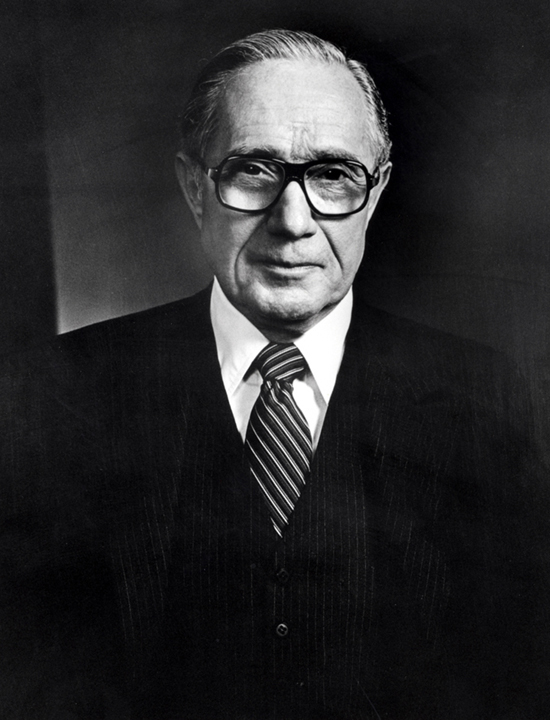
Philip Klutznick
Former United States Secretary of Commerce · U.S. Department of Commerce · 1980–1981
Philip Klutznick served as United States Secretary of Commerce (1980–1981). The page below collects sourced biographical facts, the appointment record, and provenance for Klutznick.
Key facts
- Full name
- Philip Klutznick
- Department
- U.S. Department of Commerce
- Office
- United States Secretary of Commerce
- Status
- Former secretary
- Appointment
- Senate-confirmed
- Tenure
- 1980–1981
- Confirmed
- —
- Born
- 1907
- Died
- 1999
- First year in office
- 1980
- Dataset version
- 1.20260704
Appointment & service record
United States Secretary of Commerce · 1980–1981
- Department
- U.S. Department of Commerce
- Appointment
- Senate-confirmed
- Appointing president
- —
- Confirmed
- —
Department, appointment type (Senate-confirmed, acting, recess, or designated), appointing president, confirmation status, and service dates are drawn from Wikidata and the White House Cabinet roster.[1][2][3][4]
Sources
- [1]https://www.wikidata.org/wiki/Q953998Wikidata · retrieved 2026-07-04
- [2]https://www.whitehouse.gov/administration/cabinet/whitehouse.gov · retrieved 2026-07-04
- [3]https://www.wikidata.org/wiki/Q639738wikidata-cabinet · retrieved 2026-07-04
- [4]https://www.commerce.gov/about/history/past-secretariescommerce.gov past-secretaries roster · retrieved 2026-07-04
Biographical narrative
801 words · sourced from the Wikipedia REST extract
Philip Morris Klutznick was an American lawyer, businessman, and public administrator who served as United States Secretary of Commerce from 1980 to 1981 under President Jimmy Carter. Prior to his cabinet appointment, he had a long career in law, housing development, and Jewish communal leadership, holding prominent positions such as president of B’nai B’rith and the World Jewish Congress.
Early life and career
Philip Klutznick was born on July 9, 1907, in Kansas City, Missouri. His parents, Morris and Minnie Klutznick, had emigrated from Russian Poland two years earlier, bringing with them a tradition of community involvement that would shape Philip’s later work. In 1924 he helped establish the second chapter of the Jewish fraternal youth organization Aleph Zadik Aleph (AZA) and became its second Grand Aleph Godol in 1925. After completing high school, Klutznick served as the first executive director of AZA.
He pursued higher education at the University of Kansas in Lawrence and the University of Nebraska before earning a Bachelor of Laws from Creighton University in Omaha in 1930. Following his graduation, he practiced law while also engaging in housing construction projects. During World War II, Klutznick oversaw the building of homes for defense workers across the eastern United States, including the residential town of Oak Ridge, Tennessee, which housed parts of the Manhattan Project.
After the war, Klutznick partnered with Marshall Field & Company to develop suburban shopping malls in the Chicago area. He later joined American Community Developers, contributing to the creation of Park Forest, a suburb south of Chicago. In 1953 he was elected president of B’nai B’rith, serving two three‑year terms. His leadership focused on strengthening the organization’s internal structure, expanding membership, and supporting youth programs. Klutznick also traveled extensively in the United States to discuss B’nai B’rith’s support for school desegregation and the civil rights movement.
Klutznick’s public service extended into international affairs. In 1957 he served a brief term as a delegate to the United Nations, and in 1960 he was appointed U.S. representative on the UN Economic and Social Council (ECOSOC), working closely with Ambassador Adlai Stevenson II. He resigned from this post two years later, citing challenges in aligning political objectives with economic and social priorities. In subsequent years he continued to engage in international issues, including completing a survey of Brazilian housing for the Johnson administration and collaborating with the United Nations Association of the United States.
A particular focus of Klutznick’s career was Middle Eastern affairs and Israel–United States relations. As B’nai B’rith president, he visited Israel and advocated for the use of German reparations funds to support Jewish organizations. He met with Secretary of State John Foster Dulles to discuss Middle Eastern policy. In 1977 he became president of the World Jewish Congress (WJC), succeeding Nahum Goldmann. During his tenure, Klutznick participated in negotiations preceding the 1977 Camp David Accords, meeting with Israeli leader Menachem Begin, Egyptian President Anwar Sadat, and President Carter. He also convened a commission headed by Guy de Rothschild to examine the economic implications of Arab–Israeli peace for Israel and the international Jewish community.
Cabinet tenure
Klutznick was confirmed by the Senate as United States Secretary of Commerce on January 9, 1980, at the age of 72. His appointment made him the oldest first‑time cabinet appointee in U.S. history at that time—a record later surpassed by Wilbur Ross in 2017. He served under President Jimmy Carter until January 19, 1981. Upon his confirmation, Klutznick took a leave of absence from the WJC and eventually stepped down as its president, passing leadership to Edgar Bronfman Sr.
Legacy
Philip Klutznick’s legacy spans several domains. In Jewish communal life, he is remembered for modernizing B’nai B’rith’s structure, expanding membership, and supporting youth initiatives. His tenure at the World Jewish Congress was marked by active engagement in Middle Eastern diplomacy, including participation in discussions that preceded the Camp David Accords and the establishment of a commission to assess the economic aspects of Arab–Israeli peace.
Klutznick also contributed to international policy through his work with the United Nations and later through reports such as the Seven Springs Report (1981), which gathered insights from leaders across Israel, Saudi Arabia, Jordan, Syria, Egypt, and the West Bank. In 1982 he co‑issued the Paris Declaration with Nahum Goldmann and Pierre Mendès France, calling for an end to the siege of Beirut and encouraging negotiations with the Palestine Liberation Organization.
In public administration, his appointment as Secretary of Commerce at a senior age highlighted the value of experience in cabinet roles. Though his term was brief, it underscored a career that bridged private enterprise, legal practice, Jewish communal leadership, and international diplomacy.
Philip Klutznick passed away on August 14, 1999. His multifaceted contributions left an enduring imprint on American public service, Jewish community organization, and Middle Eastern diplomatic efforts.
Sources & provenance
Every quantitative or attributable claim above carries a per-section [N] marker that resolves to the corresponding URL below. Each entry records the upstream provider, the canonical URL, and the timestamp at which the underlying source was retrieved.
Key facts
- https://www.wikidata.org/wiki/Q953998Wikidata · retrieved 2026-07-04
- https://www.whitehouse.gov/administration/cabinet/whitehouse.gov · retrieved 2026-07-04
- https://www.wikidata.org/wiki/Q639738wikidata-cabinet · retrieved 2026-07-04
- https://www.commerce.gov/about/history/past-secretariescommerce.gov past-secretaries roster · retrieved 2026-07-04
Biographical narrative
- https://en.wikipedia.org/wiki/Philip_KlutznickWikipedia · retrieved 2026-07-04
Explore the Cabinet
The Cabinet includes the Vice President and the heads of the 15 executive departments. Browse the full roster of current and former secretaries, or explore how the Cabinet fits into the federal government.