
Historical · U.S. Department of Commerce
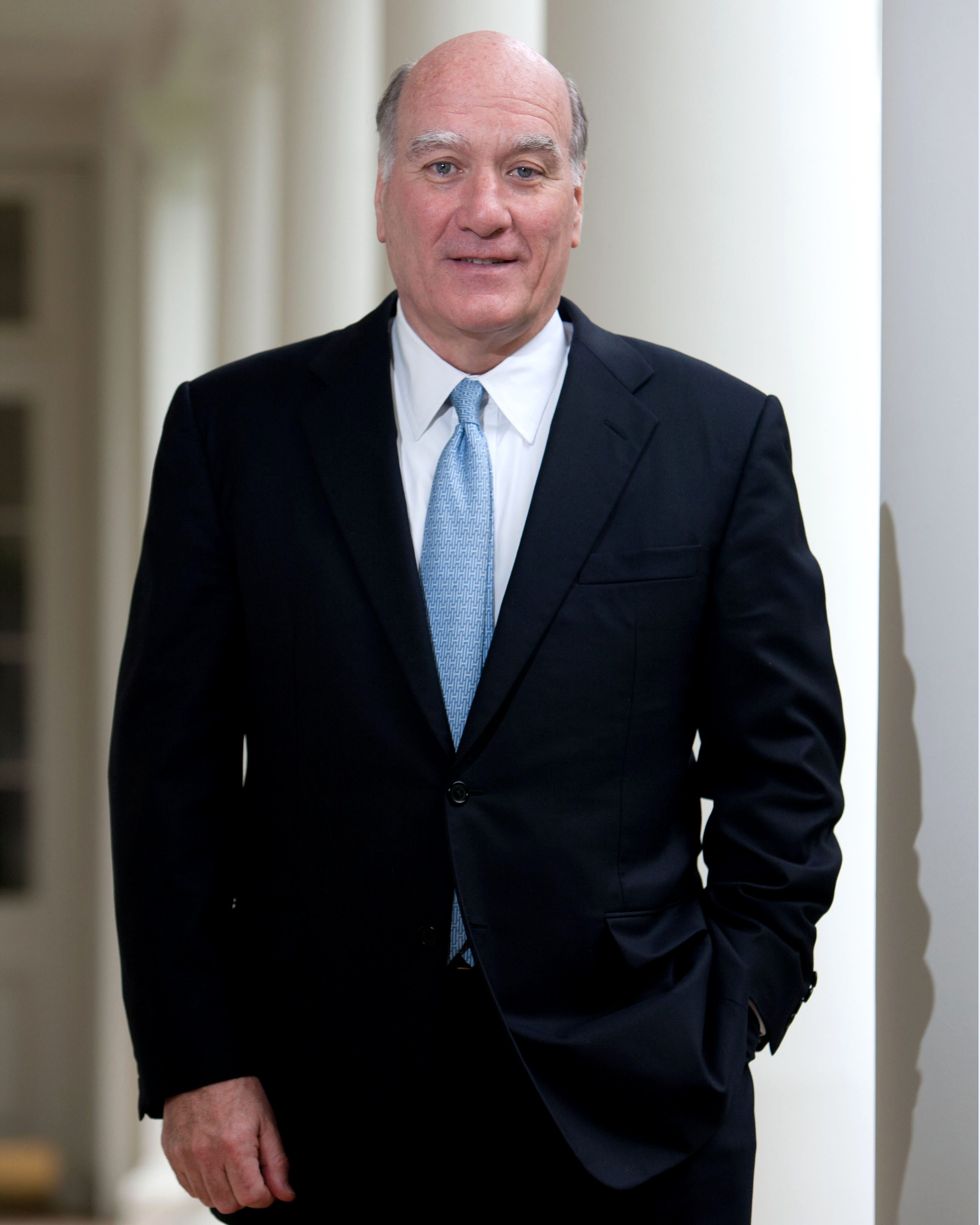
William M. Daley
Former United States Secretary of Commerce · U.S. Department of Commerce · 1997–2000
William M. Daley served as United States Secretary of Commerce (1997–2000). The page below collects sourced biographical facts, the appointment record, and provenance for Daley.
Key facts
- Full name
- William M. Daley
- Department
- U.S. Department of Commerce
- Office
- United States Secretary of Commerce
- Status
- Former secretary
- Appointment
- Senate-confirmed
- Tenure
- 1997–2000
- Confirmed
- —
- Born
- 1948
- Died
- —
- First year in office
- 1997
- Dataset version
- 1.20260703
Appointment & service record
United States Secretary of Commerce · 1997–2000
- Department
- U.S. Department of Commerce
- Appointment
- Senate-confirmed
- Appointing president
- —
- Confirmed
- —
Department, appointment type (Senate-confirmed, acting, recess, or designated), appointing president, confirmation status, and service dates are drawn from Wikidata and the White House Cabinet roster.[1][2][3]
Sources
- [1]https://www.wikidata.org/wiki/Q1370400Wikidata · retrieved 2026-07-03
- [2]https://www.whitehouse.gov/administration/cabinet/whitehouse.gov · retrieved 2026-07-03
- [3]https://www.wikidata.org/wiki/Q639738wikidata-cabinet · retrieved 2026-07-03
Biographical narrative
868 words · sourced from the Wikipedia REST extract
William Michael Daley (born August 9, 1948) is an American lawyer and banker who served as the United States Secretary of Commerce from 1997 to 2000 under President Bill Clinton. Prior to his cabinet appointment he held a variety of legal, banking, and public‑service positions, including membership on the board of Fannie Mae and leadership roles in major financial institutions. After leaving the Department of Commerce he returned to the private sector, taking executive posts at SBC Communications, JPMorgan Chase & Co., and other corporations, while also engaging in political campaigns and civic organizations.
Early life and career
Daley was born in Chicago on August 9, 1948, the youngest of seven children of Richard J. Daley, who served as mayor of Chicago from 1955 to 1976, and Eleanor “Sis” Daley (née Guilfoyle). He grew up in Bridgeport, a neighborhood on the city’s South Side, and attended St. Ignatius College Prep, graduating in 1966. He earned a bachelor’s degree from Loyola University Chicago in 1970 before pursuing legal studies at John Marshall Law School, now part of the University of Illinois Chicago School of Law. After obtaining his Juris Doctor he joined the law firm Daley and George.
From 1977 to 1980 Daley stepped away from private practice to serve on the Advisory Council of Economic Opportunity, a federal agency focused on poverty alleviation and economic development. He later returned to the legal field, working as a partner at Mayer Brown & Platt between 1993 and 1997. In parallel with his legal career he entered banking; he served as first vice chairman of Amalgamated Bank of Chicago from 1989 to 1990, then as president and chief operating officer from 1990 to 1993.
Daley’s public‑service credentials expanded in the early 1990s when President Clinton appointed him to the board of Fannie Mae in 1993. He remained on that board until 1997, overseeing aspects of the federal mortgage finance system.
Cabinet tenure
In 1997 President Clinton nominated Daley for the position of United States Secretary of Commerce. The Senate confirmed his appointment, and he assumed office later that year. During his confirmation hearing Daley emphasized a commitment to restoring the department’s reputation and ensuring that its programs operated with integrity. As secretary he oversaw U.S. export promotion, trade policy formulation, and public‑private partnership initiatives. He directed the 2000 census effort and implemented organizational changes aimed at streamlining operations, including the elimination of several positions within the department.
Daley also led multiple trade missions abroad and expanded the department’s engagement with emerging e‑commerce markets. In early 2000 he stepped down from his cabinet role to become the general chairman of Vice President Al Gore’s presidential campaign, succeeding Tony Coelho in that capacity.
Legacy
After leaving government service Daley returned to the private sector, holding a series of senior executive positions. He was appointed president of SBC Communications in December 2001 and later served as Midwest Chairman of JPMorgan Chase & Co. following its acquisition of Bank One Corporation in 2004. From 2007 to 2010 he headed the corporate responsibility program at JPMorgan Chase, focusing on sustainability and community engagement initiatives.
Daley’s corporate portfolio extended beyond banking; he worked with companies such as Boeing, Merck & Co., and Boston Properties. In recognition of his civic contributions he received the Chicago History Museum’s “Making History Award” for Distinction in Civic Leadership in 2010. He joined Argentière Capital AG as a managing partner in 2014 and served briefly as vice chairman of BNY Mellon from June to October 2019.
On November 7, 2019, Daley was announced as the head of public affairs for Wells Fargo and one of its vice chairmen; he began that role on November 13, 2019, serving until 2023. In addition to his corporate responsibilities, Daley has maintained active involvement in higher education governance, currently holding a trustee position at Northwestern University, and is a member of the Council on Foreign Relations.
Daley’s political engagement continued after his cabinet tenure. He managed his brother Richard M. Daley’s campaign for Cook County State’s Attorney in 1980 and assisted in subsequent campaigns for Chicago mayor, including the successful 1989 election that began Richard M. Daley’s six‑term tenure. In national politics he served as general chairman of Al Gore’s 2000 presidential campaign and later supported Barack Obama during the 2008 Democratic primaries, joining the advisory board of the Obama‑Biden Transition Project on November 5, 2008.
In January 2011 President Barack Obama appointed Daley as White House Chief of Staff. He succeeded Rahm Emanuel in that role, taking office on January 13, 2011. During his tenure he addressed national energy concerns; for example, in March 2011 he discussed the administration’s consideration of using the Strategic Petroleum Reserve amid rising oil prices linked to geopolitical events. Daley also appeared in a 2011 photograph taken by Pete Souza in the White House Situation Room and participated in a presidential state visit later that year.
Daley’s career reflects a blend of legal, financial, and governmental experience, with significant influence on trade policy, corporate governance, and civic leadership. His service as Secretary of Commerce and subsequent roles in both public administration and private industry have positioned him as a prominent figure in American economic and political circles.
Sources & provenance
Every quantitative or attributable claim above carries a per-section [N] marker that resolves to the corresponding URL below. Each entry records the upstream provider, the canonical URL, and the timestamp at which the underlying source was retrieved.
Key facts
- https://www.wikidata.org/wiki/Q1370400Wikidata · retrieved 2026-07-03
- https://www.whitehouse.gov/administration/cabinet/whitehouse.gov · retrieved 2026-07-03
- https://www.wikidata.org/wiki/Q639738wikidata-cabinet · retrieved 2026-07-03
Biographical narrative
- https://en.wikipedia.org/wiki/William_M._DaleyWikipedia · retrieved 2026-07-03
Explore the Cabinet
The Cabinet includes the Vice President and the heads of the 15 executive departments. Browse the full roster of current and former secretaries, or explore how the Cabinet fits into the federal government.