
Historical · U.S. Department of Education
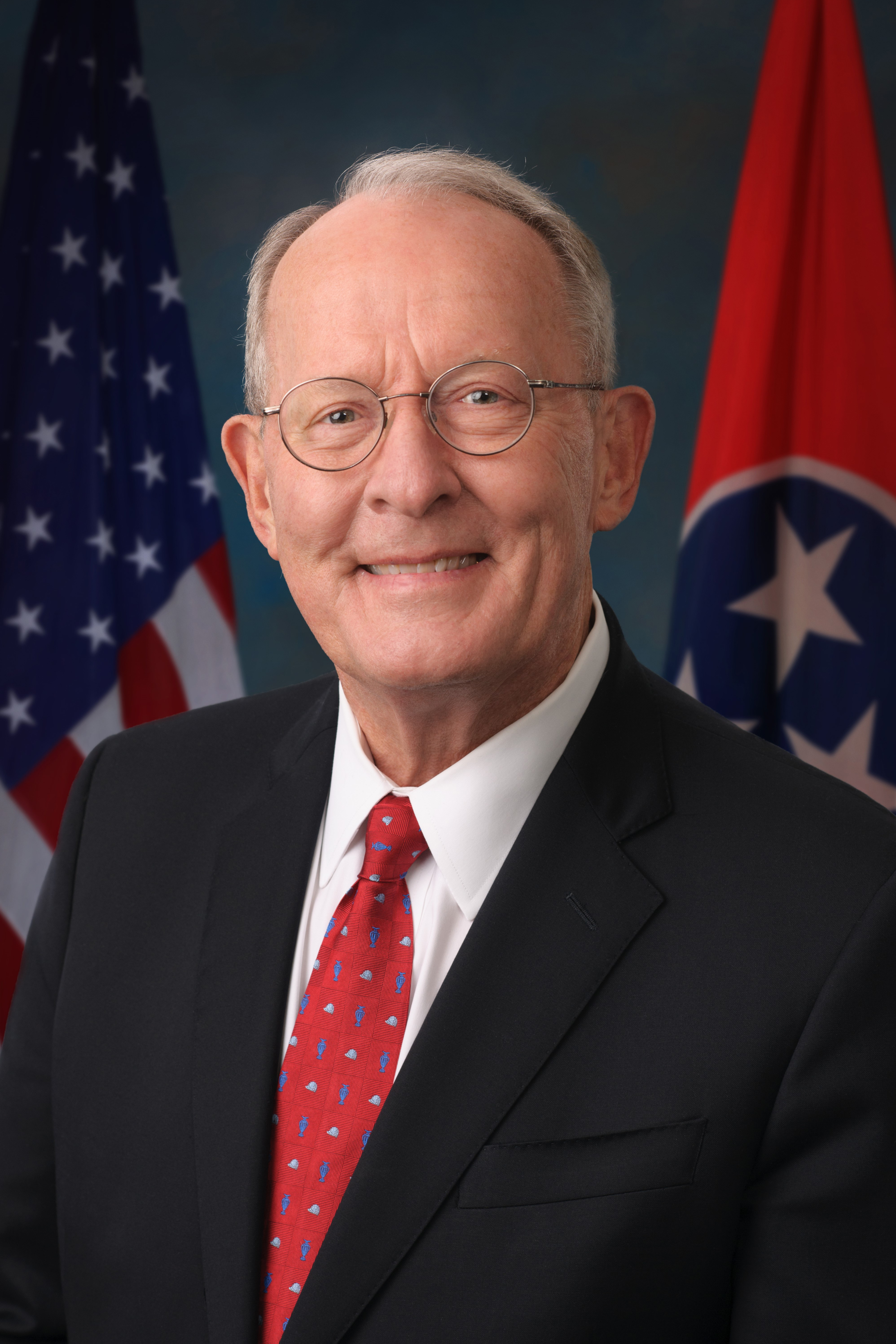
Lamar Alexander
Former United States Secretary of Education · U.S. Department of Education · 1991–1993
Lamar Alexander served as United States Secretary of Education (1991–1993). The page below collects sourced biographical facts, the appointment record, and provenance for Alexander.
Key facts
- Full name
- Lamar Alexander
- Department
- U.S. Department of Education
- Office
- United States Secretary of Education
- Status
- Former secretary
- Appointment
- Senate-confirmed
- Tenure
- 1991–1993
- Confirmed
- —
- Born
- 1940
- Died
- —
- First year in office
- 1991
- Dataset version
- 1.20260703
Appointment & service record
United States Secretary of Education · 1991–1993
- Department
- U.S. Department of Education
- Appointment
- Senate-confirmed
- Appointing president
- —
- Confirmed
- —
Department, appointment type (Senate-confirmed, acting, recess, or designated), appointing president, confirmation status, and service dates are drawn from Wikidata and the White House Cabinet roster.[1][2][3]
Sources
- [1]https://www.wikidata.org/wiki/Q419976Wikidata · retrieved 2026-07-03
- [2]https://www.whitehouse.gov/administration/cabinet/whitehouse.gov · retrieved 2026-07-03
- [3]https://www.wikidata.org/wiki/Q639738wikidata-cabinet · retrieved 2026-07-03
Biographical narrative
830 words · sourced from the Wikipedia REST extract
Lamar Alexander served as the United States Secretary of Education from 1991 to 1993, a period during which he worked under President George H. W. Bush and was confirmed by the Senate. Prior to his cabinet appointment, Alexander had an extensive career in public service that included roles as governor of Tennessee and president of the University of Tennessee. After leaving the Department of Education, he continued to influence national policy through subsequent positions in academia and the United States Senate.
Early life and career
Lamar Alexander was born on July 3, 1940, in Maryville, Tennessee, into a family that placed a strong emphasis on education. His mother, Genevra Floreine (née Rankin), taught preschool children, while his father, Andrew Lamar Alexander, served as the principal of a high school. The family’s Scotch‑Irish heritage was noted in local histories, and it helped shape Alexander’s sense of community service.
He attended Maryville High School, where he distinguished himself academically and took on leadership responsibilities, serving as class president. His early engagement with civic life extended to the Tennessee Boys State program, where he held the position of governor, an experience that introduced him to state governance and public policy at a young age.
In 1962, Alexander graduated Phi Beta Kappa from Vanderbilt University with a Bachelor of Arts degree in Latin American studies. While at Vanderbilt, he was active in campus life: he joined Sigma Chi fraternity, competed on the track and field team, edited *The Vanderbilt Hustler*—the university’s primary student newspaper—and advocated for the open admission of African Americans, reflecting his early commitment to educational equity.
He earned a Juris Doctor from New York University School of Law in 1965. Following law school, Alexander clerked for Judge John Minor Wisdom on the United States Court of Appeals for the Fifth Circuit in New Orleans from 1965 to 1966. He then entered Washington, D.C., working as a legislative assistant for Senator Howard Baker in 1967 and later serving as an aide to President Richard Nixon’s executive assistant Bryce Harlow in 1969.
Returning to Tennessee in 1970, Alexander managed the successful gubernatorial campaign of Winfield Dunn, who became the first Republican governor of the state in fifty years. His involvement in that campaign provided him with experience in statewide political organization and strategy.
Alexander co‑founded the Nashville law firm Dearborn and Ewing, where he practiced privately while remaining active in politics. He sought the governorship of Tennessee twice before winning: an unsuccessful run in 1974 was followed by a victorious campaign in 1978, after which he served two consecutive terms as governor until 1987. During his tenure as governor, Alexander chaired the National Governors Association from 1985 to 1986 and oversaw various state initiatives that reflected his focus on fiscal responsibility and educational improvement.
After leaving the governorship, Alexander transitioned to academia, becoming president of the University of Tennessee in 1988. He held that position until 1991, when he accepted an appointment by President George H. W. Bush as United States Secretary of Education.
Cabinet tenure
Alexander was confirmed by the Senate and served as Secretary of Education from 1991 to 1993. In this role, he worked under President George H. W. Bush and focused on national education policy during a period marked by discussions about reform and accountability. Alexander supported the implementation of the “America 2000” education reform initiative, which sought to improve educational outcomes across the United States through a combination of standards, assessment, and resource allocation.
During his tenure, Alexander oversaw the Department of Education’s efforts to promote educational equity and to strengthen federal programs aimed at supporting schools and students. He worked with Congress and state officials to advance policies that reflected the administration’s priorities for improving academic achievement and expanding access to quality education. His leadership in the department helped shape the national conversation about how best to address challenges within public schooling systems.
After completing his service as Secretary of Education, Alexander returned to Tennessee, where he continued to influence educational policy through his subsequent roles in academia and government.
Legacy
Alexander’s tenure as Secretary of Education contributed to a broader national dialogue on education reform during the early 1990s. His advocacy for the America 2000 initiative reflected an emphasis on accountability and standards that would later inform subsequent federal legislation. The policies he supported helped lay groundwork for future discussions about how best to measure student performance and allocate resources to improve educational outcomes.
Beyond his cabinet service, Alexander’s continued involvement in public affairs—first as president of the University of Tennessee and later as a United States Senator from Tennessee—extended his influence on education policy at both state and national levels. In the Senate, he chaired key committees related to health, education, labor, and pensions, further shaping legislation that impacted educational funding and standards. He introduced the Every Student Succeeds Act, which supplanted the No Child Left Behind Act in 2015.
Alexander also served as Chairman of the Senate Republican Conference from 200
Sources & provenance
Every quantitative or attributable claim above carries a per-section [N] marker that resolves to the corresponding URL below. Each entry records the upstream provider, the canonical URL, and the timestamp at which the underlying source was retrieved.
Key facts
- https://www.wikidata.org/wiki/Q419976Wikidata · retrieved 2026-07-03
- https://www.whitehouse.gov/administration/cabinet/whitehouse.gov · retrieved 2026-07-03
- https://www.wikidata.org/wiki/Q639738wikidata-cabinet · retrieved 2026-07-03
Biographical narrative
- https://en.wikipedia.org/wiki/Lamar_AlexanderWikipedia · retrieved 2026-07-03
Explore the Cabinet
The Cabinet includes the Vice President and the heads of the 15 executive departments. Browse the full roster of current and former secretaries, or explore how the Cabinet fits into the federal government.