
Historical · U.S. Department of Energy
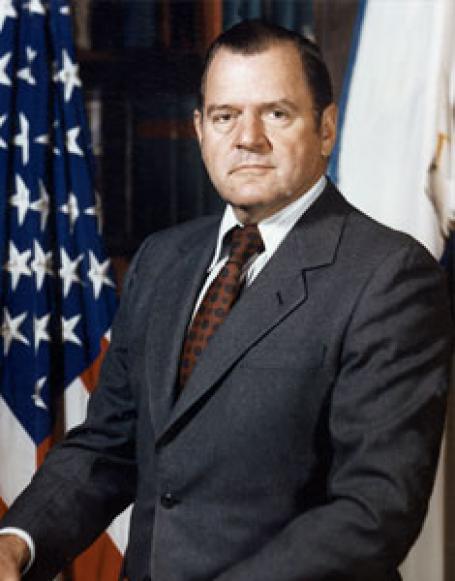
Charles Duncan, Jr.
Former United States Secretary of Energy · U.S. Department of Energy · 1979–1981
Charles Duncan, Jr. served as United States Secretary of Energy (1979–1981). The page below collects sourced biographical facts, the appointment record, and provenance for Jr..
Key facts
- Full name
- Charles Duncan, Jr.
- Department
- U.S. Department of Energy
- Office
- United States Secretary of Energy
- Status
- Former secretary
- Appointment
- Senate-confirmed
- Tenure
- 1979–1981
- Confirmed
- —
- Born
- 1926
- Died
- 2022
- First year in office
- 1979
- Dataset version
- 1.20260703
Appointment & service record
United States Secretary of Energy · 1979–1981
- Department
- U.S. Department of Energy
- Appointment
- Senate-confirmed
- Appointing president
- —
- Confirmed
- —
Department, appointment type (Senate-confirmed, acting, recess, or designated), appointing president, confirmation status, and service dates are drawn from Wikidata and the White House Cabinet roster.[1][2][3]
Sources
- [1]https://www.wikidata.org/wiki/Q1066337Wikidata · retrieved 2026-07-03
- [2]https://www.whitehouse.gov/administration/cabinet/whitehouse.gov · retrieved 2026-07-03
- [3]https://www.wikidata.org/wiki/Q639738wikidata-cabinet · retrieved 2026-07-03
Biographical narrative
1,021 words · sourced from the Wikipedia REST extract
Charles William Duncan Jr. was an American businessman and public servant who held several high‑profile positions in the federal government during the late twentieth century. Born in Houston, Texas, he pursued a career that spanned private industry, corporate leadership, and national administration. Duncan served as the United States Secretary of Energy from 1979 to 1981 under President Jimmy Carter, after previously acting as Deputy Secretary of Defense during the Iranian Revolution. His professional life also included long‑term involvement with The Coca‑Cola Company, various financial institutions, and educational and philanthropic organizations.
Early life and career
Charles Duncan was born on September 9, 1926, in Houston, Texas, where he grew up as the elder of two children. He attended Sewanee Military Academy in Tennessee before enlisting in the United States Army Air Corps during World War II; his service lasted two years. Following the war, Duncan enrolled at Rice University and earned a bachelor’s degree in chemical engineering in 1947. He then pursued graduate studies for two years in business administration at the University of Texas.
After completing his education, Duncan worked briefly as a roustabout and later as a chemical engineer with Humble Oil and Refining Corporation, which is now known as Exxon. In 1957 he joined his family’s coffee enterprise, Duncan Coffee Company, founded by his uncle and father in 1918. The company had established several well‑known grocery brands such as Admiration and Bright & Early across Texas and neighboring states. Duncan rose through the organization’s ranks and was named president in 1958.
Under Duncan’s leadership, Duncan Coffee expanded into the instant coffee market by acquiring production plants in New Jersey and Pennsylvania. He also broadened the company’s product line through acquisitions of regional ground‑coffee brands, including Butternut Foods in Nebraska and Fleetwood Coffee in Tennessee. In addition to these expansions, he developed Maryland Club Coffee, a premium blend positioned as a competitor to Maxwell House.
The coffee business entered a new phase on May 8, 1964, when it merged with The Coca‑Cola Company. Duncan joined the Coke board of directors and took charge of the newly formed Coca‑Cola Foods Division, which encompassed both the coffee and citrus (Minute Maid) segments. Three years later, in 1967, he was appointed chairman of Coca‑Cola Europe, a role that had him oversee operations across nearly 300 bottling plants throughout Europe and Asia, including locations in Eastern Europe, Southwest Asia, and North Africa. During his tenure there, the company introduced its products into Bulgaria, marking the first penetration of an American consumer marketing brand behind the Iron Curtain.
In 1970 Duncan returned to Atlanta and was named president of The Coca‑Cola Company in 1971. He held that position until 1974, a period during which the firm experienced significant growth and modernized its advertising strategies. While serving as president, he purchased the TE Ranch southwest of Cody, Wyoming—a working cattle ranch originally established in 1895 by William F. “Buffalo Bill” Cody—from Coca‑Cola’s R. W. Woodruff. After stepping down from the presidency, Duncan left Coca‑Cola in 1974 to resume operations in Houston, where he became chairman of Rotan Mosle Financial Corp. and Robertson Distribution Systems.
Cabinet tenure
Charles Duncan entered federal service at the recommendation of an advisor to President Jimmy Carter. In 1977, Carter nominated him as Deputy Secretary of Defense, a position that placed him in the midst of the Iranian Revolution. During this period he advocated for the removal of the prohibition on women serving in combat roles and undertook multiple diplomatic missions to countries experiencing significant political upheaval, including Iran. His military advisor at the time was Colonel Colin Powell, who later described Duncan as a mentor.
In July 1979, President Carter nominated Duncan to succeed James Schlesinger as Secretary of Energy. The Senate confirmed his appointment, and he served from 1979 until the end of Carter’s administration in 1981. Although critics noted that Duncan had limited experience in the oil sector, he earned a reputation for strong managerial abilities. His tenure was marked by a focus on conservation measures alongside efforts to increase production. He implemented quotas on oil imports, promoted weatherization programs for homes, and secured subsidies for gasohol, all of which were intended to alleviate the effects of the energy crisis that had intensified during the late 1970s.
Legacy
After leaving Washington in January 1981, Duncan returned to Houston and co‑founded Gulf Partners with his brother John H. Duncan. The private investment firm became a significant player in regional finance. In addition to his role at Gulf Partners, he served on the boards of several major corporations, including The Coca‑Cola Company, JPMorgan Chase, Texas Eastern, American Express, and United Technologies. He also held positions with Houston NFL Holdings LP as a limited partner, and he was treasurer and director of The Methodist Hospital.
Duncan’s influence extended into education and public service in Texas. At the request of Governor Mark White and businessman Ross Perot, he joined the Select Committee on Public Education and the Texas State Board of Education. His participation contributed to the development of the “no pass no play” rule, which required student athletes to maintain passing grades in all academic courses.
A long‑time supporter of Rice University, Duncan served as a trustee on its Board of Governors for many years. From 1982 to 1996 he chaired the board and guided the university through several key initiatives, including leading searches for new presidents, advocating for the recruitment of international students, and helping establish the James A. Baker III Institute for Public Policy—a nonpartisan think‑tank. In recognition of his service, Rice named its new computational engineering building Anne and Charles Duncan Hall in 1996.
In June 2007, after fifty years of marriage, Duncan and his wife celebrated their anniversary and later that month donated $30 million to Rice University to establish a center dedicated to advancing research and education. He continued to serve on the Welch Foundation board until October 2004.
Charles William Duncan Jr. passed away on October 18, 2022, leaving behind a legacy characterized by leadership in both private industry and public administration, as well as significant contributions to educational institutions and philanthropic causes.
Sources & provenance
Every quantitative or attributable claim above carries a per-section [N] marker that resolves to the corresponding URL below. Each entry records the upstream provider, the canonical URL, and the timestamp at which the underlying source was retrieved.
Key facts
- https://www.wikidata.org/wiki/Q1066337Wikidata · retrieved 2026-07-03
- https://www.whitehouse.gov/administration/cabinet/whitehouse.gov · retrieved 2026-07-03
- https://www.wikidata.org/wiki/Q639738wikidata-cabinet · retrieved 2026-07-03
Biographical narrative
- https://en.wikipedia.org/wiki/Charles_Duncan_Jr.Wikipedia · retrieved 2026-07-03
Explore the Cabinet
The Cabinet includes the Vice President and the heads of the 15 executive departments. Browse the full roster of current and former secretaries, or explore how the Cabinet fits into the federal government.