
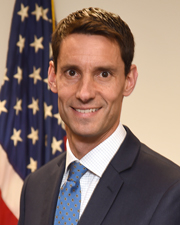
Historical · U.S. Department of Health and Human Services
Norris Cochran
Acting
Former Acting United States Secretary of Health and Human Services · U.S. Department of Health and Human Services · 2021–2021
Norris Cochran served as Acting United States Secretary of Health and Human Services (2021–2021). The page below collects sourced biographical facts, the appointment record, and provenance for Cochran.
Key facts
- Full name
- Norris Cochran
- Department
- U.S. Department of Health and Human Services
- Office
- United States Secretary of Health and Human Services
- Status
- Former secretary
- Appointment
- Acting
- Tenure
- 2021–2021
- Confirmed
- —
- Born
- 1970
- Died
- —
- First year in office
- 2021
- Dataset version
- 1.20260704
Appointment & service record
United States Secretary of Health and Human Services · 2021–2021
- Department
- U.S. Department of Health and Human Services
- Appointment
- Acting
- Appointing president
- —
- Confirmed
- Not confirmed
Department, appointment type (Senate-confirmed, acting, recess, or designated), appointing president, confirmation status, and service dates are drawn from Wikidata and the White House Cabinet roster.[1][2][3]
Sources
- [1]https://www.wikidata.org/wiki/Q28530101Wikidata · retrieved 2026-07-04
- [2]https://www.whitehouse.gov/administration/cabinet/whitehouse.gov · retrieved 2026-07-04
- [3]https://www.wikidata.org/wiki/Q639738wikidata-cabinet · retrieved 2026-07-04
Biographical narrative
836 words · sourced from the Wikipedia REST extract
Norris Whitehouse Cochran IV is an American public‑service professional whose career has spanned several decades within federal agencies that shape national health policy and fiscal management. He served as the acting United States Secretary of Health and Human Services during two brief periods—first in 2017 and again from January to March 2021—while also holding senior budgetary positions at the Department of Health and Human Services (HHS). His work has focused on overseeing discretionary programs, directing the department’s budgeting functions, and managing financial resources for the agency.
Early life and career
Norris Cochran was born in 1970. He pursued higher education at the University of California, Santa Barbara, where he earned a Bachelor of Arts degree in history of public policy in 1993. Seeking to deepen his understanding of governmental operations, he continued his studies at the Lyndon B. Johnson School of Public Affairs at the University of Texas at Austin, obtaining a Master of Public Affairs in 1995.
Cochran entered federal service in 1996 when he joined the Centers for Disease Control and Prevention (CDC). His initial role placed him within an agency that plays a central part in public health surveillance, disease prevention, and emergency response. After several years at the CDC, he transitioned to the Office of Management and Budget (OMB) in 2001, where he worked in the Health Division until 2006. In this capacity, Cochran contributed to the development and oversight of budgetary policies that affect a broad range of health programs across the federal government.
On February 5, 2006, Cochran moved to the Department of Health and Human Services. By 2007 he had advanced to the position of Director of the Division of Discretionary Programs, a role that involved managing funding allocations for various HHS initiatives that are not mandated by law but are essential for programmatic flexibility. In March 2009, he was appointed Deputy Assistant Secretary of Budget—a senior executive service position—where he took on responsibilities as the director of the HHS Office of Budget. This office is tasked with preparing and administering the department’s budget, ensuring fiscal accountability, and coordinating financial planning across HHS agencies.
Cabinet tenure
Cochran’s expertise in budgeting and program management positioned him to serve in acting leadership roles within HHS during periods of transition. In 2017, he stepped into the role of acting United States Secretary of Health and Human Services following a vacancy at the top of the department. His appointment was temporary, intended to maintain continuity while a permanent secretary was selected.
He returned to the acting secretary position in January 2021, serving until March of that year. During this tenure, Cochran oversaw the day‑to‑day operations of HHS, guiding the agency through ongoing public health challenges and ensuring that its programs continued to function effectively. His leadership during these interims was complemented by his broader responsibilities as Deputy Assistant Secretary of Budget, where he directed financial resources for the department.
In addition to his acting secretary duties, Cochran served as Acting Assistant Secretary for Financial Resources throughout most of the Trump administration. In this capacity, he managed the allocation and oversight of funds across HHS programs, working closely with other senior officials to align fiscal priorities with departmental objectives.
Legacy
Norris Cochran’s career reflects a sustained commitment to the financial stewardship of one of the nation’s largest federal agencies. His progression from entry‑level positions at the CDC to senior budgetary roles demonstrates a deepening expertise in both public health policy and fiscal management. As Director of the Division of Discretionary Programs, he helped shape how HHS allocates resources to programs that require flexibility beyond statutory mandates.
His tenure as Deputy Assistant Secretary of Budget placed him at the heart of HHS’s financial planning processes. In this role, Cochran was responsible for preparing comprehensive budget proposals, monitoring expenditures, and ensuring compliance with federal accounting standards. His leadership contributed to maintaining fiscal discipline within the department during periods of significant policy shifts and evolving public health needs.
During his two stints as acting Secretary of Health and Human Services, Cochran provided stable oversight at a time when the department faced complex challenges. While specific policy initiatives from these brief periods are not detailed in available records, his stewardship ensured that HHS’s core functions—such as disease prevention, health insurance programs, and public health research—continued to operate without interruption.
Beyond administrative duties, Cochran’s work has had a broader impact on the structure of federal budgeting within the health sector. By coordinating financial resources across multiple agencies under HHS, he helped foster an environment in which program managers could secure necessary funding while adhering to stringent fiscal guidelines. His experience underscores the importance of transparent and accountable budgetary practices in maintaining public trust.
In sum, Norris Cochran’s professional journey illustrates a blend of policy knowledge and financial acumen that has served the Department of Health and Human Services across multiple administrations. His contributions to budgeting processes, program oversight, and interim leadership have helped sustain the department’s mission to protect and improve the health of all Americans.
Sources & provenance
Every quantitative or attributable claim above carries a per-section [N] marker that resolves to the corresponding URL below. Each entry records the upstream provider, the canonical URL, and the timestamp at which the underlying source was retrieved.
Key facts
- https://www.wikidata.org/wiki/Q28530101Wikidata · retrieved 2026-07-04
- https://www.whitehouse.gov/administration/cabinet/whitehouse.gov · retrieved 2026-07-04
- https://www.wikidata.org/wiki/Q639738wikidata-cabinet · retrieved 2026-07-04
Biographical narrative
- https://en.wikipedia.org/wiki/Norris_CochranWikipedia · retrieved 2026-07-04
Explore the Cabinet
The Cabinet includes the Vice President and the heads of the 15 executive departments. Browse the full roster of current and former secretaries, or explore how the Cabinet fits into the federal government.