
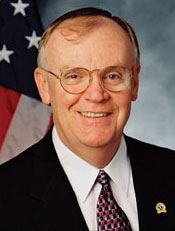
Historical · U.S. Department of Homeland Security
James Loy
Acting
Former Acting United States Secretary of Homeland Security · U.S. Department of Homeland Security · 2005–2005
James Loy served as Acting United States Secretary of Homeland Security (2005–2005). The page below collects sourced biographical facts, the appointment record, and provenance for Loy.
Key facts
- Full name
- James Loy
- Department
- U.S. Department of Homeland Security
- Office
- United States Secretary of Homeland Security
- Status
- Former secretary
- Appointment
- Acting
- Tenure
- 2005–2005
- Confirmed
- —
- Born
- 1942
- Died
- —
- First year in office
- 2005
- Dataset version
- 1.20260704
Appointment & service record
United States Secretary of Homeland Security · 2005–2005
- Department
- U.S. Department of Homeland Security
- Appointment
- Acting
- Appointing president
- —
- Confirmed
- Not confirmed
Department, appointment type (Senate-confirmed, acting, recess, or designated), appointing president, confirmation status, and service dates are drawn from Wikidata and the White House Cabinet roster.[1][2][3]
Sources
- [1]https://www.wikidata.org/wiki/Q1314442Wikidata · retrieved 2026-07-04
- [2]https://www.whitehouse.gov/administration/cabinet/whitehouse.gov · retrieved 2026-07-04
- [3]https://www.wikidata.org/wiki/Q639738wikidata-cabinet · retrieved 2026-07-04
Biographical narrative
823 words · sourced from the Wikipedia REST extract
James Milton Loy is a retired admiral of the United States Coast Guard who served in several high‑level federal positions, including as Deputy Secretary and acting Secretary of Homeland Security during the early years of that department. His career spans military command, homeland security administration, and post‑government service in both private industry and academic leadership.
Early life and career
James Milton Loy was born on August 10, 1942, in Altoona, Pennsylvania. As a youth he earned the rank of Eagle Scout with the Boy Scouts of America, later receiving the Distinguished Eagle Scout Award for his lifetime achievements. He entered the United States Coast Guard Academy in 1960, completing his undergraduate education there before pursuing graduate studies. Loy obtained master’s degrees in history and government from Wesleyan University and a master’s degree in public administration from the University of Rhode Island.
Loy began his professional life as a commissioned officer in the U.S. Coast Guard. During the Vietnam War he commanded the patrol boat USCGC Point Lomas, gaining combat experience that would inform his later leadership roles. Over the course of his career he advanced through the ranks to become an admiral. In May 1998 he was appointed the twenty‑first Commandant of the U.S. Coast Guard, a position he held until 2002.
As commandant, Loy faced the unprecedented challenge posed by the September 11 attacks in 2001. He oversaw the rapid resumption of sea‑borne trade after the Coast Guard had temporarily closed major ports for security reasons. In addition to domestic responsibilities, he represented the United States at the International Maritime Organization (IMO). His leadership was instrumental in securing approval and implementation of the International Ship and Port Facility Security Code, which entered into effect in 2004.
In May 2002, Secretary Norman Mineta of the Department of Transportation appointed Loy as Deputy Undersecretary for the newly formed Transportation Security Administration (TSA). He guided the agency through its creation and subsequent integration into the Department of Homeland Security. On October 23, 2003, President George W. Bush nominated Loy to serve as Deputy Secretary of Homeland Security; he was sworn in on November 4, 2003.
Cabinet tenure
Loy’s service within the Department of Homeland Security culminated in a brief period as acting Secretary. Following the departure of Tom Ridge, Loy assumed the role of Acting Secretary from February 1 to February 15, 2005, until Michael Chertoff was confirmed and sworn into office. After stepping down from the acting position, he resigned as Deputy Secretary effective March 1, 2005.
Shortly after leaving government service, Loy transitioned to the private sector. On April 7, 2005, the Cohen Group announced that he would join the firm as a Senior Counselor, beginning his tenure on April 18, 2005. Later that year, on August 5, 2005, he accepted a position on the Board of Directors for Lockheed Martin.
In addition to corporate roles, Loy remained engaged with maritime and security education. In the fall of 2006, he was honored as the first Chair of the Tyler Institute for Leadership at the U.S. Coast Guard Academy. Through this position he facilitated visits by distinguished speakers and helped design a specialized class that taught cadets about securing the international shipping industry.
Legacy
James Loy’s career reflects a sustained focus on maritime security, homeland protection, and organizational leadership. His command of the Coast Guard during the immediate aftermath of 9/11 demonstrated his capacity to restore critical infrastructure while coordinating with international partners. The adoption of the International Ship and Port Facility Security Code under his guidance marked a significant advance in global port security standards.
Within the nascent Department of Homeland Security, Loy’s tenure as Deputy Secretary contributed to the integration of transportation security functions into a broader homeland protection framework. His brief service as acting Secretary placed him at the helm during a pivotal transition period for the department.
After leaving public office, Loy continued to influence national security policy through his positions in private industry and academia. As a senior counselor at the Cohen Group and director at Lockheed Martin, he applied his operational experience to corporate strategy. His leadership of the Tyler Institute for Leadership extended his impact to the next generation of Coast Guard officers.
Beyond professional duties, Loy has been active in public discourse on national security matters. In 2020 he joined a group of former Republican national‑security officials in signing a statement that expressed concerns about then‑President Donald Trump’s fitness for office and supported Vice President Joe Biden’s candidacy. In July 2022, he participated with other former military leaders in condemning the actions surrounding the January 6, 2021 attack on the U.S. Capitol.
Loy’s service has been recognized through multiple honors, including the Distinguished Eagle Scout Award and election as a fellow of the National Academy of Public Administration in 2004. His career trajectory—from Coast Guard officer to federal administrator and post‑government leader—illustrates a continued commitment to maritime safety, homeland security, and public service.
Sources & provenance
Every quantitative or attributable claim above carries a per-section [N] marker that resolves to the corresponding URL below. Each entry records the upstream provider, the canonical URL, and the timestamp at which the underlying source was retrieved.
Key facts
- https://www.wikidata.org/wiki/Q1314442Wikidata · retrieved 2026-07-04
- https://www.whitehouse.gov/administration/cabinet/whitehouse.gov · retrieved 2026-07-04
- https://www.wikidata.org/wiki/Q639738wikidata-cabinet · retrieved 2026-07-04
Biographical narrative
- https://en.wikipedia.org/wiki/James_LoyWikipedia · retrieved 2026-07-04
Explore the Cabinet
The Cabinet includes the Vice President and the heads of the 15 executive departments. Browse the full roster of current and former secretaries, or explore how the Cabinet fits into the federal government.