
Historical · U.S. Department of Housing and Urban Development
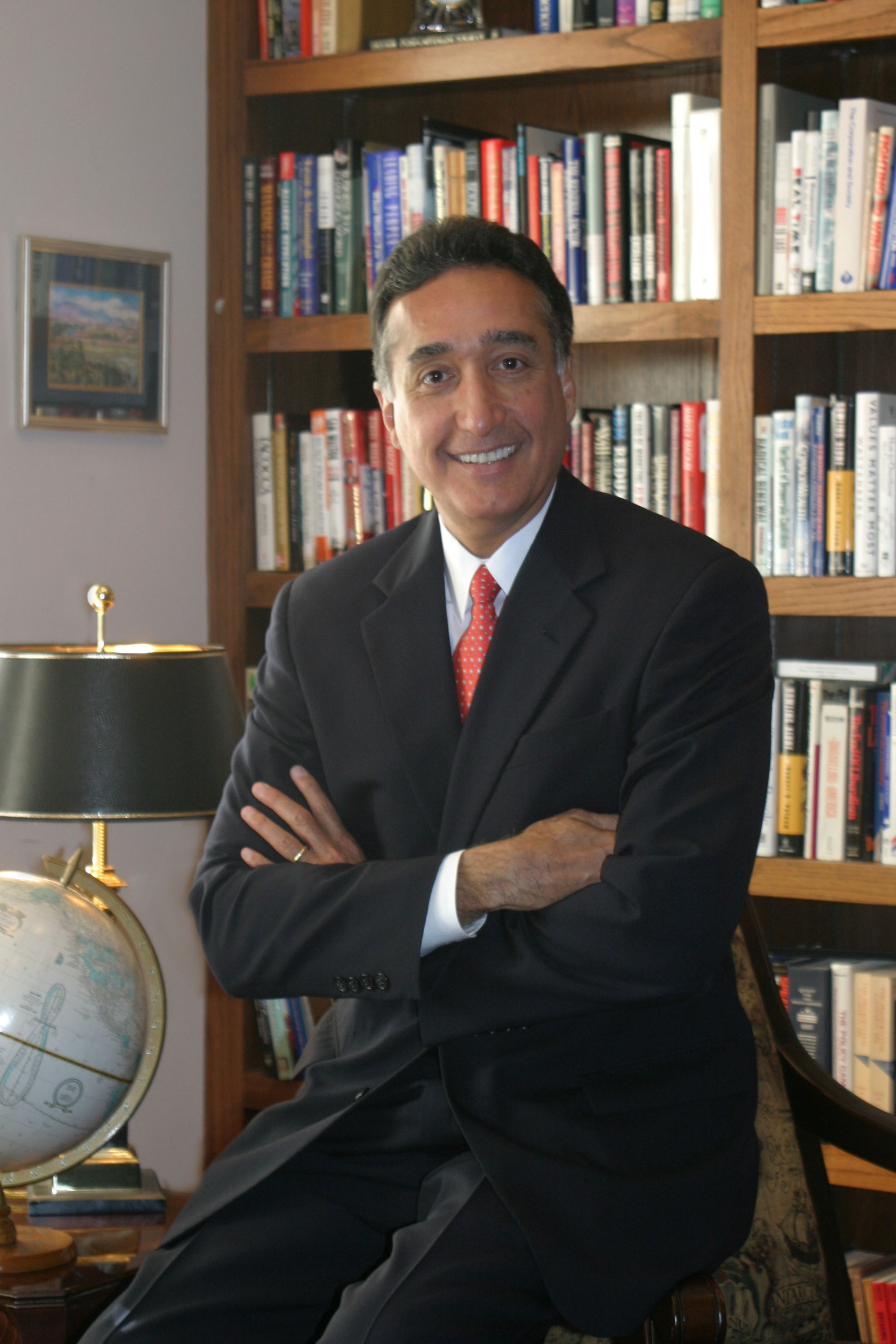
Henry Cisneros
Former United States Secretary of Housing and Urban Development · U.S. Department of Housing and Urban Development · 1993–1997
Henry Cisneros served as United States Secretary of Housing and Urban Development (1993–1997). The page below collects sourced biographical facts, the appointment record, and provenance for Cisneros.
Key facts
- Full name
- Henry Cisneros
- Department
- U.S. Department of Housing and Urban Development
- Office
- United States Secretary of Housing and Urban Development
- Status
- Former secretary
- Appointment
- Senate-confirmed
- Tenure
- 1993–1997
- Confirmed
- —
- Born
- 1947
- Died
- —
- First year in office
- 1993
- Dataset version
- 1.20260703
Appointment & service record
United States Secretary of Housing and Urban Development · 1993–1997
- Department
- U.S. Department of Housing and Urban Development
- Appointment
- Senate-confirmed
- Appointing president
- —
- Confirmed
- —
Department, appointment type (Senate-confirmed, acting, recess, or designated), appointing president, confirmation status, and service dates are drawn from Wikidata and the White House Cabinet roster.[1][2][3]
Sources
- [1]https://www.wikidata.org/wiki/Q1606601Wikidata · retrieved 2026-07-03
- [2]https://www.whitehouse.gov/administration/cabinet/whitehouse.gov · retrieved 2026-07-03
- [3]https://www.wikidata.org/wiki/Q639738wikidata-cabinet · retrieved 2026-07-03
Biographical narrative
1,109 words · sourced from the Wikipedia REST extract
Henry Gabriel Cisneros, born on June 11, 1947 in San Antonio, Texas, is an American public servant and businessman who has held significant roles in municipal and federal government. He served as the mayor of San Antonio from 1981 to 1989, becoming the city’s second Latino mayor and its first since 1842. In the Clinton administration he was appointed United States Secretary of Housing and Urban Development (HUD), a position he held from 1993 until 1997 after Senate confirmation. Throughout his career Cisneros has focused on urban planning, public housing revitalization, and community engagement across the United States.
Early life and career
Cisneros entered the world in a neighborhood that bordered San Antonio’s predominantly Mexican west side barrio, an area now known as the inner west side of the city. He received his early education at Catholic institutions: first at the Church of the Little Flower and later at Central Catholic Marianist High School. In 1964 he enrolled at Texas A&M University, where he became active in student leadership through the MSC Student Conference on National Affairs. During his sophomore year he shifted his major from aeronautical engineering to city management, a decision that foreshadowed his future focus on urban affairs. In 1967 he was selected by MSC SCONA to attend the annual Student Conference on United States Affairs at West Point.
While studying at Texas A&M, Cisneros served in the Corps of Cadets as a member of the Ross Volunteers and also held the position of combined band commander for the Fightin’ Texas Aggie Band. He earned a Bachelor of Arts in English in 1968 and followed that with a Master of Arts in Urban and Regional Planning in 1970, both from A&M. His pursuit of advanced study continued at Harvard University’s John F. Kennedy School of Government, where he completed a Master of Public Administration in 1973. In 1974 he engaged in doctoral research on urban economics at the Massachusetts Institute of Technology (MIT) and later received a Doctor of Public Administration from George Washington University in 1976. During his time at MIT he also served as an infantry officer in the Massachusetts Army National Guard.
Cisneros’ professional path began shortly after completing his undergraduate degree, when he worked in the office of San Antonio’s City Manager during the summer. While pursuing his master’s degree he held positions in the offices of the City Managers of Bryan, Texas, and later served as assistant director for President Lyndon B. Johnson’s Model Cities program, which aimed to revitalize urban neighborhoods in San Antonio. After graduating from A&M in 1970, he relocated to Washington, D.C., where he became an assistant to the Executive Vice President of the National League of Cities. In 1971 he was selected as a White House Fellow and served as an assistant to Secretary Elliot Richardson of Health, Education, and Welfare.
A Ford Foundation Grant in 1972 prompted Cisneros to move to Boston, where he earned a second master’s degree at Harvard while working as a teaching assistant in the Department of Urban Studies and Planning at MIT. In 1974 he declined a professorship offer from MIT and returned to San Antonio, taking up a faculty position in Public Administration at the University of Texas at San Antonio.
Cabinet tenure
Cisneros entered municipal politics in 1975 when he ran for city council as a candidate of the GGL (Gente de la Ciudad) party. He was elected the youngest city councilman in San Antonio’s history, a record that stood until 2003. During his time on the council he emphasized direct engagement with constituents: he worked in the sanitation department, walked patrol routes alongside police officers, administered first aid with ambulance attendants, and visited families living in public housing units. His populist positions addressed labor, water, education, and housing issues, and he cultivated strong support among Latino communities, particularly those residing on the city’s west side.
A significant moment of his council tenure occurred when the city faced a Justice Department order to adopt single-member districts that would provide greater direct representation for minority groups. Cisneros voted in favor of accepting the order, which led to the establishment of directly represented districts in 1977 and marked a shift toward more inclusive electoral practices. He was re-elected twice, in 1977 and 1979, representing Council District 1.
In 1981 he was elected mayor of San Antonio, serving until 1989. His mayoral administration focused on urban revitalization and community development, building upon his earlier experience with the Model Cities program. After leaving municipal office, Cisneros joined the federal government as the United States Secretary of Housing and Urban Development in 1993. Confirmed by the Senate, he served under President Bill Clinton until 1997.
During his tenure at HUD, Cisneros was credited with initiating the revitalization of many public housing developments across the country. He also helped formulate policies that contributed to achieving the nation’s highest-ever rate of homeownership. In addition to overseeing federal housing programs, he acted as the President’s chief representative to cities nationwide, traveling to more than two hundred municipalities and engaging directly with local leaders on issues ranging from urban planning to economic development.
When Cisneros announced his departure from HUD in 1997, reports emerged alleging that payments had been made to a former mistress. These allegations were reported contemporaneously but no further details are provided in the available sources.
Legacy
Henry Cisneros’ career reflects a sustained commitment to urban policy and community engagement at both local and national levels. His early work on San Antonio’s city council laid the groundwork for inclusive representation, particularly for Latino residents, by supporting reforms that increased direct electoral participation. As mayor, he continued to prioritize revitalization projects that addressed housing needs and economic opportunities within the city.
At the federal level, Cisneros’ leadership of HUD coincided with a period of significant progress in public housing renewal and homeownership rates. His role as the President’s liaison to cities facilitated dialogue between municipal governments and the federal administration, fostering collaboration on urban development initiatives across more than two hundred communities. While his tenure was not without controversy—most notably the allegations that surfaced at its conclusion—the overall trajectory of his service underscores a focus on improving housing conditions and promoting equitable access to homeownership.
Cisneros’ educational background in urban planning, public administration, and economics informed both his municipal and federal work, allowing him to approach complex urban challenges with analytical rigor. His career path—from student leader to city councilman, mayor, and cabinet secretary—illustrates a progression of increasing responsibility within the sphere of public service, marked by consistent attention to the needs of diverse communities and the practical aspects of urban governance.
Sources & provenance
Every quantitative or attributable claim above carries a per-section [N] marker that resolves to the corresponding URL below. Each entry records the upstream provider, the canonical URL, and the timestamp at which the underlying source was retrieved.
Key facts
- https://www.wikidata.org/wiki/Q1606601Wikidata · retrieved 2026-07-03
- https://www.whitehouse.gov/administration/cabinet/whitehouse.gov · retrieved 2026-07-03
- https://www.wikidata.org/wiki/Q639738wikidata-cabinet · retrieved 2026-07-03
Biographical narrative
- https://en.wikipedia.org/wiki/Henry_CisnerosWikipedia · retrieved 2026-07-03
Explore the Cabinet
The Cabinet includes the Vice President and the heads of the 15 executive departments. Browse the full roster of current and former secretaries, or explore how the Cabinet fits into the federal government.