
Historical · U.S. Department of Labor
John Thomas Dunlop
Former United States Secretary of Labor · U.S. Department of Labor · 1975–1976
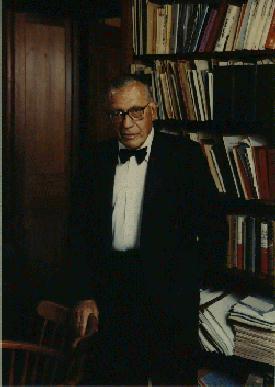
John Thomas Dunlop served as United States Secretary of Labor (1975–1976). The page below collects sourced biographical facts, the appointment record, and provenance for Dunlop.
Key facts
- Full name
- John Thomas Dunlop
- Department
- U.S. Department of Labor
- Office
- United States Secretary of Labor
- Status
- Former secretary
- Appointment
- Senate-confirmed
- Tenure
- 1975–1976
- Confirmed
- —
- Born
- 1914
- Died
- 2003
- First year in office
- 1975
- Dataset version
- 1.20260703
Appointment & service record
United States Secretary of Labor · 1975–1976
- Department
- U.S. Department of Labor
- Appointment
- Senate-confirmed
- Appointing president
- —
- Confirmed
- —
Department, appointment type (Senate-confirmed, acting, recess, or designated), appointing president, confirmation status, and service dates are drawn from Wikidata and the White House Cabinet roster.[1][2][3]
Sources
- [1]https://www.wikidata.org/wiki/Q382049Wikidata · retrieved 2026-07-03
- [2]https://www.whitehouse.gov/administration/cabinet/whitehouse.gov · retrieved 2026-07-03
- [3]https://www.wikidata.org/wiki/Q639738wikidata-cabinet · retrieved 2026-07-03
Biographical narrative
864 words · sourced from the Wikipedia REST extract
John Thomas Dunlop was a prominent American labor economist, educator, and public administrator whose career spanned academia, government advisory roles, and cabinet service. Born in 1914, he earned his doctorate at the University of California, Berkeley, and spent most of his professional life teaching at Harvard University, where he held leadership positions within the economics department and the Faculty of Arts and Sciences. In 1975, President Gerald Ford appointed him as United States Secretary of Labor, a position he held until 1976 after Senate confirmation. Beyond his cabinet tenure, Dunlop directed the Cost of Living Council, chaired a commission on worker‑management relations in the 1990s, and served as an arbitrator in numerous industrial disputes. He passed away in October 2003.
Early life and career
John Thomas Dunlop was born on July 5, 1914, in Placerville, California, where his family operated a pear orchard. When he was four years old, his parents—devoted Presbyterian missionaries—relocated the family to Cebu in the Philippines. He completed his primary and secondary education there before returning to the United States with his younger brother William to pursue higher studies. Initially rejected by the University of California, Berkeley, Dunlop enrolled at Marin Junior College in 1931. He later transferred to Berkeley, graduating summa cum laude in 1935, and continued at the institution for a Ph.D. in economics. His dissertation, completed in 1939, examined wage‑rate movements within the business cycle.
In 1937, Dunlop married Dorothy Emily Webb on July 6. That same year he received a fellowship to study at the University of Cambridge, where he worked under John Maynard Keynes. Although Keynes’ health limited their interaction, Dunlop’s fieldwork in cotton mills during this period led him to publish a significant paper in *The Economic Journal* in 1938 that addressed wage rigidity concepts in Keynesian theory.
Following his fellowship, Dunlop accepted a teaching fellowship at Harvard University’s economics department, a position he would hold for the remainder of his life. He earned tenure in 1945 and became a full professor by 1950. His administrative responsibilities grew over time: he chaired the Department of Economics from 1961 to 1966, served as Dean of the Faculty of Arts and Sciences between 1970 and 1973, and was appointed Thomas W. Lamont University Professor in 1971. Throughout his academic career, Dunlop focused on wage determination, the interplay of markets and institutions, and the role of unions in collective bargaining. His scholarship culminated in influential works such as *Industrial Relations Systems* (1958) and *Industrialism and Industrial Man* (1960), which introduced a comprehensive framework for understanding how product markets, regulatory environments, and institutional practices shape labor outcomes.
Cabinet tenure
Dunlop’s appointment as United States Secretary of Labor came in 1975 under President Gerald Ford. His confirmation by the Senate marked the culmination of decades of experience in both academic research and practical dispute resolution. During his brief tenure, which lasted until 1976, he oversaw the Department of Labor’s activities in accordance with federal policy objectives. Prior to becoming secretary, Dunlop had served as Director of the United States Cost of Living Council from 1973 to 1974, a role that involved assessing and advising on price stability measures.
Although his time in cabinet was relatively short, it reflected his broader commitment to applying economic analysis to labor market issues at the national level. His confirmation by the Senate underscored bipartisan confidence in his expertise and reputation as an impartial mediator in industrial relations matters.
Legacy
John Thomas Dunlop’s influence on the field of industrial relations is widely recognized. He is credited with developing the concept of an “industrial relations system,” a model that integrates product‑market dynamics, regulatory frameworks, and institutional practices to explain wage setting and workplace outcomes. This framework has become foundational in both academic study and practical analysis of labor markets.
Beyond theory, Dunlop’s career was marked by extensive advisory work across successive presidential administrations—from Franklin D. Roosevelt through Bill Clinton—providing counsel on economic stabilization and industrial relations. He served as an arbitrator and impartial chairman for numerous labor‑management committees, mediating disputes in a variety of industries during the post–World War II era. His leadership extended to government boards that addressed industrial relations conflicts and broader economic issues.
In the 1990s, Dunlop chaired the United States Commission on the Future of Worker‑Management Relations (1993–1995), producing the Dunlop Report in 1994, which offered recommendations for improving labor relations practices. His scholarly output included several influential books: *Industrial Relations Systems* (1958, revised 1993); *Industrialism and Industrial Man* (1960, coauthored); *Labor and the American Community* (1970, with Derek C. Bok); *Dispute Resolution, Negotiation and Consensus Building* (1984); and *The Management of Labor Unions* (1990). These works collectively advanced understanding of wage dynamics, collective bargaining strategies, and dispute resolution mechanisms.
Dunlop also mentored generations of doctoral students at Harvard, many of whom went on to prominent careers in labor economics, industrial relations research, and public policy. His teaching legacy is reflected in the continued application of his analytical frameworks by scholars and practitioners alike.
John Thomas Dunlop died on October 2, 2003. His career bridged academia, government service, and practical mediation, leaving a lasting imprint on both the study and practice of industrial relations in the United States.
Sources & provenance
Every quantitative or attributable claim above carries a per-section [N] marker that resolves to the corresponding URL below. Each entry records the upstream provider, the canonical URL, and the timestamp at which the underlying source was retrieved.
Key facts
- https://www.wikidata.org/wiki/Q382049Wikidata · retrieved 2026-07-03
- https://www.whitehouse.gov/administration/cabinet/whitehouse.gov · retrieved 2026-07-03
- https://www.wikidata.org/wiki/Q639738wikidata-cabinet · retrieved 2026-07-03
Biographical narrative
- https://en.wikipedia.org/wiki/John_Thomas_DunlopWikipedia · retrieved 2026-07-03
Explore the Cabinet
The Cabinet includes the Vice President and the heads of the 15 executive departments. Browse the full roster of current and former secretaries, or explore how the Cabinet fits into the federal government.