
Historical · U.S. Department of Labor
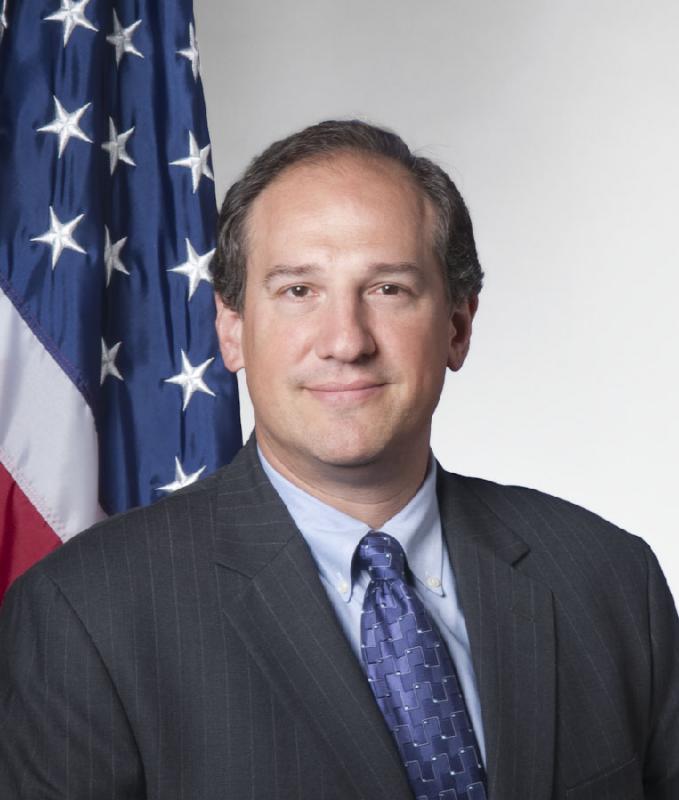
Seth Harris
Former United States Secretary of Labor · U.S. Department of Labor · 2013–2013
Seth Harris served as United States Secretary of Labor (2013–2013). The page below collects sourced biographical facts, the appointment record, and provenance for Harris.
Key facts
- Full name
- Seth Harris
- Department
- U.S. Department of Labor
- Office
- United States Secretary of Labor
- Status
- Former secretary
- Appointment
- Senate-confirmed
- Tenure
- 2013–2013
- Confirmed
- —
- Born
- 1962
- Died
- —
- First year in office
- 2013
- Dataset version
- 1.20260703
Appointment & service record
United States Secretary of Labor · 2013–2013
- Department
- U.S. Department of Labor
- Appointment
- Senate-confirmed
- Appointing president
- —
- Confirmed
- —
Department, appointment type (Senate-confirmed, acting, recess, or designated), appointing president, confirmation status, and service dates are drawn from Wikidata and the White House Cabinet roster.[1][2][3]
Sources
- [1]https://www.wikidata.org/wiki/Q4120997Wikidata · retrieved 2026-07-03
- [2]https://www.whitehouse.gov/administration/cabinet/whitehouse.gov · retrieved 2026-07-03
- [3]https://www.wikidata.org/wiki/Q639738wikidata-cabinet · retrieved 2026-07-03
Biographical narrative
936 words · sourced from the Wikipedia REST extract
Seth D. Harris is an American attorney, scholar, and former government official who served as the United States Secretary of Labor during a portion of President Barack Obama’s administration. Born in 1962, he pursued a career that combined legal practice, academic research, and public service, focusing particularly on labor law, employment economics, and disability policy. After his tenure in federal office, Harris continued to contribute to the field through teaching positions at several universities, advisory roles for early‑stage companies, and participation in transition teams for subsequent administrations.
Early life and career
Seth D. Harris was born on October 12, 1962. He grew up in a family with strong educational ties: his father, Dr. Jonathan Harris, was a high school teacher and author of young adult non‑fiction books; his mother, Martha Harris, served as a high school librarian before retiring. His brother, Paul Harris, is known for his work as a radio personality.
Harris completed his undergraduate education at Cornell University’s School of Industrial and Labor Relations, earning a Bachelor of Science degree in 1983. While an undergraduate, he was inducted into the Quill and Dagger society, a senior honor society at Cornell. He then attended New York University School of Law, where he earned a Juris Doctor. During law school, Harris served as editor‑in‑chief of the Review of Law & Social Change and became a member of the Order of the Coif, an academic honor society for law graduates.
Following graduation from NYU, Harris clerked for two federal judges: Chief Judge Gene Carter of the United States District Court for the District of Maine and Judge William C. Canby Jr. of the United States Court of Appeals for the Ninth Circuit. These early legal experiences provided a foundation for his later work in labor law.
Before joining the federal government, Harris spent seven years working within the U.S. Department of Labor in various policy roles. He served as Counselor to the Secretary and advised both President Bill Clinton’s first‑term Labor Secretary Robert Reich and second‑term Secretary Alexis Herman on legal, policy, and management matters related to labor issues.
Harris also built a substantial academic career. For nine years preceding his appointment to the Obama administration, he was a professor of law at New York Law School and directed its Labor & Employment Law Programs. His scholarship concentrated on the economics of labor and employment law, with particular emphasis on the employment provisions of the Americans with Disabilities Act. He published articles addressing the National Labor Relations Act, the Fair Labor Standards Act, worker organizing, and broader issues of employment discrimination.
In addition to his teaching duties, Harris served as a Senior Fellow for the Life Without Limits Project of the United Cerebral Palsy Association and was a member of Georgetown University Law School’s Workplace Flexibility 2010 National Advisory Commission. These roles reflected his ongoing interest in disability policy and workplace accommodations.
Cabinet tenure
Harris entered federal office during President Barack Obama’s first term. In February 2009, he was nominated to serve as the United States Deputy Secretary of Labor. The U.S. Senate confirmed him unanimously in May 2009, and he assumed the position later that year. As Deputy Secretary, Harris served from 2009 until January 16, 2014.
During his tenure, Harris became acting Secretary of Labor following the resignation of Hilda Solis in January 2013. For six months, he fulfilled the duties of the secretary while awaiting the appointment of a new permanent head of the department. In addition to his responsibilities within the Department of Labor, Harris served on the board of directors for the Overseas Private Investment Corporation.
Harris’s service concluded with his resignation from the Deputy Secretary position in January 2014. After leaving the Obama administration, he continued to engage in public policy work and academia.
Legacy
Seth D. Harris has made lasting contributions to labor law scholarship and public policy through both his academic research and his government service. His writings on the economics of labor and employment law have influenced discussions around modernizing workplace regulations, particularly in relation to independent contractors and gig economy workers. He has also addressed the legal frameworks surrounding disability accommodations, offering insights that inform contemporary debates about inclusive employment practices.
In the federal arena, Harris’s role as Deputy Secretary of Labor placed him at the center of policy development during a period marked by significant economic challenges. His leadership as acting secretary ensured continuity within the Department of Labor during a transitional phase. Moreover, his participation on the Overseas Private Investment Corporation board expanded his influence beyond domestic labor issues to international investment considerations.
Following his cabinet service, Harris continued to shape labor policy through academic appointments at Cornell University’s Institute for Public Affairs and School of Industrial & Labor Relations, as well as legal practice in Washington, D.C. He also served in a senior capacity within the Biden administration, acting as Deputy Assistant to the President for Labor and the Economy and deputy director of the National Economic Council until July 2022.
Beyond his formal roles, Harris remains active on corporate boards, advising early‑stage companies, and teaching at Northeastern University as a professor of practice in law and policy. His ongoing engagement with both scholarly communities and industry stakeholders reflects a sustained commitment to advancing labor standards and workplace equity.
Through a blend of legal expertise, academic rigor, and public service, Seth D. Harris has contributed to the evolution of U.S. labor policy, particularly in areas concerning employment economics, disability accommodations, and the regulation of emerging work arrangements. His career exemplifies a continued effort to align legal frameworks with contemporary workforce realities.
Sources & provenance
Every quantitative or attributable claim above carries a per-section [N] marker that resolves to the corresponding URL below. Each entry records the upstream provider, the canonical URL, and the timestamp at which the underlying source was retrieved.
Key facts
- https://www.wikidata.org/wiki/Q4120997Wikidata · retrieved 2026-07-03
- https://www.whitehouse.gov/administration/cabinet/whitehouse.gov · retrieved 2026-07-03
- https://www.wikidata.org/wiki/Q639738wikidata-cabinet · retrieved 2026-07-03
Biographical narrative
- https://en.wikipedia.org/wiki/Seth_HarrisWikipedia · retrieved 2026-07-03
Explore the Cabinet
The Cabinet includes the Vice President and the heads of the 15 executive departments. Browse the full roster of current and former secretaries, or explore how the Cabinet fits into the federal government.