
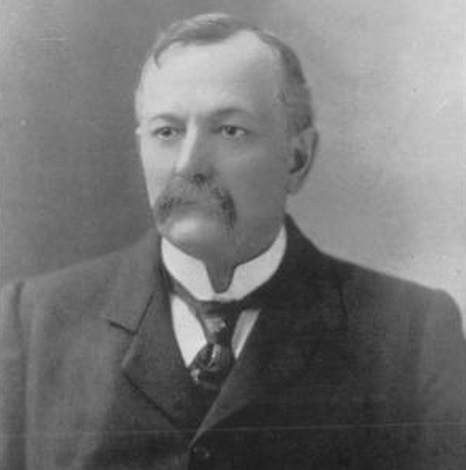
Historical · U.S. Department of State
Edwin F. Uhl
Acting
Former Acting United States Secretary of State · U.S. Department of State · 1895–1895
Edwin F. Uhl served as Acting United States Secretary of State (1895–1895). The page below collects sourced biographical facts, the appointment record, and provenance for Uhl.
Key facts
- Full name
- Edwin F. Uhl
- Department
- U.S. Department of State
- Office
- United States Secretary of State
- Status
- Former secretary
- Appointment
- Acting
- Tenure
- 1895–1895
- Confirmed
- —
- Born
- 1841
- Died
- 1901
- First year in office
- 1895
- Dataset version
- 1.20260704
Appointment & service record
United States Secretary of State · 1895–1895
- Department
- U.S. Department of State
- Appointment
- Acting
- Appointing president
- —
- Confirmed
- Not confirmed
Department, appointment type (Senate-confirmed, acting, recess, or designated), appointing president, confirmation status, and service dates are drawn from Wikidata and the White House Cabinet roster.[1][2][3]
Sources
- [1]https://www.wikidata.org/wiki/Q3431169Wikidata · retrieved 2026-07-04
- [2]https://www.whitehouse.gov/administration/cabinet/whitehouse.gov · retrieved 2026-07-04
- [3]https://www.wikidata.org/wiki/Q639738wikidata-cabinet · retrieved 2026-07-04
Biographical narrative
870 words · sourced from the Wikipedia REST extract
Edwin Fuller Uhl (August 14 1841 – May 17 1901) was a distinguished Michigan lawyer and public servant whose career spanned local, state, and federal government. He held the mayoralty of Grand Rapids, served as United States Assistant Secretary of State, briefly acted as Secretary of State during President Grover Cleveland’s administration, and represented the United States in Germany as ambassador. Uhl’s professional life combined legal practice, banking leadership, and diplomatic service, reflecting a broad engagement with civic affairs throughout the late nineteenth century.
Early life and career
Edwin F. Uhl was born on August 14 1841 in the township of Rush, New York. His parents, David M. Uhl and Catherine (De Garmo) Uhl, relocated the family to a farm near Ypsilanti, Michigan, when Edwin was three years old. Growing up on this rural property, Uhl received his early education before enrolling at the University of Michigan. He completed an undergraduate degree in 1862 and earned a Master of Arts from the same institution in 1863. Following his academic pursuits, he studied law under the guidance of established practitioners and was admitted to the Michigan bar in January 1864.
Uhl’s legal career began immediately after admission, as he entered private practice in Ypsilanti. Over the next three decades, he worked both independently and in partnership with other attorneys, building a reputation for diligence and competence. His professional life intersected with public service early on; in 1870 he was elected Prosecuting Attorney of Washtenaw County, a position he held for two years.
On May 1 1865, Uhl married Alice Follett, the daughter of Benjamin Follett—a prominent local citizen who had previously served as mayor of Ypsilanti. The couple raised four children: Lucy Follett, David Edwin, Alice Edwina, and Marshall Mortimer. Their family life remained rooted in Michigan even after Uhl’s move to Grand Rapids in 1876.
In Grand Rapids, Uhl continued his legal practice while expanding into the financial sector. In 1881 he was appointed president of the Grand Rapids National Bank, a role he maintained until 1893 and later resumed in 1897 after his diplomatic service. His leadership extended beyond banking; at one time he served as President of the Bar Association of Grand Rapids, underscoring his standing within the local legal community.
Uhl’s political engagement culminated in his election as mayor of Grand Rapids in 1890. He served two terms, during which he oversaw municipal administration and contributed to the city’s development. His tenure as mayor established him as a prominent figure in Michigan politics and positioned him for subsequent federal appointments.
Cabinet tenure
In 1893, Uhl was appointed United States Assistant Secretary of State, prompting his relocation to Washington, D.C., where he became part of the Department of State’s senior leadership. His responsibilities included assisting with diplomatic correspondence, overseeing consular affairs, and supporting the Secretary in policy implementation.
Uhl’s most notable federal appointment came on May 28 1895 when President Grover Cleveland designated him Acting Secretary of State. He served in this capacity until June 9 1895, a brief period during which he managed the department’s day‑to‑day operations and maintained continuity of U.S. foreign policy while the permanent secretary was absent.
Following his acting tenure, Uhl continued to contribute to U.S. diplomatic efforts. In 1895, he was tasked with inspecting United States consular offices throughout Europe—a role that required extensive travel and assessment of overseas missions’ effectiveness. The following year, in 1896, he received the appointment of Ambassador Extraordinary and Plenipotentiary to Germany. He represented American interests in Berlin until 1897, when the Cleveland administration was succeeded by a new presidential administration, leading to his recall from the post.
During his time abroad, Uhl engaged with German officials on matters ranging from trade relations to consular services for American citizens. His diplomatic service coincided with a period of growing international engagement for the United States, and he played a role in maintaining amicable ties between the two nations.
Legacy
After concluding his diplomatic career, Edwin F. Uhl returned to Grand Rapids, where he resumed his legal practice and continued involvement in local affairs until his death on May 17 1901. He was interred at Highland Cemetery in Ypsilanti, Michigan, returning to the community that had shaped much of his early life.
Uhl’s legacy is multifaceted. As a lawyer, he contributed to the development of Michigan’s legal infrastructure over three decades, mentoring younger attorneys and upholding professional standards. His leadership in banking helped stabilize local financial institutions during a period of economic growth and change. In public office, his mayoral tenure reflected a commitment to municipal governance and civic improvement.
On the national stage, Uhl’s service as Assistant Secretary of State, Acting Secretary of State, and Ambassador to Germany positioned him among the key diplomatic figures of the late nineteenth century. His inspections of consular offices across Europe and representation in Berlin contributed to the United States’ expanding foreign presence and reinforced diplomatic protocols that would influence subsequent administrations.
Overall, Edwin Fuller Uhl exemplified a career rooted in public service, legal expertise, and international diplomacy. His contributions at local, state, and federal levels illustrate the interconnected nature of governance during an era when the United States was solidifying its domestic institutions while extending its reach abroad.
Sources & provenance
Every quantitative or attributable claim above carries a per-section [N] marker that resolves to the corresponding URL below. Each entry records the upstream provider, the canonical URL, and the timestamp at which the underlying source was retrieved.
Key facts
- https://www.wikidata.org/wiki/Q3431169Wikidata · retrieved 2026-07-04
- https://www.whitehouse.gov/administration/cabinet/whitehouse.gov · retrieved 2026-07-04
- https://www.wikidata.org/wiki/Q639738wikidata-cabinet · retrieved 2026-07-04
Biographical narrative
- https://en.wikipedia.org/wiki/Edwin_F._UhlWikipedia · retrieved 2026-07-04
Explore the Cabinet
The Cabinet includes the Vice President and the heads of the 15 executive departments. Browse the full roster of current and former secretaries, or explore how the Cabinet fits into the federal government.