
Historical · U.S. Department of State
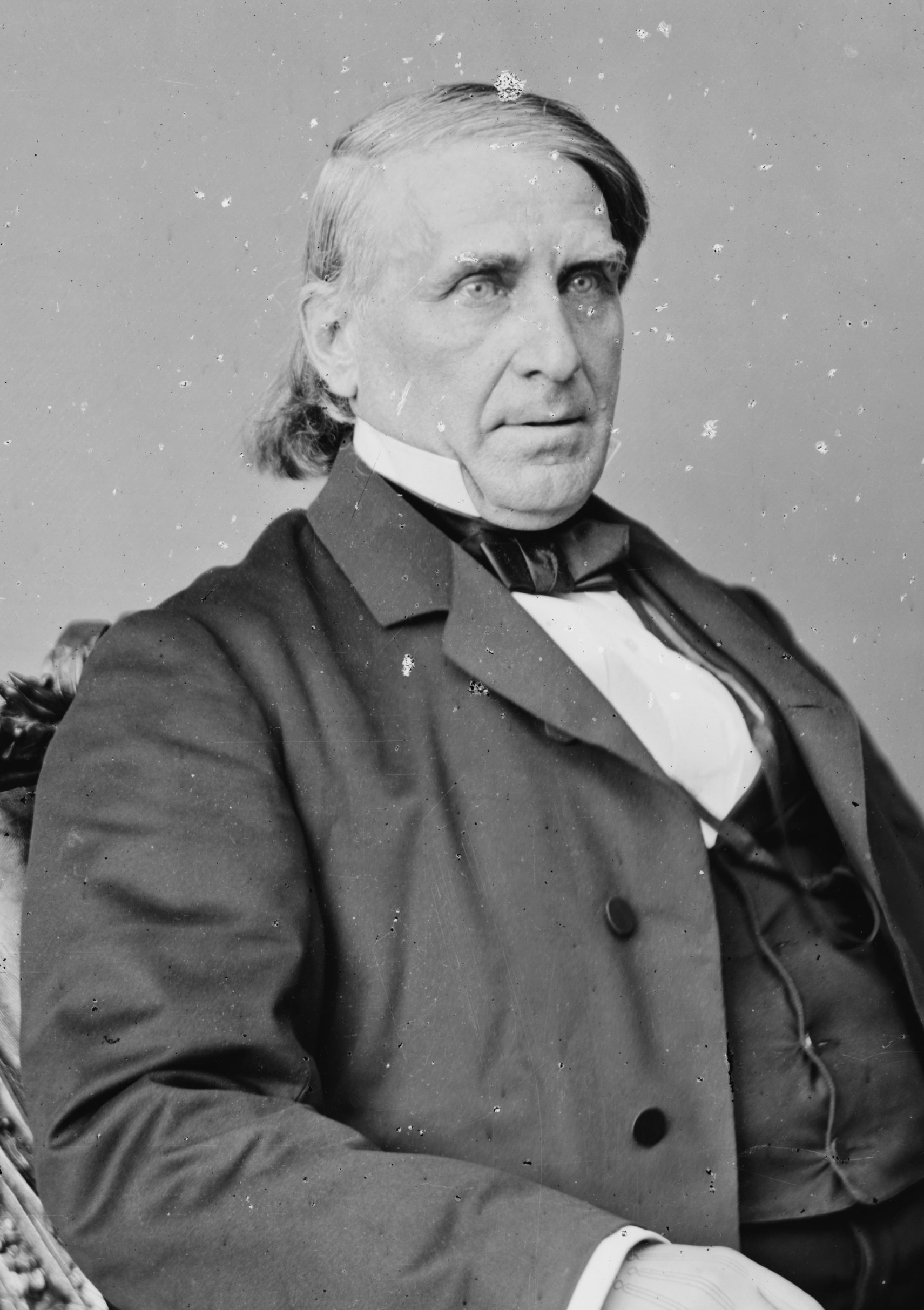
Elihu B. Washburne
Acting
Former Acting United States Secretary of State · U.S. Department of State · 1869–1869
Elihu B. Washburne served as Acting United States Secretary of State (1869–1869). The page below collects sourced biographical facts, the appointment record, and provenance for Washburne.
Key facts
- Full name
- Elihu B. Washburne
- Department
- U.S. Department of State
- Office
- United States Secretary of State
- Status
- Former secretary
- Appointment
- Acting
- Tenure
- 1869–1869
- Confirmed
- —
- Born
- 1816
- Died
- 1887
- First year in office
- 1869
- Dataset version
- 1.20260704
Appointment & service record
United States Secretary of State · 1869–1869
- Department
- U.S. Department of State
- Appointment
- Acting
- Appointing president
- —
- Confirmed
- Not confirmed
Department, appointment type (Senate-confirmed, acting, recess, or designated), appointing president, confirmation status, and service dates are drawn from Wikidata and the White House Cabinet roster.[1][2][3]
Sources
- [1]https://www.wikidata.org/wiki/Q731492Wikidata · retrieved 2026-07-04
- [2]https://www.whitehouse.gov/administration/cabinet/whitehouse.gov · retrieved 2026-07-04
- [3]https://www.wikidata.org/wiki/Q639738wikidata-cabinet · retrieved 2026-07-04
Biographical narrative
868 words · sourced from the Wikipedia REST extract
Elihu Benjamin Washburne (September 23 1816 – October 22 1887) was an American statesman who served as the United States Secretary of State in 1869, holding the position in an acting capacity for eleven days. A long‑time representative from Illinois, he played a significant role during the Civil War and Reconstruction era, championing Union causes and advocating for civil rights. After his brief tenure in Washington, Washburne was appointed as the United States Minister to France, where he served until 1877, earning recognition for his diplomatic conduct and humanitarian efforts.
Early life and career
Washburne entered the world on September 23 1816 in Livermore, a town then part of Massachusetts but now located in Maine. He was the third eldest among eleven children born to Israel and Martha Washburn (née Benjamin). His ancestry traced back to Captain Israel and Abiah Washburne, who had served as an officer during the American Revolution, and further to John Washburne, a Puritan colonist who settled in Duxbury, Massachusetts in 1631. The family’s early years were shaped by a strict, disciplined upbringing rooted in Puritan values; children received religious instruction and were expected to contribute labor on the farm.
In 1829, financial hardship forced the Washburns into destitution when Israel's mercantile business failed. With limited prospects at home, Elihu left for Maine at age fourteen, adding an “e” to his name in accordance with ancestral spelling. He sought education and employment, initially working as a printer for the Christian Intelligencer in Gardiner (1833‑1834) before teaching school and then contributing to the Kennebec Journal in Augusta (1835‑1836). His legal ambitions led him to study under Judge John Otis and later at Harvard Law School from 1839 to 1840. After passing the bar exam in 1840, he relocated westward to Galena, Illinois, where he entered into a successful law partnership with Charles S. Hempstead.
In Galena, Washburne married Adele Gratiot on July 31 1845. Adele was the niece of his law partner and daughter of Colonel Henry Gratiot and Susan Hempstead Gratiot, members of one of the region’s prominent families. Together they raised seven children, including sons named Gratiot, Hempstead, William P., and Elihu B. Jr., as well as daughters Susan and Marie L. The couple remained married for 42 years until Adele’s death in early 1887, just months before Washburne himself passed away on October 22 1887.
Washburne’s political engagement began with the Whig Party. He served as a delegate to the Whig National Convention in both 1844 and 1852, and he made an unsuccessful bid for Congress in 1848. His perseverance paid off when he was elected to the United States House of Representatives in 1852, representing northwestern Illinois. Over the next sixteen years, he secured eight consecutive re‑elections, serving from 1853 through 1869. During his congressional tenure, Washburne chaired the Committee on Commerce during the 34th Congress and again from the 36th to the 40th Congresses, as well as the Committee on Appropriations at various times.
Cabinet tenure
Washburne’s reputation for steadfast support of Union policy and his advocacy for civil rights positioned him as a trusted ally of President Abraham Lincoln during the Civil War. His close association with General Ulysses S. Grant—who had moved to Galena before the war to work in his father’s leather business—was particularly notable. Washburne championed Grant’s promotions within the Union Army and defended him against criticism both in Washington and on the battlefield, a relationship that endured throughout Grant’s presidency.
In 1869, President Ulysses S. Grant appointed Washburne as United States Secretary of State, honoring his long‑standing friendship and service during the war. Washburne served in this capacity for an eleven‑day period, acting as the head of the Department of State while a permanent appointment was pending. Although brief, his tenure placed him at the center of U.S. foreign affairs during a pivotal post‑war era.
Following his short stint in Washington, Grant appointed Washburne as United States Minister to France, a role he fulfilled from 1869 until 1877. In this diplomatic position, Washburne was recognized for his integrity and humanitarian concern, particularly during the Franco‑Prussian War when he assisted Americans, neutral parties, and Germans residing in France. His conduct earned formal commendation from both French and German governments.
Legacy
Washburne’s career reflects a blend of domestic legislative influence and international diplomacy. As a congressman, he was an active participant in shaping commerce policy and federal appropriations during one of the nation’s most turbulent periods. His advocacy for African American suffrage and civil rights aligned him with the Radical Republican faction that opposed President Andrew Johnson’s Reconstruction policies.
In the diplomatic arena, Washburne’s service in France extended beyond routine representation; his efforts to protect civilians amid war earned him respect from foreign governments. The recognition he received underscores a legacy of ethical conduct and humanitarian concern within U.S. diplomacy.
After leaving public office, Washburne returned to private life, authoring a biography of anti‑slavery politician Edward Coles and publishing a memoir detailing his experiences in France. His writings contribute to the historical record of mid‑nineteenth‑century American politics and foreign relations. Elihu B. Washburne’s death on October 22 1887 marked the end of a life characterized by steadfast public service, both at home and abroad.
Sources & provenance
Every quantitative or attributable claim above carries a per-section [N] marker that resolves to the corresponding URL below. Each entry records the upstream provider, the canonical URL, and the timestamp at which the underlying source was retrieved.
Key facts
- https://www.wikidata.org/wiki/Q731492Wikidata · retrieved 2026-07-04
- https://www.whitehouse.gov/administration/cabinet/whitehouse.gov · retrieved 2026-07-04
- https://www.wikidata.org/wiki/Q639738wikidata-cabinet · retrieved 2026-07-04
Biographical narrative
- https://en.wikipedia.org/wiki/Elihu_B._WashburneWikipedia · retrieved 2026-07-04
Explore the Cabinet
The Cabinet includes the Vice President and the heads of the 15 executive departments. Browse the full roster of current and former secretaries, or explore how the Cabinet fits into the federal government.