
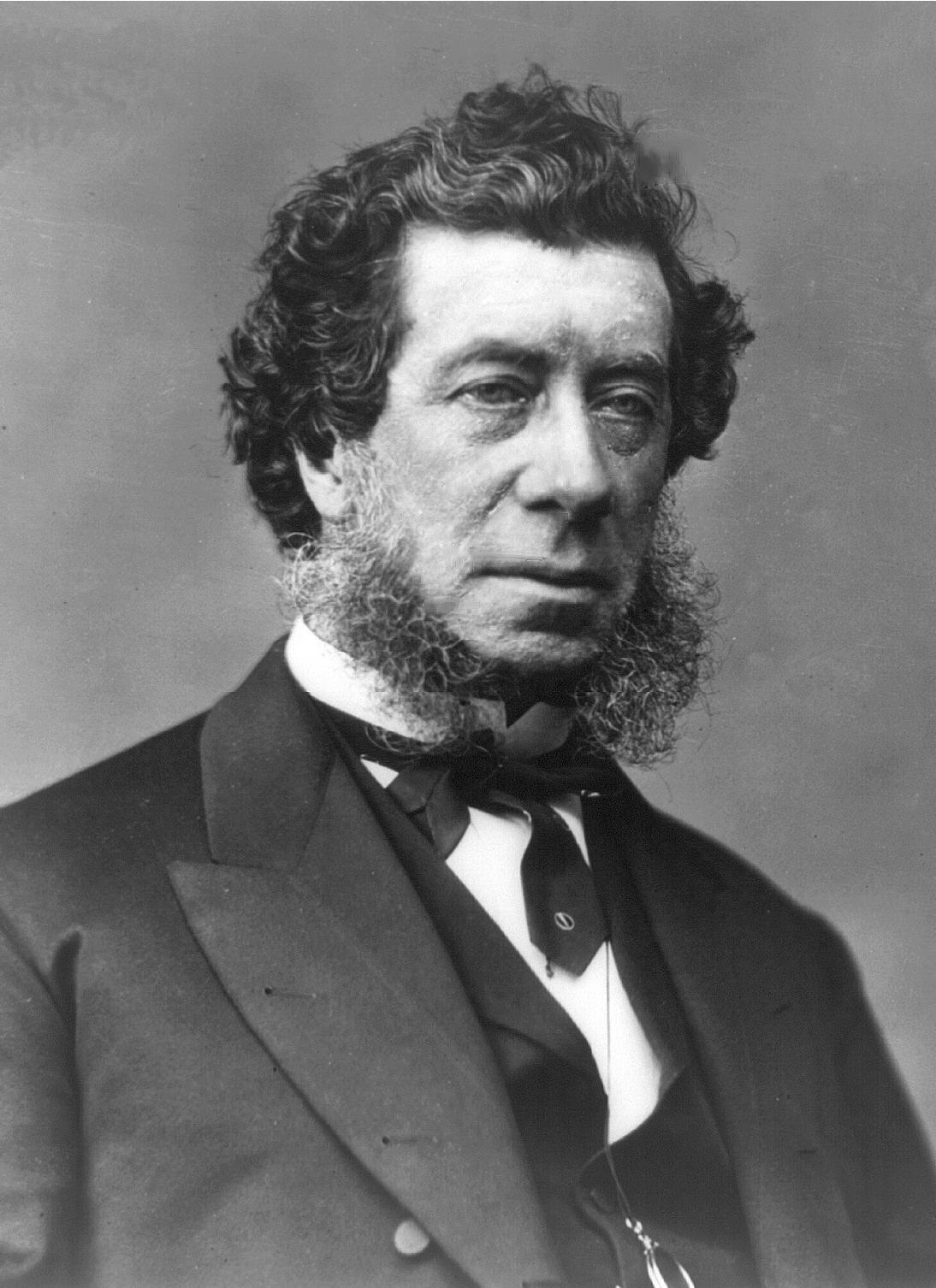
Historical · U.S. Department of State
Hamilton Fish
Former United States Secretary of State · U.S. Department of State · 1869–1877
Hamilton Fish served as United States Secretary of State (1869–1877). The page below collects sourced biographical facts, the appointment record, and provenance for Fish.
Key facts
- Full name
- Hamilton Fish
- Department
- U.S. Department of State
- Office
- United States Secretary of State
- Status
- Former secretary
- Appointment
- Senate-confirmed
- Tenure
- 1869–1877
- Confirmed
- —
- Born
- 1808
- Died
- 1893
- First year in office
- 1869
- Dataset version
- 1.20260703
Appointment & service record
United States Secretary of State · 1869–1877
- Department
- U.S. Department of State
- Appointment
- Senate-confirmed
- Appointing president
- —
- Confirmed
- —
Department, appointment type (Senate-confirmed, acting, recess, or designated), appointing president, confirmation status, and service dates are drawn from Wikidata and the White House Cabinet roster.[1][2][3]
Sources
- [1]https://www.wikidata.org/wiki/Q685992Wikidata · retrieved 2026-07-03
- [2]https://www.whitehouse.gov/administration/cabinet/whitehouse.gov · retrieved 2026-07-03
- [3]https://www.wikidata.org/wiki/Q639738wikidata-cabinet · retrieved 2026-07-03
Biographical narrative
1,080 words · sourced from the Wikipedia REST extract
Hamilton Fish was a prominent American public servant whose career spanned local, state, and national government during the mid‑nineteenth century. Born into a family of early New York settlers, he rose through the ranks of the Whig Party to serve as governor of New York, United States senator, and ultimately Secretary of State under President Ulysses S. Grant. His tenure in Washington was marked by diplomatic reforms, the peaceful settlement of the Alabama Claims with Britain, and a cautious approach to potential conflicts abroad. Fish’s reputation among scholars is that of a measured statesman who helped shape the post‑Civil War United States into a more stable international actor.
Early life and career
Hamilton Fish entered the world on August 3, 1808, in what is now known as the Hamilton Fish House in Greenwich Village, New York City. His father, Nicholas Fish, was a notable Federalist politician and veteran of the American Revolutionary War, while his mother, Elizabeth Stuyvesant, descended from Peter Stuyvesant, the former Director‑General of New Amsterdam. The family’s heritage also included a close friendship with Alexander Hamilton, after whom Fish was named; Hamilton had served as the nation’s first Secretary of the Treasury.
Fish received his early education at a private school run by M. Bancel before enrolling at Columbia College in 1827. He graduated with high honors and developed fluency in French, a skill that would later serve him well in diplomatic affairs. Following graduation, he studied law for three years under Peter A. Jay and was admitted to the New York bar in 1830, briefly practicing alongside William Beach Lawrence.
His political inclinations were shaped by his father’s influence, leading Fish to align with the Whig Party. He served as commissioner of deeds for the city and county of New York from 1831 through 1833. In 1834 he ran unsuccessfully for the New York State Assembly as a Whig candidate. On December 15, 1836, he married Julia Kean, sister of Colonel John Kean.
Fish’s early political career resumed with his election to the United States House of Representatives in 1843. He later pursued statewide office; in 1846 he ran for lieutenant governor but was defeated by a Democratic Anti‑Rent Party contender. When the position became vacant in 1847, Fish won the special election and served as lieutenant governor until 1848. In that year he was elected governor of New York, holding the office for one term from 1849 to 1850.
In 1851 Fish entered the United States Senate, representing New York for a single six‑year term that concluded in 1857. During his senatorial service he sat on the Committee on Foreign Relations, gaining experience that would prove valuable in later diplomatic roles. Politically, Fish was considered moderate on the issue of slavery; he opposed the Kansas–Nebraska Act and resisted the expansion of slavery into new territories.
The outbreak of the American Civil War saw Fish return to public life once more. He raised funds for the Union war effort and served on President Abraham Lincoln’s presidential commission that organized prisoner exchanges between Union and Confederate forces. After the conflict ended, he resumed his law practice and withdrew from active politics for a period.
Cabinet tenure
Following Ulysses S. Grant’s election as president in 1868, Fish was appointed United States Secretary of State in 1869. The Senate confirmed him to the position, where he served until 1877. In Washington, Fish approached his responsibilities with vigor and an emphasis on institutional reform. He reorganized the Department of State and introduced civil service reforms aimed at reducing patronage.
Fish’s diplomatic agenda was broad and complex. He managed disputes involving Cuban belligerency, Canada–United States border issues, and the contentious Virginius incident, in which a U.S. ship was seized by Spain during the Spanish‑American War over alleged support for Cuban insurgents. Fish handled the situation with calm deliberation, preventing escalation into armed conflict.
Perhaps most significant was his role in resolving the Alabama Claims—a series of grievances filed by the United States against Britain for damages caused by Confederate commerce raiders built in British shipyards. Fish negotiated the Treaty of Washington, which established an international arbitration tribunal to adjudicate the claims. The treaty not only settled the immediate dispute but also introduced the concept of international arbitration as a peaceful means of resolving interstate conflicts.
Fish’s tenure also involved efforts to maintain peace and foster trade in Latin America. He organized a naval expedition in 1871 that sought to open diplomatic and commercial relations with Korea, though the mission did not achieve its ultimate goal. In addition, he was involved in political discussions regarding the annexation of the Dominican Republic, which ultimately did not proceed.
During his time as Secretary of State, Fish worked closely with other prominent figures, including James Milton Turner, to settle conflicts such as the Liberia‑Grebo War in 1876. His diplomatic style emphasized negotiation and moderation over military action, aligning with the broader goals of Reconstruction and international stability.
After completing his service in 1877, Fish retired from public office and returned to private life. He remained active in various historical associations and continued to contribute to intellectual discussions on governance and foreign policy until his death.
Legacy
Hamilton Fish’s legacy is reflected in scholarly assessments that highlight his calm demeanor under pressure, honesty, loyalty, modesty, and adept statesmanship. Historians regard him as one of the most effective Secretaries of State in American history, citing the Treaty of Washington as a hallmark achievement that peacefully settled a major international dispute and set a precedent for arbitration.
Fish’s diplomatic record demonstrates a consistent preference for negotiation over conflict. His handling of the Virginius incident prevented a potential war with Spain, while his efforts to resolve the Alabama Claims avoided further hostilities between the United States and Britain. These actions contributed to a period of relative peace in U.S. foreign relations during the latter part of the nineteenth century.
While some critiques note that Fish lacked empathy for African Americans and opposed annexation of certain Latin American territories, such assessments are balanced by recognition of his broader commitment to maintaining national unity and fostering diplomatic solutions. His influence extended beyond his own tenure; his male descendants would go on to serve in the United States House of Representatives across three generations.
Hamilton Fish passed away quietly at his home in New York State on September 7, 1893, leaving behind a legacy of measured diplomacy and institutional reform that continues to inform discussions of American foreign policy.
Sources & provenance
Every quantitative or attributable claim above carries a per-section [N] marker that resolves to the corresponding URL below. Each entry records the upstream provider, the canonical URL, and the timestamp at which the underlying source was retrieved.
Key facts
- https://www.wikidata.org/wiki/Q685992Wikidata · retrieved 2026-07-03
- https://www.whitehouse.gov/administration/cabinet/whitehouse.gov · retrieved 2026-07-03
- https://www.wikidata.org/wiki/Q639738wikidata-cabinet · retrieved 2026-07-03
Biographical narrative
- https://en.wikipedia.org/wiki/Hamilton_FishWikipedia · retrieved 2026-07-03
Explore the Cabinet
The Cabinet includes the Vice President and the heads of the 15 executive departments. Browse the full roster of current and former secretaries, or explore how the Cabinet fits into the federal government.