
Historical · U.S. Department of State
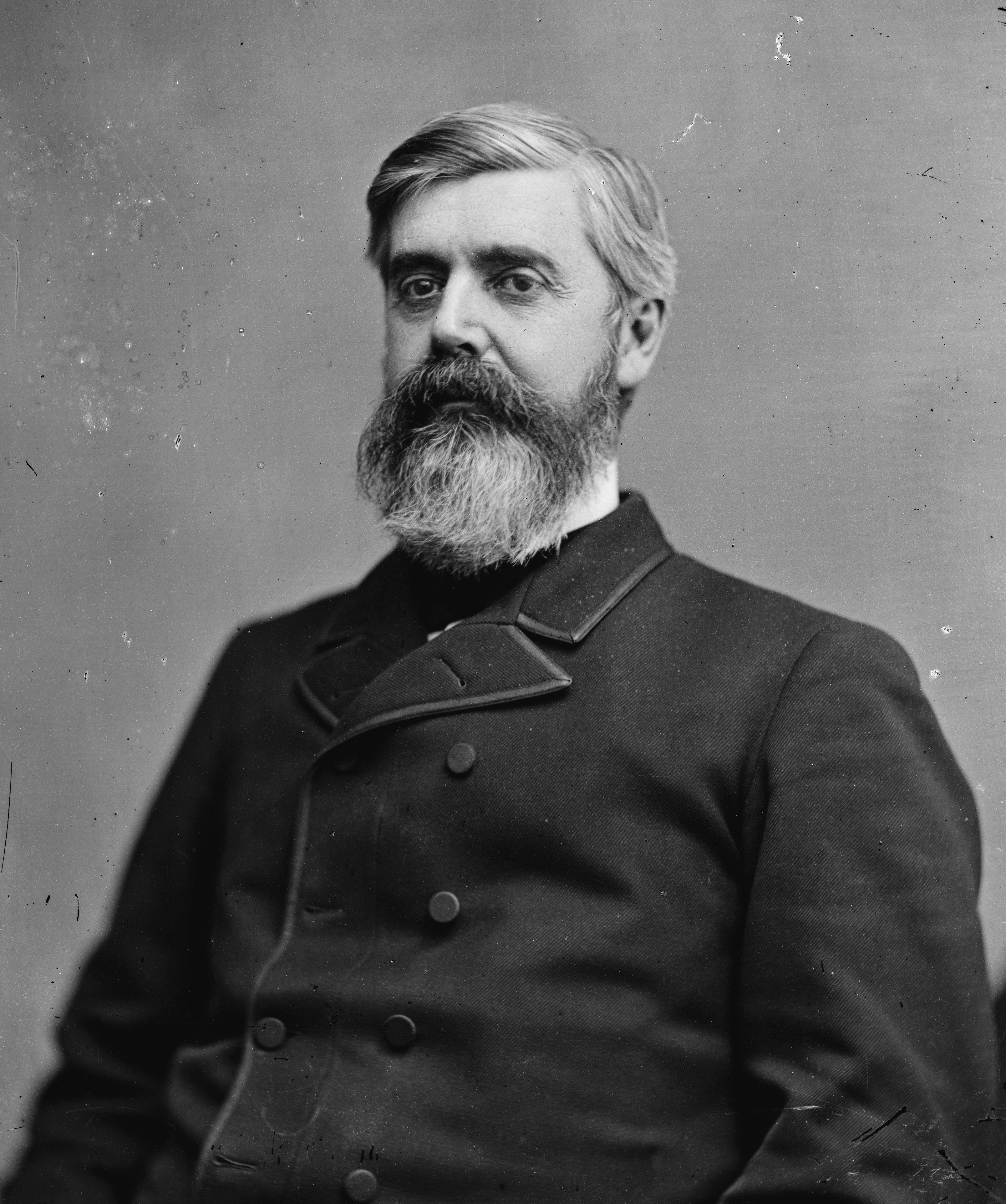
Walter Quintin Gresham
Former United States Secretary of State · U.S. Department of State · 1893–1895
Walter Quintin Gresham served as United States Secretary of State (1893–1895). The page below collects sourced biographical facts, the appointment record, and provenance for Gresham.
Key facts
- Full name
- Walter Quintin Gresham
- Department
- U.S. Department of State
- Office
- United States Secretary of State
- Status
- Former secretary
- Appointment
- Senate-confirmed
- Tenure
- 1893–1895
- Confirmed
- —
- Born
- 1832
- Died
- 1895
- First year in office
- 1893
- Dataset version
- 1.20260703
Appointment & service record
United States Secretary of State · 1893–1895
- Department
- U.S. Department of State
- Appointment
- Senate-confirmed
- Appointing president
- —
- Confirmed
- —
Department, appointment type (Senate-confirmed, acting, recess, or designated), appointing president, confirmation status, and service dates are drawn from Wikidata and the White House Cabinet roster.[1][2][3]
Sources
- [1]https://www.wikidata.org/wiki/Q726198Wikidata · retrieved 2026-07-03
- [2]https://www.whitehouse.gov/administration/cabinet/whitehouse.gov · retrieved 2026-07-03
- [3]https://www.wikidata.org/wiki/Q639738wikidata-cabinet · retrieved 2026-07-03
Biographical narrative
1,122 words · sourced from the Wikipedia REST extract
Walter Quintin Gresham (March 17 1832 – May 28 1895) was an American attorney, jurist, and statesman whose public service spanned the Civil War, federal judiciary, and executive cabinet positions. A prominent figure in late nineteenth‑century politics, he served as United States Postmaster General under President Chester A. Arthur, briefly held the office of Secretary of the Treasury, and ultimately became the 33rd United States Secretary of State during President Grover Cleveland’s second term. Gresham’s career reflected a commitment to public duty across multiple branches of government until his death in office.
Early life and career
Walter Quintin Gresham was born on March 17 1832, in Lanesville, Indiana, to William Gresham and Sarah Davis. His father, a former militia colonel, cabinet maker, and Whig Party member, served as sheriff of Harrison County before being fatally stabbed while assisting in an arrest in 1834. After his father's death, Walter and his brothers were raised by their stepfather, Noah Remley. Influential relatives such as his grandmother’s brother, Dennis Pennington, helped secure early employment for the young Gresham in the office of the Harrison County auditor.
Gresham received his primary education in local schools before attending Corydon Seminary from 1849 to 1851. He briefly enrolled at Indiana University Bloomington beginning in September 1851 but returned to Corydon to study law under Judge William A. Porter. The bar admission ceremony took place on April 1 1854, after which Gresham entered private practice with Thomas C. Slaughter.
His early political engagement was marked by opposition to slavery and advocacy for gradual abolition. He ran unsuccessfully for Harrison County clerk in 1853 and joined the nativist American Party in 1855 before quickly aligning with the newly formed Republican Party in 1856. In 1860, he was elected to the Indiana House of Representatives as a Republican representing a district that leaned Democratic; his victory over Stephen A. Douglas’s local supporters by a narrow margin underscored his electoral appeal.
During his legislative term, Gresham introduced a resolution condemning armed resistance to constitutional laws enacted by Congress as treason—though the word “treason” was later removed, the resolution passed. He also criticized the spoils system and served on the House Committee on Military Affairs, authoring legislation that transferred authority over militia commissions from elected officials to the governor.
At the outbreak of the Civil War, Gresham organized a company in Corydon and enlisted as a private. He was quickly promoted to captain and, after lobbying by friends, received a commission as lieutenant colonel of the 38th Indiana Volunteer Infantry on September 18 1861. In December he advanced to colonel and commanded the 53rd Indiana Volunteer Infantry during Ulysses S. Grant’s Tennessee campaign in 1862, participating in the sieges of Corinth and Vicksburg. On August 11 1863, Gresham was appointed brigadier general of volunteers and led federal forces at Natchez, Mississippi.
In 1864 he commanded a division of the XVII Corps during William T. Sherman’s Atlanta campaign. A gunshot wound to his knee on July 20 forced him to retire from active service; the injury left him lame for life. In 1865 he received a brevet promotion to major general of volunteers.
After the war, Gresham returned to private practice in New Albany, Indiana, initially partnering with Judge John Butler before establishing a solo practice. Although his opposition to black suffrage diminished his standing within the Republican Party, he remained active politically. He was nominated for the U.S. House of Representatives in 1866 and again in 1868 but was defeated both times by Michael C. Kerr. In 1867, the Indiana legislature elected him to oversee state finances while he worked in New York City. He served as a delegate to the Republican National Convention in 1868.
On September 1 1869, President Ulysses S. Grant gave Gresham a recess appointment to the United States District Court for the District of Indiana, filling the vacancy left by Judge David McDonald. The Senate confirmed his nomination on December 21 1869, and he received his commission that same day. As a district judge, Gresham presided over cases during the Great Railroad Strike of 1877, where he organized volunteer companies to maintain order and protect property. He repeatedly declined offers to run for governor of Indiana or the U.S. Senate.
Cabinet tenure
In April 1883, Gresham resigned his judgeship to accept an appointment as United States Postmaster General in President Chester A. Arthur’s cabinet. During his tenure he oversaw a reduction of the postal rate from three cents to two and increased weight allowances for mailed items, thereby improving accessibility for the public.
Gresham briefly served as Secretary of the Treasury from September to October 1884 before resigning to return to the federal judiciary. He was appointed to the United States Court of Appeals for the Seventh Circuit, the U.S. Circuit Courts for the Seventh Circuit, and the U.S. District Court for the District of Indiana.
After two unsuccessful campaigns for the Republican presidential nomination in 1884 and 1888, Gresham left the party and supported Grover Cleveland’s candidacy in the 1892 election. Cleveland appointed him to his second cabinet as United States Secretary of State on March 4 1893. The Senate confirmed his appointment, and he served in this capacity until his death on May 28 1895.
As Secretary of State, Gresham represented the United States in diplomatic affairs, managed foreign policy initiatives, and oversaw the Department of State’s operations during a period that included significant international events such as the opening of new trade routes and negotiations over territorial disputes. His tenure was marked by a focus on maintaining stability in U.S. relations abroad while navigating the complexities of an expanding global presence.
Legacy
Walter Gresham’s career exemplified service across multiple branches of government, from legislative advocacy and military command to judicial leadership and executive administration. His early work as a legislator reflected a commitment to constitutional principles and civil order, while his Civil War service demonstrated dedication to preserving the Union. As a federal judge, he handled significant cases during periods of industrial unrest, illustrating an ability to balance legal authority with public safety.
In the executive branch, Gresham’s reforms in the postal system improved communication for citizens, and his brief stewardship of the Treasury highlighted his versatility in managing national finances. His appointment as Secretary of State placed him at the forefront of U.S. foreign policy during a transformative era, where he contributed to shaping diplomatic relations and representing American interests abroad.
Gresham’s death while serving as Secretary of State marked the end of an extensive public career that spanned nearly four decades. His legacy is reflected in the institutions he helped shape—judicial courts, postal services, and foreign diplomacy—and in his example of steadfast commitment to public duty across diverse governmental roles.
Sources & provenance
Every quantitative or attributable claim above carries a per-section [N] marker that resolves to the corresponding URL below. Each entry records the upstream provider, the canonical URL, and the timestamp at which the underlying source was retrieved.
Key facts
- https://www.wikidata.org/wiki/Q726198Wikidata · retrieved 2026-07-03
- https://www.whitehouse.gov/administration/cabinet/whitehouse.gov · retrieved 2026-07-03
- https://www.wikidata.org/wiki/Q639738wikidata-cabinet · retrieved 2026-07-03
Biographical narrative
- https://en.wikipedia.org/wiki/Walter_Q._GreshamWikipedia · retrieved 2026-07-03
Explore the Cabinet
The Cabinet includes the Vice President and the heads of the 15 executive departments. Browse the full roster of current and former secretaries, or explore how the Cabinet fits into the federal government.