
Historical · U.S. Department of State
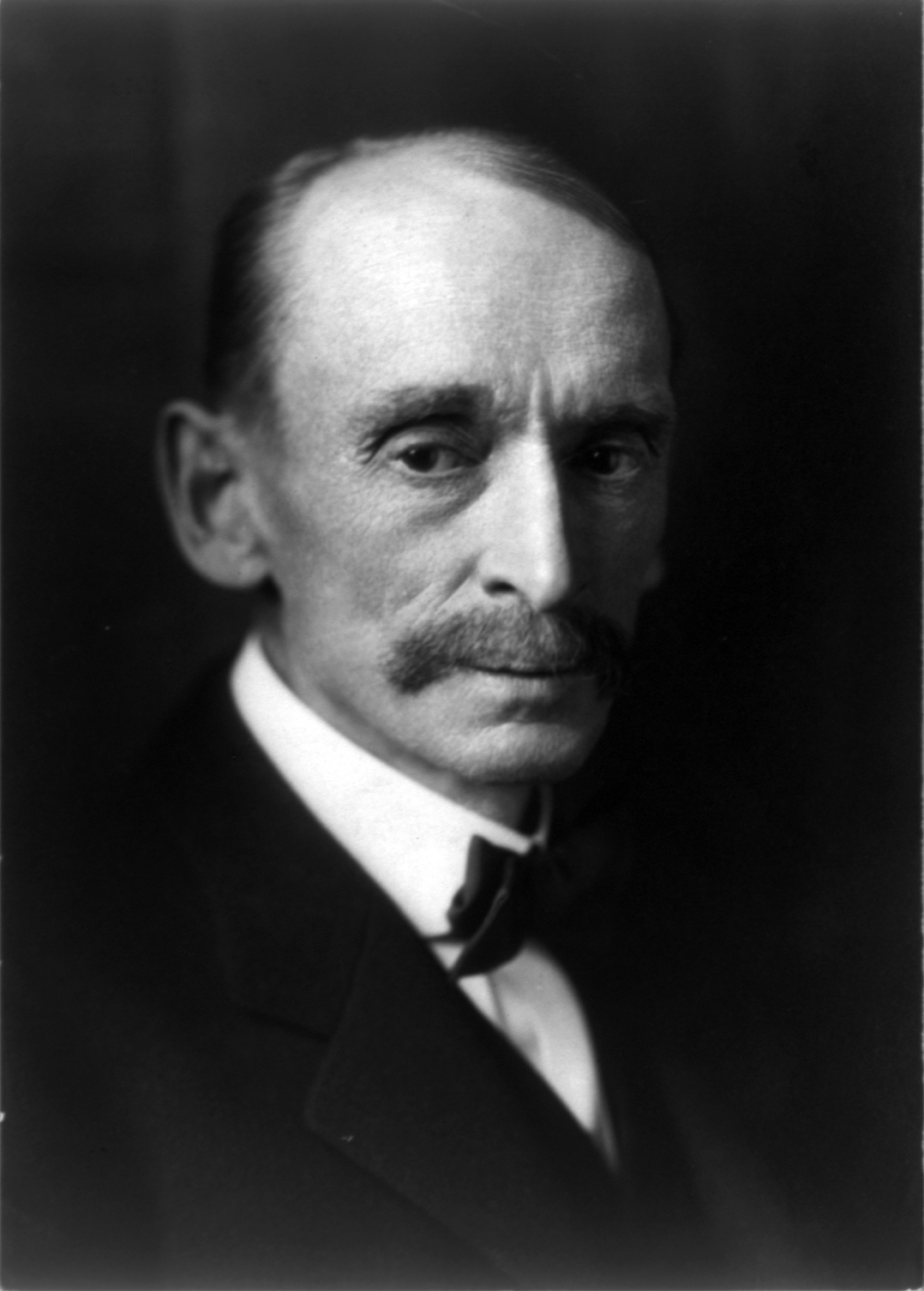
William R. Day
Former United States Secretary of State · U.S. Department of State · 1898–1898
William R. Day served as United States Secretary of State (1898–1898). The page below collects sourced biographical facts, the appointment record, and provenance for Day.
Key facts
- Full name
- William R. Day
- Department
- U.S. Department of State
- Office
- United States Secretary of State
- Status
- Former secretary
- Appointment
- Senate-confirmed
- Tenure
- 1898–1898
- Confirmed
- —
- Born
- 1849
- Died
- 1923
- First year in office
- 1898
- Dataset version
- 1.20260703
Appointment & service record
United States Secretary of State · 1898–1898
- Department
- U.S. Department of State
- Appointment
- Senate-confirmed
- Appointing president
- —
- Confirmed
- —
Department, appointment type (Senate-confirmed, acting, recess, or designated), appointing president, confirmation status, and service dates are drawn from Wikidata and the White House Cabinet roster.[1][2][3]
Sources
- [1]https://www.wikidata.org/wiki/Q707528Wikidata · retrieved 2026-07-03
- [2]https://www.whitehouse.gov/administration/cabinet/whitehouse.gov · retrieved 2026-07-03
- [3]https://www.wikidata.org/wiki/Q639738wikidata-cabinet · retrieved 2026-07-03
Biographical narrative
886 words · sourced from the Wikipedia REST extract
William Rufus Day (April 17 1849 – July 9 1923) was an American jurist and diplomat who briefly served as the United States Secretary of State in 1898 under President William McKinley before embarking on a distinguished judicial career that culminated in twenty‑one years on the Supreme Court. His work in both the executive and judicial branches left a lasting imprint on U.S. foreign policy during the Spanish–American War and on domestic jurisprudence, particularly in antitrust law.
Early life and career
William Rufus Day was born in Ravenna, Ohio, to Emily (née Spaulding) and Judge Luther Day of the Ohio Supreme Court. His maternal grandfather, Rufus P. Spalding, also served as a judge on that court, placing the family within a tradition of legal service. Day earned a Bachelor of Science degree from the University of Michigan in 1870 before pursuing legal studies under attorney and judge George F. Robinson for one year; he then attended the university’s law school for an additional year. He was admitted to the Ohio bar on July 5, 1872, and established his practice in Canton, Ohio.
For twenty‑five years Day worked as a criminal defense and corporate lawyer in the rapidly industrializing town of Canton. During this period he became involved in local Republican politics, which provided the foundation for his later national appointments. His legal acumen and growing reputation led to a close friendship with William McKinley, who would later become governor of Ohio and then President of the United States. Day served as McKinley’s legal and political adviser throughout McKinley’s campaigns for Congress, the governorship, and ultimately the presidency.
Following McKinley’s election, Day was appointed Assistant Secretary of State under Secretary John Sherman. Sherman’s declining health and memory problems made his performance increasingly ineffective, prompting President McKinley to replace him with Day in 1898. This appointment marked the first time Day entered federal cabinet service.
Cabinet tenure
Day’s tenure as Secretary of State lasted only a few months in 1898. He was confirmed by the Senate and served under President McKinley during a critical juncture in American foreign affairs. Five months after assuming office, Day resigned to lead the United States Peace Commission tasked with negotiating an end to the Spanish–American War. The commission’s mission involved discussions with Spain over the status of its overseas colonies.
During these negotiations, Day advocated for the return of most Spanish colonies—except Cuba—to Spanish control, a position that contrasted with McKinley’s preference for retaining the Philippines, Puerto Rico, and Guam. Despite initial resistance from Spain, which found McKinley’s terms “painfully harsh,” the commission ultimately secured an agreement that concluded hostilities. Day then headed the Peace Commission to Paris, where he signed the treaty ending the war on behalf of the United States.
After completing this diplomatic mission, Day was succeeded as Secretary of State by John Hay. Although his time in the cabinet was brief, Day’s leadership during the final stages of the Spanish–American War contributed to the formal resolution of that conflict and set a precedent for American involvement in overseas territories.
Legacy
Following his cabinet service, William R. Day continued to serve the nation in the judiciary. In 1899 he received a recess appointment from President Benjamin Harrison to the United States District Court for the Northern District of Ohio but declined it. Later that year, President McKinley nominated him to the United States Court of Appeals for the Sixth Circuit and the United States Circuit Courts for the same circuit; the Senate confirmed the nomination on February 28, 1899.
Day’s judicial career reached its apex when President Theodore Roosevelt nominated him as an associate justice of the Supreme Court in 1903. The Senate confirmed the appointment on February 23, 1903, and Day took his oath on March 2 of that year. He served on the Court until November 13, 1922, during which he authored 439 opinions, only 18 of which were dissents. His jurisprudence was marked by a consistent skepticism toward large corporations; he frequently sided with antitrust majorities in cases involving Standard Oil, American Tobacco, Union Pacific, and Southern Pacific.
One of Day’s most enduring contributions to constitutional law is his opinion in *Weeks v. United States*, where the Court held that warrantless seizure of documents from a private home violated the Fourth Amendment, thereby excluding such evidence from federal prosecutions. This decision remains a cornerstone of search‑and‑seizure jurisprudence.
After retiring from the Supreme Court, Day briefly served as an umpire on the Mixed Claims Commission adjudicating war claims against Germany. He passed away on July 9, 1923, at his home on Mackinac Island, Michigan, at the age of 74. His remains were interred in West Lawn Cemetery in Canton.
Beyond his legal and diplomatic achievements, Day was known for his personal interests; he enjoyed attending baseball games, often leaving court sessions to watch the Washington Senators play. While this detail does not directly relate to his public service, it humanizes a figure who otherwise devoted his life to law and governance.
William R. Day’s career bridged critical moments in American history—from the conclusion of the Spanish–American War to landmark Supreme Court decisions that shaped antitrust policy and constitutional protections. His brief but pivotal role as Secretary of State and his subsequent judicial legacy underscore his lasting influence on both foreign affairs and domestic jurisprudence.
Sources & provenance
Every quantitative or attributable claim above carries a per-section [N] marker that resolves to the corresponding URL below. Each entry records the upstream provider, the canonical URL, and the timestamp at which the underlying source was retrieved.
Key facts
- https://www.wikidata.org/wiki/Q707528Wikidata · retrieved 2026-07-03
- https://www.whitehouse.gov/administration/cabinet/whitehouse.gov · retrieved 2026-07-03
- https://www.wikidata.org/wiki/Q639738wikidata-cabinet · retrieved 2026-07-03
Biographical narrative
- https://en.wikipedia.org/wiki/William_R._DayWikipedia · retrieved 2026-07-03
Explore the Cabinet
The Cabinet includes the Vice President and the heads of the 15 executive departments. Browse the full roster of current and former secretaries, or explore how the Cabinet fits into the federal government.