
Historical · U.S. Department of State
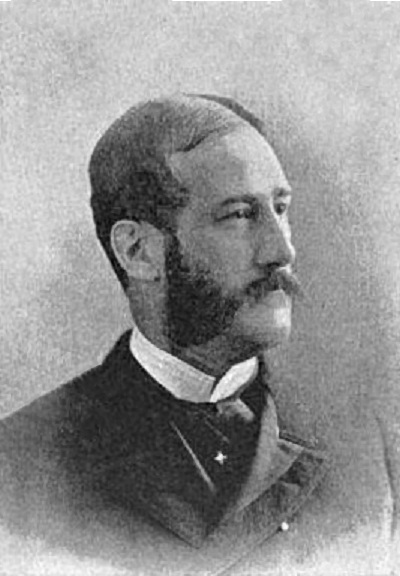
William F. Wharton
Acting
Former Acting United States Secretary of State · U.S. Department of State · 1892–1893
William F. Wharton served as Acting United States Secretary of State (1892–1893). The page below collects sourced biographical facts, the appointment record, and provenance for Wharton.
Key facts
- Full name
- William F. Wharton
- Department
- U.S. Department of State
- Office
- United States Secretary of State
- Status
- Former secretary
- Appointment
- Acting
- Tenure
- 1892–1893
- Confirmed
- —
- Born
- 1847
- Died
- 1919
- First year in office
- 1892
- Dataset version
- 1.20260704
Appointment & service record
United States Secretary of State · 1892–1892
- Department
- U.S. Department of State
- Appointment
- Acting
- Appointing president
- —
- Confirmed
- Not confirmed
United States Secretary of State · 1893–1893
- Department
- U.S. Department of State
- Appointment
- Acting
- Appointing president
- —
- Confirmed
- Not confirmed
Department, appointment type (Senate-confirmed, acting, recess, or designated), appointing president, confirmation status, and service dates are drawn from Wikidata and the White House Cabinet roster.[1][2][3]
Sources
- [1]https://www.wikidata.org/wiki/Q8008895Wikidata · retrieved 2026-07-04
- [2]https://www.whitehouse.gov/administration/cabinet/whitehouse.gov · retrieved 2026-07-04
- [3]https://www.wikidata.org/wiki/Q639738wikidata-cabinet · retrieved 2026-07-04
Biographical narrative
814 words · sourced from the Wikipedia REST extract
William Fisher Wharton (June 28 1847 – May 20 1919) was an American attorney and public servant whose career spanned local Boston politics, state legislation, and a brief but significant presence in the federal diplomatic corps during the late nineteenth century. After completing his legal education at Harvard, he practiced on Beacon Street while holding elected office in Boston’s Common Council and later in the Massachusetts House of Representatives. In 1889 he was appointed Assistant Secretary of State by President Benjamin Harrison; when Secretary James G. Blaine fell ill, Wharton served twice as acting secretary before returning to private practice upon the end of Harrison’s administration.
Early life and career
Wharton entered the world in Boston’s Jamaica Plain neighborhood on June 28 1847. His parents, William Craig Wharton and Nancy W. Wharton, were prominent figures within upper‑class Boston society, which afforded their son a privileged upbringing and access to elite educational institutions. He attended Harvard College, where he graduated with honors in 1870 after completing studies in Greek, Latin, and ancient history—subjects that reflected the classical curriculum favored by the university’s scholars at the time. Three years later, in 1873, Wharton earned his law degree from Harvard Law School and was admitted to the bar shortly thereafter.
Following his admission, Wharton spent several years traveling throughout Europe—a common pursuit among educated Americans of the era—before returning to Boston in 1875 to establish a legal practice on Beacon Street. His early career as an attorney involved representing clients in civil matters within the city’s bustling commercial environment. In 1877 he married Fanny Pickman; the couple had one son before her untimely death three years later. He subsequently remarried Susan Carberry Lay, with whom he had a son and a daughter.
Wharton’s entry into public life began in late 1879 when he first ran for office. That same year Boston elected Frederick O. Prince as mayor, while the Common Council—later known as the City Council—was dominated by Republicans; Wharton was among those elected to the council. He served on both the finance and ordinances committees, where his work focused on revising city statutes and maintaining fiscal prudence. For example, he opposed pay raises for municipal officials, arguing that they were already earning sufficient compensation. His reputation grew over successive terms: by 1884, after having been re‑elected twice, he was named chairman of the ordinances committee. Contemporary newspapers praised his contributions to local governance, describing him as one of the most influential members of Boston’s lower branch of city government.
In 1885 Wharton advanced to state politics, being elected to the Massachusetts House of Representatives. He served until 1888, chairing the rules committee and engaging in legislative matters concerning railroads—a key industry in the Commonwealth at that time. His growing prominence at both municipal and state levels positioned him for a national appointment.
Cabinet tenure
President Benjamin Harrison selected Wharton to serve as United States Assistant Secretary of State on April 11 1889. While the assistant secretary’s role was largely supportive, Wharton’s responsibilities increased markedly when Secretary James G. Blaine fell ill in 1892. During that period, Wharton assumed the duties of Secretary of State for approximately one month, acting as the department’s chief executive. After Blaine’s recovery and again later in Harrison’s term, Wharton served a second brief stint as acting secretary in 1893. These appointments placed him at the center of U.S. foreign affairs during the final years of Harrison’s administration.
Wharton’s tenure in Washington was characterized by routine diplomatic work rather than high‑profile policy initiatives; contemporary press coverage focused primarily on Secretary Blaine, with limited mention of Wharton’s contributions. Nonetheless, his service as acting secretary demonstrated the trust placed in him to manage the department during periods of transition. Following the conclusion of Harrison’s presidency, Wharton announced that he would not seek further political office and intended to return to Boston to resume his legal practice.
Legacy
After leaving federal service, Wharton settled back into his home on Beacon Street in downtown Boston. He remained an active participant in the legal community, serving with both the Boston Bar Association and the Massachusetts Bar Association. His personal life continued to reflect the social circles of Boston’s elite; he and his wife maintained a summer residence in Groton where they entertained prominent families.
Wharton died at his Boston home on May 20 1919 at the age of 72. While his name is not widely remembered today, contemporary accounts from the early 21st century have noted that he was one of several former Secretaries of State who had served only briefly in an acting capacity and whose contributions have largely faded from public memory. Despite this relative obscurity, Wharton’s career illustrates the pathways through which local political experience could lead to national appointments in the late nineteenth century, and his service as Assistant Secretary of State remains a documented part of U.S. diplomatic history.
Sources & provenance
Every quantitative or attributable claim above carries a per-section [N] marker that resolves to the corresponding URL below. Each entry records the upstream provider, the canonical URL, and the timestamp at which the underlying source was retrieved.
Key facts
- https://www.wikidata.org/wiki/Q8008895Wikidata · retrieved 2026-07-04
- https://www.whitehouse.gov/administration/cabinet/whitehouse.gov · retrieved 2026-07-04
- https://www.wikidata.org/wiki/Q639738wikidata-cabinet · retrieved 2026-07-04
Biographical narrative
- https://en.wikipedia.org/wiki/William_F._WhartonWikipedia · retrieved 2026-07-04
Explore the Cabinet
The Cabinet includes the Vice President and the heads of the 15 executive departments. Browse the full roster of current and former secretaries, or explore how the Cabinet fits into the federal government.