
Historical · U.S. Department of the Interior
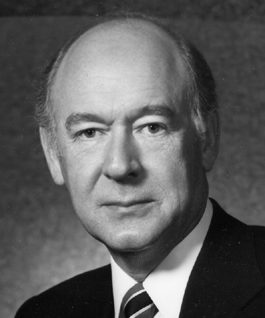
Cecil D. Andrus
Former United States Secretary of the Interior · U.S. Department of the Interior · 1977–1981
Cecil D. Andrus served as United States Secretary of the Interior (1977–1981). The page below collects sourced biographical facts, the appointment record, and provenance for Andrus.
Key facts
- Full name
- Cecil D. Andrus
- Department
- U.S. Department of the Interior
- Office
- United States Secretary of the Interior
- Status
- Former secretary
- Appointment
- Senate-confirmed
- Tenure
- 1977–1981
- Confirmed
- —
- Born
- 1931
- Died
- 2017
- First year in office
- 1977
- Dataset version
- 1.20260705
Appointment & service record
United States Secretary of the Interior · 1977–1981
- Department
- U.S. Department of the Interior
- Appointment
- Senate-confirmed
- Appointing president
- —
- Confirmed
- —
Department, appointment type (Senate-confirmed, acting, recess, or designated), appointing president, confirmation status, and service dates are drawn from Wikidata and the White House Cabinet roster.[1][2][3]
Sources
- [1]https://www.wikidata.org/wiki/Q372022Wikidata · retrieved 2026-07-05
- [2]https://www.whitehouse.gov/administration/cabinet/whitehouse.gov · retrieved 2026-07-05
- [3]https://www.wikidata.org/wiki/Q639738wikidata-cabinet · retrieved 2026-07-05
Biographical narrative
889 words · sourced from the Wikipedia REST extract
Cecil Dale Andrus was an American public servant who held the office of United States Secretary of the Interior from 1977 to 1981, a position confirmed by the Senate and appointed by President Jimmy Carter. Prior to his federal appointment he served as governor of Idaho for fourteen years across two non‑consecutive periods, during which he became known for his stewardship of natural resources and his efforts to balance environmental protection with economic development.
Early life and career
Cecil D. Andrus was born on August 25, 1931, in Hood River, Oregon. He grew up as the middle child among three siblings—an older brother named Steve and a younger sister named Margaret—in a family that later settled near Junction City on a farm without electricity. In early 1942, during World War II, the Andrus family relocated to Eugene, where his father Hal and uncle Bud opened a machine shop that refurbished sawmill equipment.
Andrus completed high school at Eugene High School in 1948 at the age of sixteen. He enrolled at Oregon State College in Corvallis, initially majoring in engineering during his freshman year. At seventeen he secured a summer position with the local utility company and, later that year, eloped to Reno with his high‑school sweetheart Carol Mae May, whom he married when she was 16 months younger than him.
In February 1951, following the outbreak of the Korean War, Andrus enlisted in the United States Naval Reserves. He served as an electronics technician aboard patrol aircraft until 1955. After leaving active duty, he moved to Orofino in northern Idaho and worked in various capacities within his family’s timber business. When the sawmill closed, he transitioned to the insurance industry in 1963 and relocated his family to Lewiston along the Clearwater River in 1966.
Andrus entered politics as a Democrat in 1960, motivated by concerns over inadequate educational resources in rural Idaho. He successfully challenged an incumbent Republican state senator representing Orofino, winning election to the Idaho State Senate. He was re‑elected in 1962 and again in 1964, serving until 1968.
His first bid for governor came in 1966, when he lost narrowly in the Democratic primary to Charles Herndon. After Herndon's untimely death in a plane crash weeks before the general election, Andrus was selected as the replacement nominee but ultimately fell short against Republican Don Samuelson. Undeterred, he returned to the state senate in 1968 and won re‑election from Lewiston.
In 1970, Andrus challenged Samuelson again for governor and secured victory by a margin exceeding ten thousand votes. His campaign was notably marked by opposition to proposed molybdenum mining developments in Idaho’s White Cloud Mountains—a stance that resonated with voters concerned about environmental impacts. During his first term he played an instrumental role in securing congressional support for the designation of the Sawtooth Wilderness Area, thereby preserving a significant portion of Idaho’s natural landscape.
Andrus was re‑elected as governor in 1974 with more than seventy percent of the vote, defeating Republican Lieutenant Governor Jack M. Murphy by a record margin. His tenure was highlighted by a focus on conservation and responsible resource management, earning him recognition from national publications such as Time magazine, which listed him among its “200 Faces for the Future” in that year.
Cabinet tenure
In January 1977, Andrus resigned as governor to accept an appointment as Secretary of the Interior under President Jimmy Carter. He became the first individual from Idaho to serve in a presidential cabinet and was confirmed by the United States Senate. During his four years in Washington, D.C., he emphasized environmental stewardship while also addressing economic considerations tied to natural resource use.
One of Andrus’s notable contributions at the federal level involved expanding protections for national park lands. He worked closely with congressional leaders to secure additional acreage for a prominent California redwood forest area, thereby extending its preservation status. In addition, he played a key role in advancing legislation that expanded protected land holdings in Alaska during the final months of the Carter administration, ensuring continued conservation efforts despite the impending transition to a new presidential administration.
Throughout his cabinet service, Andrus maintained an approach that sought to balance ecological concerns with the interests of business and industry. He advocated for decision‑making processes that relied on expert knowledge within the Department of the Interior, aiming to reduce undue influence from external stakeholders while preserving opportunities for sustainable economic development.
Legacy
Cecil D. Andrus’s impact on conservation policy extended beyond his federal tenure. In 1993, an Idaho wildlife preserve in Washington County was named the Cecil D. Andrus Wildlife Management Area in honor of his lifelong dedication to protecting natural resources. The following year, a wilderness area that had been part of his earlier advocacy—the White Clouds region—was renamed the Cecil D. Andrus–White Clouds Wilderness, further cementing his association with environmental preservation.
Andrus’s record as governor remains unmatched in Idaho history; he served fourteen years across two non‑consecutive terms, the longest cumulative tenure for any state leader in the region. His legacy is characterized by a belief that environmentalism and economic progress can coexist when guided by informed expertise and responsible governance. He passed away on August 24, 2017, one day before his eighty-sixth birthday, leaving behind a body of work that continues to influence public policy regarding land management and conservation in the United States.
Sources & provenance
Every quantitative or attributable claim above carries a per-section [N] marker that resolves to the corresponding URL below. Each entry records the upstream provider, the canonical URL, and the timestamp at which the underlying source was retrieved.
Key facts
- https://www.wikidata.org/wiki/Q372022Wikidata · retrieved 2026-07-05
- https://www.whitehouse.gov/administration/cabinet/whitehouse.gov · retrieved 2026-07-05
- https://www.wikidata.org/wiki/Q639738wikidata-cabinet · retrieved 2026-07-05
Biographical narrative
- https://en.wikipedia.org/wiki/Cecil_AndrusWikipedia · retrieved 2026-07-05
Explore the Cabinet
The Cabinet includes the Vice President and the heads of the 15 executive departments. Browse the full roster of current and former secretaries, or explore how the Cabinet fits into the federal government.