
Historical · U.S. Department of the Interior
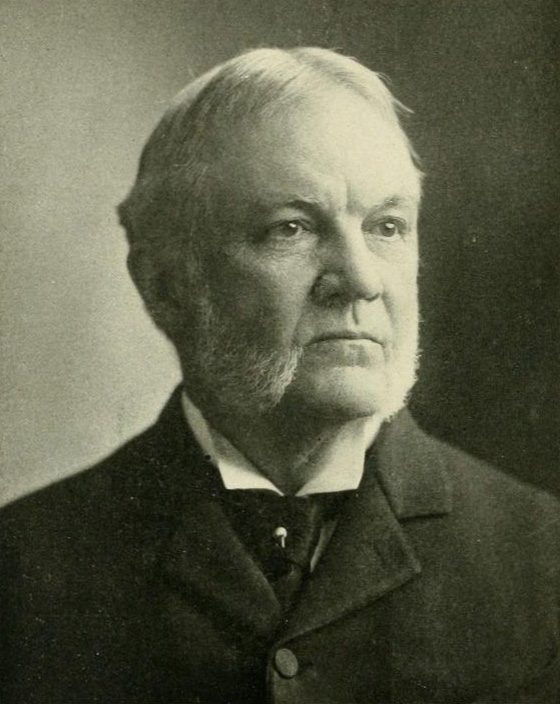
Cornelius Newton Bliss
Former United States Secretary of the Interior · U.S. Department of the Interior · 1897–1899
Cornelius Newton Bliss served as United States Secretary of the Interior (1897–1899). The page below collects sourced biographical facts, the appointment record, and provenance for Bliss.
Key facts
- Full name
- Cornelius Newton Bliss
- Department
- U.S. Department of the Interior
- Office
- United States Secretary of the Interior
- Status
- Former secretary
- Appointment
- Senate-confirmed
- Tenure
- 1897–1899
- Confirmed
- —
- Born
- 1833
- Died
- 1911
- First year in office
- 1897
- Dataset version
- 1.20260704
Appointment & service record
United States Secretary of the Interior · 1897–1899
- Department
- U.S. Department of the Interior
- Appointment
- Senate-confirmed
- Appointing president
- —
- Confirmed
- —
Department, appointment type (Senate-confirmed, acting, recess, or designated), appointing president, confirmation status, and service dates are drawn from Wikidata and the White House Cabinet roster.[1][2][3][4]
Sources
- [1]https://www.wikidata.org/wiki/Q382782Wikidata · retrieved 2026-07-04
- [2]https://www.whitehouse.gov/administration/cabinet/whitehouse.gov · retrieved 2026-07-04
- [3]https://www.wikidata.org/wiki/Q639738wikidata-cabinet · retrieved 2026-07-04
- [4]https://www.doi.gov/interiormuseum/past-secretariesdoi.gov past-secretaries roster · retrieved 2026-07-04
Biographical narrative
836 words · sourced from the Wikipedia REST extract
Cornelius Newton Bliss (January 26, 1833 – October 9, 1911) was an American merchant, politician and art collector who served as United States Secretary of the Interior in President William McKinley’s administration. Prior to his cabinet appointment he had built a prominent career in wholesale dry‑goods trading, been active in Republican political circles, and held the position of treasurer for the Republican National Committee during four consecutive presidential campaigns.
Early life and career
Bliss was born in Fall River, Massachusetts, to Asahel Newton Bliss and Irene Borden (née Luther) Bliss. His family traced its ancestry back to Thomas Bliss, who emigrated from Belstone, Devonshire, to New England in 1635. When Bliss was an infant his father died; his mother later married Edward S. Keep, with whom she relocated the family to New Orleans in 1840. He received his early education both in Fall River and in New Orleans, where he entered his stepfather’s counting house as a young clerk.
In 1849, Bliss returned to Massachusetts and began working as a clerk for a prominent Boston commercial house. His aptitude led him to become a junior partner within the firm. Seeking broader opportunities, he later moved to New York City and established a branch of the same enterprise there. The original partnership, known as Wright & Whitman, was renamed Wright, Bliss & Fabyan in 1874 following the death of senior partner John S. Wright. When Eben Wright died in 1881, the firm adopted the name Bliss, Fabyan & Co., under which it continued to operate well into the twentieth century. Under Bliss’s leadership, the company became one of the largest wholesale dry‑goods houses in the United States.
Bliss’s business success was complemented by a strong interest in protective tariffs. He emerged as a consistent advocate for tariff protection and played a key role in organizing the American Protective Tariff League, eventually serving as its president. His engagement with economic policy naturally extended into political activity. In 1887 and 1888 he chaired the Republican state committee and was instrumental in securing the Harrison ticket’s success in New York during the latter year. From 1892 to 1904, Bliss served as treasurer of the Republican National Committee, a position that placed him at the center of national campaign finance and organization.
Despite offers to serve in higher executive roles—including an invitation to become Secretary of the Treasury under President McKinley—Bliss declined those appointments. Instead, he accepted the nomination for United States Secretary of the Interior, a cabinet post he held from 1897 until 1899 during McKinley’s presidency. In 1900 Bliss was invited to stand as McKinley’s vice‑presidential candidate; he again refused the offer. The following year President McKinley was assassinated, and Theodore Roosevelt assumed the presidency.
Bliss married Mary Elizabeth Plummer on March 30, 1859. She was the daughter of Honorable Avery Plummer of Boston. Together they had four children: Nellie Bliss (born 1861), who died young; Lizzie Plummer Bliss (1864–1931), one of the founders of the Museum of Modern Art in New York City; George Bliss, who also died young; and Cornelius Newton Bliss Jr. (1875–1949), a prominent financier who married Zaidee Cobb. The family was associated with the Jekyll Island Club, known as The Millionaires Club, located on Jekyll Island, Georgia.
Bliss’s health began to deteriorate in 1910. In the summer of 1911 he spent time at his country home in Rumson, New Jersey, accompanied by physician Arthur W. Bingham. By September he had returned to New York City because of his frailty. He remained at his residence on East 37th Street for the final two weeks of his life and died there from heart disease at 7 p.m. on October 9, 1911. His burial took place in Woodlawn Cemetery in the Bronx, New York.
Cabinet tenure
Bliss’s appointment as Secretary of the Interior placed him within President McKinley’s cabinet during a period of rapid industrial expansion and territorial acquisition for the United States. While serving from 1897 to 1899, he was responsible for overseeing federal lands, natural resources, and Native American affairs. His confirmation by the Senate affirmed his suitability for the role, though specific policy initiatives or legislative actions undertaken during his tenure are not detailed in the available records. Bliss’s term concluded at the end of McKinley’s second year in office.
Legacy
Beyond his public service, Bliss was noted for his collection of fine art. He owned works by artists such as Arthur Bowen Davies and Claude Monet, including Monet’s painting *The Manneporte near Étretat*, which is now housed at the Metropolitan Museum of Art. His patronage contributed to the cultural enrichment of the period.
Bliss’s multifaceted career—as a successful merchant in the dry‑goods industry, an advocate for protective tariffs, a key figure in Republican campaign organization, and a cabinet secretary—reflects the interconnected nature of commerce, politics, and public administration at the turn of the twentieth century. His personal interests in art and his involvement with elite social clubs further illustrate the breadth of his engagement with American society during his lifetime.
Sources & provenance
Every quantitative or attributable claim above carries a per-section [N] marker that resolves to the corresponding URL below. Each entry records the upstream provider, the canonical URL, and the timestamp at which the underlying source was retrieved.
Key facts
- https://www.wikidata.org/wiki/Q382782Wikidata · retrieved 2026-07-04
- https://www.whitehouse.gov/administration/cabinet/whitehouse.gov · retrieved 2026-07-04
- https://www.wikidata.org/wiki/Q639738wikidata-cabinet · retrieved 2026-07-04
- https://www.doi.gov/interiormuseum/past-secretariesdoi.gov past-secretaries roster · retrieved 2026-07-04
Biographical narrative
- https://en.wikipedia.org/wiki/Cornelius_Newton_BlissWikipedia · retrieved 2026-07-04
Explore the Cabinet
The Cabinet includes the Vice President and the heads of the 15 executive departments. Browse the full roster of current and former secretaries, or explore how the Cabinet fits into the federal government.