
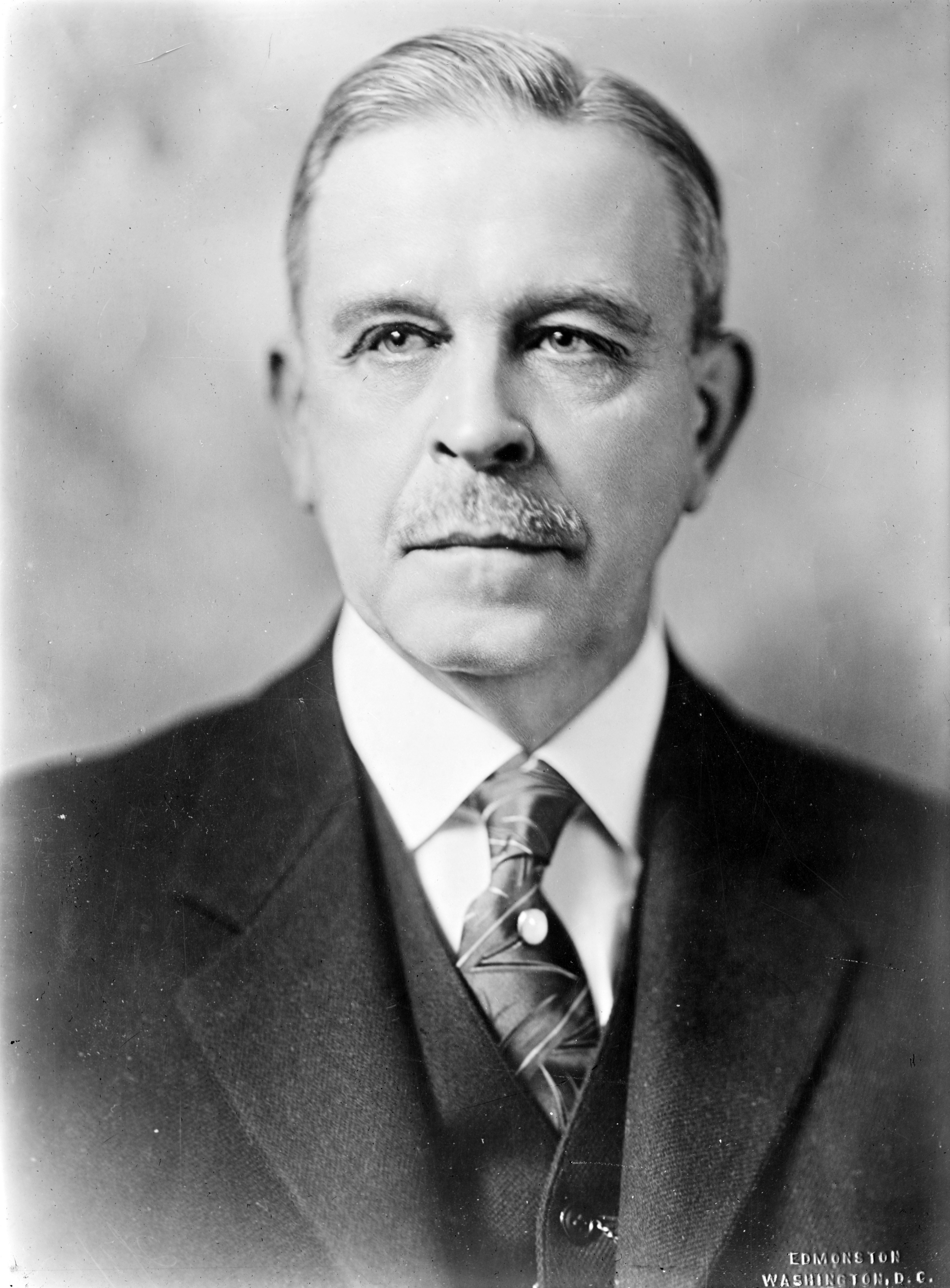
Historical · U.S. Department of the Interior
Hubert Work
Former United States Secretary of the Interior · U.S. Department of the Interior · 1923–1928
Hubert Work served as United States Secretary of the Interior (1923–1928). The page below collects sourced biographical facts, the appointment record, and provenance for Work.
Key facts
- Full name
- Hubert Work
- Department
- U.S. Department of the Interior
- Office
- United States Secretary of the Interior
- Status
- Former secretary
- Appointment
- Senate-confirmed
- Tenure
- 1923–1928
- Confirmed
- —
- Born
- 1860
- Died
- 1942
- First year in office
- 1923
- Dataset version
- 1.20260703
Appointment & service record
United States Secretary of the Interior · 1923–1928
- Department
- U.S. Department of the Interior
- Appointment
- Senate-confirmed
- Appointing president
- —
- Confirmed
- —
Department, appointment type (Senate-confirmed, acting, recess, or designated), appointing president, confirmation status, and service dates are drawn from Wikidata and the White House Cabinet roster.[1][2][3]
Sources
- [1]https://www.wikidata.org/wiki/Q368717Wikidata · retrieved 2026-07-03
- [2]https://www.whitehouse.gov/administration/cabinet/whitehouse.gov · retrieved 2026-07-03
- [3]https://www.wikidata.org/wiki/Q639738wikidata-cabinet · retrieved 2026-07-03
Biographical narrative
964 words · sourced from the Wikipedia REST extract
Hubert Work was an American physician whose career bridged medicine, military service, and high‑level federal administration in the early twentieth century. Born in 1860 and passing away in 1942, he became the first medical doctor to serve in a United States Cabinet position. His public service included tenure as United States Postmaster General from 1922 to 1923 during President Warren G. Harding’s administration and appointment as Secretary of the Interior from 1923 until 1928 under both Harding and President Calvin Coolidge.
Early life and career
Hubert Work entered the world on July 3, 1860, in Marion Center, Pennsylvania, to parents Tabitha Van Horn and Moses Thompson Work. He pursued medical education at the University of Michigan for a year (1882–1883) before completing his degree at the University of Pennsylvania, where he earned an M.D. in 1885. After establishing himself professionally, Work relocated to Colorado, where he founded Woodcroft Hospital in Pueblo in 1896, contributing to the region’s healthcare infrastructure and providing medical services to a growing population in the western United States.
Work’s engagement with public affairs was closely tied to the Republican Party, though his personal political affiliation is not recorded for his Cabinet service. He served as the state chairman of the party in Colorado in 1912 and represented the state at the Republican National Convention in 1920. In 1914, he sought election to the United States Senate in a special contest that marked Colorado’s first popular vote under the Seventeenth Amendment; he received 98,728 ballots (39 percent) but was defeated by Democrat Charles S. Thomas, who secured 102,037 votes (40.3 percent). The election outcome reflected the competitive political landscape of the era and highlighted Work’s willingness to engage in electoral politics despite his primary career as a physician.
During World War I, Work contributed to the war effort through his medical expertise, serving in the United States Army Medical Corps and attaining the rank of lieutenant colonel. His leadership extended beyond military service; from 1921 to 1922 he presided over the American Medical Association as its president, a role that underscored his standing within the national medical community and allowed him to influence discussions on professional standards, public health policy, and the organization of medical practice across the country.
In federal service prior to his Cabinet appointment, Work was appointed United States Assistant Postmaster General in 1921 and subsequently promoted to United States Postmaster General in 1922. He held this position until 1923, overseeing postal operations during a period of significant expansion for the U.S. mail system, which included the introduction of new services and increased efficiency in handling the nation’s growing volume of correspondence.
Cabinet tenure
In 1923, President Warren G. Harding nominated Hubert Work as Secretary of the Interior. The Senate confirmed his appointment, and he served in that capacity through the remainder of Harding’s term and into the administration of President Calvin Coolidge until July 24, 1928. As Secretary of the Interior, Work oversaw federal responsibilities related to natural resources, public lands, and Native American affairs. His tenure coincided with a period of active management of the nation’s vast interior territories, including the regulation of mining, forestry, and water resources, as well as the administration of policies affecting indigenous populations.
One notable development during his tenure was the formal granting of American citizenship to Native Americans residing within the United States. This action represented a significant shift in federal policy toward indigenous peoples and reflected broader changes occurring in national attitudes toward citizenship and civil rights at the time. Work’s resignation from the department on July 24, 1928 led to the appointment of Roy O. West as his successor.
Work’s service as Secretary of the Interior marked him as the first physician ever to hold a position within the United States Cabinet, setting a precedent for medical professionals in high‑level government roles and demonstrating the value that expertise from diverse professional backgrounds can bring to federal administration.
Legacy
Hubert Work’s legacy encompasses several domains: medicine, public administration, and civil rights. His early career as a physician and hospital founder contributed to the development of healthcare services in Colorado, providing essential medical care to communities in a rapidly expanding region. As president of the American Medical Association, he influenced national discussions on medical practice standards and professional organization, helping shape the direction of the profession during a formative period.
In federal government, his tenure as Secretary of the Interior is remembered for its role in formalizing citizenship status for Native Americans—a policy change that had lasting implications for indigenous communities across the country. The decision to grant citizenship was part of a broader movement toward recognizing the rights and identities of native peoples within the United States, and Work’s leadership facilitated the implementation of this significant legal transformation.
His appointment also broke a historical barrier by bringing a medical professional into Cabinet service, thereby expanding the diversity of expertise represented at the highest levels of federal administration. This precedent opened avenues for future appointments of individuals with specialized knowledge in fields such as science, medicine, and engineering to cabinet positions, enriching policy discussions with perspectives grounded in technical and professional experience.
Work’s personal life included two marriages and three children. He married Laura M. Arbuckle in 1887; together they had Philip, Dorcas "Doris" Logan, and Robert Van Horn Work. After Laura’s death, he remarried Ethel Reed Gano in 1933. Hubert Work died on December 14, 1942, in Denver, Colorado. He was interred at Arlington National Cemetery in Arlington, Virginia, beside his first wife, underscoring the enduring respect afforded to his military and public service contributions. His burial in a national cemetery reflects recognition of both his wartime medical service and his federal leadership, cementing his place among those who have served the nation in multiple capacities.
Sources & provenance
Every quantitative or attributable claim above carries a per-section [N] marker that resolves to the corresponding URL below. Each entry records the upstream provider, the canonical URL, and the timestamp at which the underlying source was retrieved.
Key facts
- https://www.wikidata.org/wiki/Q368717Wikidata · retrieved 2026-07-03
- https://www.whitehouse.gov/administration/cabinet/whitehouse.gov · retrieved 2026-07-03
- https://www.wikidata.org/wiki/Q639738wikidata-cabinet · retrieved 2026-07-03
Biographical narrative
- https://en.wikipedia.org/wiki/Hubert_WorkWikipedia · retrieved 2026-07-03
Explore the Cabinet
The Cabinet includes the Vice President and the heads of the 15 executive departments. Browse the full roster of current and former secretaries, or explore how the Cabinet fits into the federal government.