
Historical · U.S. Department of the Interior
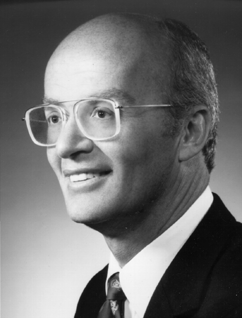
James G. Watt
Former United States Secretary of the Interior · U.S. Department of the Interior · 1981–1983
James G. Watt served as United States Secretary of the Interior (1981–1983). The page below collects sourced biographical facts, the appointment record, and provenance for Watt.
Key facts
- Full name
- James G. Watt
- Department
- U.S. Department of the Interior
- Office
- United States Secretary of the Interior
- Status
- Former secretary
- Appointment
- Senate-confirmed
- Tenure
- 1981–1983
- Confirmed
- —
- Born
- 1938
- Died
- 2023
- First year in office
- 1981
- Dataset version
- 1.20260703
Appointment & service record
United States Secretary of the Interior · 1981–1983
- Department
- U.S. Department of the Interior
- Appointment
- Senate-confirmed
- Appointing president
- —
- Confirmed
- —
Department, appointment type (Senate-confirmed, acting, recess, or designated), appointing president, confirmation status, and service dates are drawn from Wikidata and the White House Cabinet roster.[1][2][3]
Sources
- [1]https://www.wikidata.org/wiki/Q710501Wikidata · retrieved 2026-07-03
- [2]https://www.whitehouse.gov/administration/cabinet/whitehouse.gov · retrieved 2026-07-03
- [3]https://www.wikidata.org/wiki/Q639738wikidata-cabinet · retrieved 2026-07-03
Biographical narrative
955 words · sourced from the Wikipedia REST extract
James Gaius Watt was an American lawyer, lobbyist, and public servant who served as the United States Secretary of the Interior during the early years of the Ronald Reagan administration. His tenure from 1981 to 1983 was marked by a strong emphasis on expanding resource extraction on federal lands and waters, which drew significant criticism from environmental groups and positioned him as one of Reagan’s most controversial cabinet appointments.
Early life and career
James Gaius Watt entered the world in Lusk, Wyoming, on January 31, 1938. He was raised by his parents, Lois Mae (née Williams) and William Gaius Watt, a lawyer who also practiced homesteading. Growing up in the American West shaped Watt’s later focus on natural resource issues.
Watt pursued higher education at the University of Wyoming, where he earned a bachelor’s degree in 1960 followed by a juris doctor in 1962. His legal training paved the way for his initial foray into politics when he became an aide to Senator Milward L. Simpson of Wyoming. The connection was facilitated through Simpson’s son, Alan, and it provided Watt with early exposure to federal legislative processes.
Throughout the 1960s and 1970s, Watt held a series of positions that deepened his involvement in natural resource policy. He served as secretary to the Natural Resources Committee and the Environmental Pollution Advisory Panel within the U.S. Chamber of Commerce, roles that reflected his alignment with right‑leaning perspectives on resource management. In 1969, he was appointed deputy assistant secretary for water and power development at the Department of the Interior, placing him directly within the executive branch’s stewardship of federal lands.
Watt’s career continued to ascend when, in 1975, he became vice chairman of the Federal Power Commission, an agency responsible for regulating interstate electricity transmission. Two years later, in 1977, he assumed the position of first president and chief legal officer of Mountain States Legal Foundation. This public‑interest law firm was described as being “dedicated to individual liberty, the right to own and use property, limited and ethical government and economic freedom.” Several attorneys who worked under Watt at the foundation would later occupy prominent federal positions, including Ann Veneman and Gale Norton.
Cabinet tenure
In 1980, President‑elect Ronald Reagan nominated Watt to serve as Secretary of the Interior. The United States Senate confirmed his appointment, allowing him to take office in 1981. From the outset, Watt’s approach to resource management was characterized by a strong preference for expanding access to federal lands and waters for oil, gas, coal, and other extractive industries.
Watt opened nearly all of America’s coastal waters to oil and gas drilling and broadened the availability of federal land for coal mining. He also relaxed restrictions on strip‑mining operations. His proposals included opening 80 million acres of undeveloped land for drilling and mining by the year 2000, a plan that was widely criticized for its environmental implications. During his term, the area leased to coal mining increased fivefold.
The Secretary’s actions were perceived as hostile to environmental protection efforts. He sought to eliminate the Land and Water Conservation Fund, an initiative designed to expand wildlife refuges and other protected areas. Additionally, he resisted accepting private land donations earmarked for conservation purposes. Environmental groups accused him of reducing funding for environmental programs, restructuring the Department of the Interior to diminish federal regulatory power, and recommending that wilderness and shore lands—such as Santa Monica Bay—be leased for oil and gas exploration.
Watt’s record on species protection was notably low; he listed the fewest endangered species under the Endangered Species Act among Secretaries of the Interior. This record would later be surpassed by Dirk Kempthorne, a Secretary appointed during the George W. Bush administration.
Beyond policy decisions, Watt occasionally referenced his Dispensationalist Christian faith when addressing environmental matters. He remarked that he was uncertain how many future generations might remain before the Lord’s return and suggested that resource management should be conducted with prudence for those who would follow. An apocryphal statement attributed to him—“After the last tree is felled, Christ will come back”—was later clarified as a misattribution; Watt publicly denied having made such a remark.
In April 1983, Watt exercised his authority over public events by banning concerts featuring The Beach Boys and The Grass Roots from the National Mall. He cited concerns that these rock bands had encouraged drug use and alcoholism among attendees in previous Independence Day celebrations, arguing that they attracted “the wrong element.” This decision was part of a broader effort to regulate cultural activities on federal property.
Watt’s tenure concluded abruptly in 1983 when he resigned following remarks about the composition of a panel reviewing his coal‑leasing policies. He described the panel as having “every kind of mixture—I have a Black. I have a woman, two Jews and a cripple.” The comments sparked controversy and led to his departure from the cabinet.
Legacy
After leaving government service, Watt entered the private sector as a lobbyist representing builders seeking contracts with the U.S. Department of Housing and Urban Development (HUD). His lobbying activities would later become the subject of legal scrutiny.
In 1995, federal prosecutors indicted Watt on eighteen counts of felony perjury and obstruction of justice. The charges stemmed from false statements he had made before a grand jury investigating influence peddling at HUD. In 1996, he was sentenced to five years’ probation as part of the resolution of those cases.
James Gaius Watt passed away on May 27, 2023, at the age of 85. His career remains emblematic of a period in American governance when resource extraction and environmental regulation were often at odds, and his actions continue to be referenced in discussions about federal land management and the balance between economic development and conservation.
Sources & provenance
Every quantitative or attributable claim above carries a per-section [N] marker that resolves to the corresponding URL below. Each entry records the upstream provider, the canonical URL, and the timestamp at which the underlying source was retrieved.
Key facts
- https://www.wikidata.org/wiki/Q710501Wikidata · retrieved 2026-07-03
- https://www.whitehouse.gov/administration/cabinet/whitehouse.gov · retrieved 2026-07-03
- https://www.wikidata.org/wiki/Q639738wikidata-cabinet · retrieved 2026-07-03
Biographical narrative
- https://en.wikipedia.org/wiki/James_G._WattWikipedia · retrieved 2026-07-03
Explore the Cabinet
The Cabinet includes the Vice President and the heads of the 15 executive departments. Browse the full roster of current and former secretaries, or explore how the Cabinet fits into the federal government.