
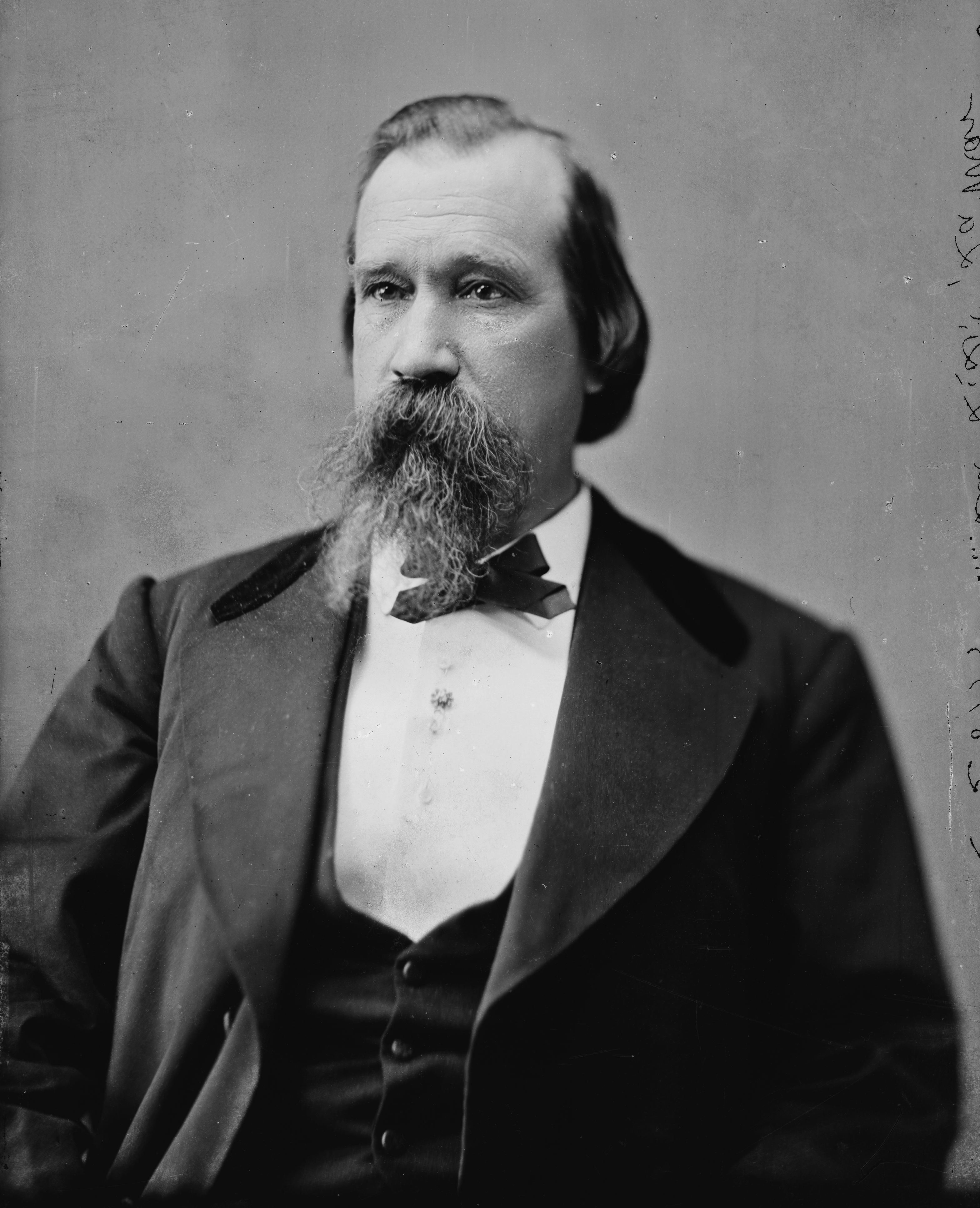
Historical · U.S. Department of the Interior
Lucius Quintus Cincinnatus Lamar
Former United States Secretary of the Interior · U.S. Department of the Interior · 1885–1888
Lucius Quintus Cincinnatus Lamar served as United States Secretary of the Interior (1885–1888). The page below collects sourced biographical facts, the appointment record, and provenance for Lamar.
Key facts
- Full name
- Lucius Quintus Cincinnatus Lamar
- Department
- U.S. Department of the Interior
- Office
- United States Secretary of the Interior
- Status
- Former secretary
- Appointment
- Senate-confirmed
- Tenure
- 1885–1888
- Confirmed
- —
- Born
- 1825
- Died
- 1893
- First year in office
- 1885
- Dataset version
- 1.20260703
Appointment & service record
United States Secretary of the Interior · 1885–1888
- Department
- U.S. Department of the Interior
- Appointment
- Senate-confirmed
- Appointing president
- —
- Confirmed
- —
Department, appointment type (Senate-confirmed, acting, recess, or designated), appointing president, confirmation status, and service dates are drawn from Wikidata and the White House Cabinet roster.[1][2][3]
Sources
- [1]https://www.wikidata.org/wiki/Q1549250Wikidata · retrieved 2026-07-03
- [2]https://www.whitehouse.gov/administration/cabinet/whitehouse.gov · retrieved 2026-07-03
- [3]https://www.wikidata.org/wiki/Q639738wikidata-cabinet · retrieved 2026-07-03
Biographical narrative
892 words · sourced from the Wikipedia REST extract
Lucius Quintus Cincinnatus Lamar was a prominent 19th‑century American figure whose career spanned law, military service, politics, diplomacy, and the federal judiciary. Born in Georgia in 1825, he practiced law in Mississippi before serving as a Confederate officer during the Civil War. After the war he returned to public life, representing Mississippi in both houses of Congress, acting as a diplomat for the Confederacy, and eventually holding two high‑level federal appointments: United States Secretary of the Interior from 1885 to 1888 and associate justice of the Supreme Court until his death in 1893.
Early life and career
Lamar entered the world on September 17, 1825, near Eatonton, Georgia, at a family plantation called “Fairfield.” His parents were Lucius Quintus Cincinnatus Lamar and Sarah Bird; he had five siblings. The elder Lamar was a lawyer and state judge in Georgia, and his death by suicide when young Lamar was nine left an early imprint on the younger man’s life. Contemporary accounts described the suicide as resulting from either insanity or severe dyspepsia.
He received his initial schooling in the Milledgeville area before attending the Manual Labor School in Covington from 1837 to 1840; that institution later merged with Emory College, where Lamar completed his studies in 1845. While at Emory, he married Virginia Longstreet, daughter of Augustus Baldwin Longstreet, who served as president of the college. The couple wed in July 1847 at the President’s House on the Emory campus and had four children: L.Q.C. Lamar III, Virginia, Sarah, and Frances. Their marriage ended with Virginia’s death from lung disease on December 29, 1884.
After graduation, Lamar pursued a legal career. He was admitted to the Georgia bar in 1847 in Vienna and opened his own practice in Covington before moving to Oxford, Mississippi, in 1849. In Mississippi he established himself as a lawyer and slaveholder; the 1850 federal census recorded him owning fourteen enslaved people near Oxford, mostly women and girls. A decade later, after a brief return to Georgia described below, Lamar owned thirty‑one slaves in Lafayette County, of whom fourteen were female and seventeen male, including nine boys and four girls under ten.
Lamar’s early political involvement began with participation in local Democratic conventions in 1847 and 1849, where he advocated for proslavery positions that would characterize his public stance throughout the antebellum period. He helped organize a local branch of the Southern Rights Party in Oxford in 1851 and soon became its delegate to the statewide party convention in Jackson. Lamar campaigned on behalf of Jefferson Davis for governor and served as the party’s spokesman in a debate with Unionist opponent Henry Foote, though Foote ultimately won the election.
In the summer of 1852, homesick and dissatisfied as a politician, Lamar returned to Covington and entered into a legal partnership. He reentered politics in Georgia by winning a seat in the Georgia House of Representatives as a member of the Democratic Party representing Newton County, which had typically favored Whig candidates. After serving briefly in that capacity, he moved back to Mississippi and entered state politics more fully.
During the American Civil War, Lamar helped raise the 19th Mississippi Infantry Regiment and served on the staff of General James Longstreet, his wife's cousin by marriage. In 1862, Confederate President Jefferson Davis appointed him Special Commissioner to Russia, a diplomatic role that underscored his prominence within the Confederacy.
Following the war, Lamar returned to academia as a professor at the University of Mississippi while also engaging in state constitutional conventions. His postwar political career resumed with election to the United States House of Representatives in 1873, making him the first Democrat from Mississippi elected to Congress after the conflict. He served in the House until 1877 and then moved to the Senate, representing Mississippi from 1877 to 1885.
Cabinet tenure
In 1885, President Grover Cleveland nominated Lamar for the position of United States Secretary of the Interior. The Senate confirmed his appointment, allowing him to serve in that capacity until 1888. As Secretary, he oversaw federal responsibilities related to natural resources, public lands, and Native American affairs, among other duties typical of the department. His tenure occurred during a period when the federal government was expanding its regulatory reach over land use and resource management.
After completing his service as Interior Secretary, Lamar received another significant appointment: nomination to the United States Supreme Court in 1888. He became the first Southerner appointed to the high court since the Civil War, serving on its bench until his death on January 23, 1893.
Legacy
Lamar’s life reflects a trajectory from regional legal practice and Confederate service to influential federal roles during Reconstruction and beyond. His experience as a Confederate officer and diplomat juxtaposed with his later participation in the United States government illustrates the complex reintegration of Southern leaders into national institutions after the Civil War. As Secretary of the Interior, he contributed to the administration’s management of public lands and resources, while his brief tenure on the Supreme Court placed him among the judiciary’s most senior figures.
His death in 1893 marked the end of a career that bridged multiple facets of American governance: law, military service, diplomacy, legislative representation, executive administration, and judicial oversight. Lamar remains a historical example of how former Confederate leaders transitioned into key positions within the federal government during the late nineteenth century.
Sources & provenance
Every quantitative or attributable claim above carries a per-section [N] marker that resolves to the corresponding URL below. Each entry records the upstream provider, the canonical URL, and the timestamp at which the underlying source was retrieved.
Key facts
- https://www.wikidata.org/wiki/Q1549250Wikidata · retrieved 2026-07-03
- https://www.whitehouse.gov/administration/cabinet/whitehouse.gov · retrieved 2026-07-03
- https://www.wikidata.org/wiki/Q639738wikidata-cabinet · retrieved 2026-07-03
Biographical narrative
- https://en.wikipedia.org/wiki/Lucius_Quintus_Cincinnatus_LamarWikipedia · retrieved 2026-07-03
Explore the Cabinet
The Cabinet includes the Vice President and the heads of the 15 executive departments. Browse the full roster of current and former secretaries, or explore how the Cabinet fits into the federal government.