
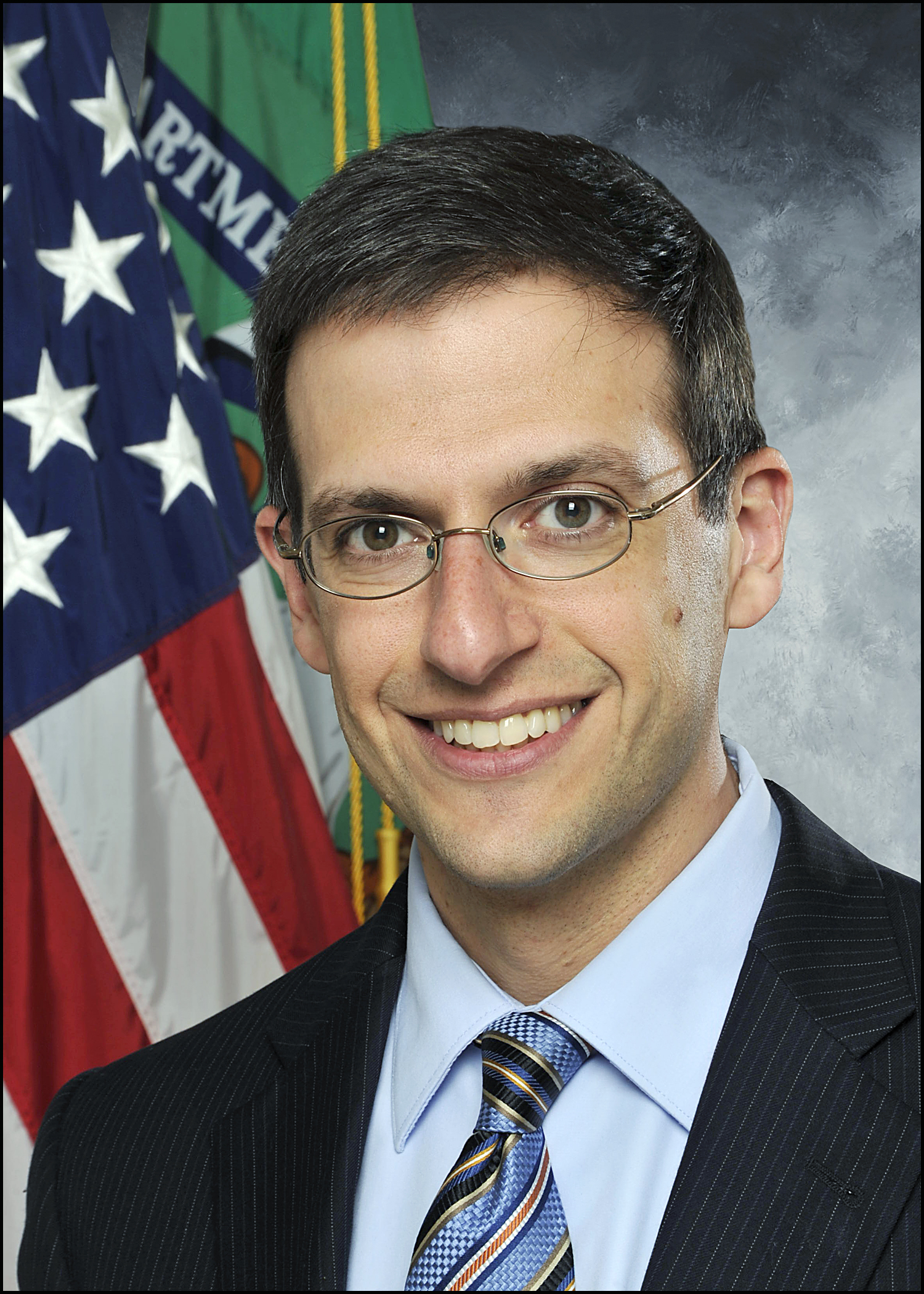
Historical · U.S. Department of the Treasury
Adam Szubin
Acting
Former Acting United States Secretary of the Treasury · U.S. Department of the Treasury · 2017–2017
Adam Szubin served as Acting United States Secretary of the Treasury (2017–2017). The page below collects sourced biographical facts, the appointment record, and provenance for Szubin.
Key facts
- Full name
- Adam Szubin
- Department
- U.S. Department of the Treasury
- Office
- United States Secretary of the Treasury
- Status
- Former secretary
- Appointment
- Acting
- Tenure
- 2017–2017
- Confirmed
- —
- Born
- 1972
- Died
- —
- First year in office
- 2017
- Dataset version
- 1.20260705
Appointment & service record
United States Secretary of the Treasury · 2017–2017
- Department
- U.S. Department of the Treasury
- Appointment
- Acting
- Appointing president
- —
- Confirmed
- Not confirmed
Department, appointment type (Senate-confirmed, acting, recess, or designated), appointing president, confirmation status, and service dates are drawn from Wikidata and the White House Cabinet roster.[1][2][3]
Sources
- [1]https://www.wikidata.org/wiki/Q28514306Wikidata · retrieved 2026-07-05
- [2]https://www.whitehouse.gov/administration/cabinet/whitehouse.gov · retrieved 2026-07-05
- [3]https://www.wikidata.org/wiki/Q639738wikidata-cabinet · retrieved 2026-07-05
Biographical narrative
812 words · sourced from the Wikipedia REST extract
Adam Jacob Szubin is an American attorney who has held several senior positions within the United States Department of the Treasury, most notably serving as Acting Secretary during the early months of the 2017 presidential administration. His career in federal finance and law spans more than a decade, beginning with his entry into Treasury service in 2004 and culminating in his brief tenure at the top of the department before the appointment of Steven Mnuchin. After leaving government, Szubin has continued to influence public policy through academic engagement and private legal practice.
Early life and career
Szubin was born in 1972 and grew up in an Orthodox Jewish household that emphasized both religious observance and academic achievement. He attended Yavneh Academy for his early schooling, a private institution known for integrating Judaic studies with a rigorous secular curriculum. Following this, he enrolled at the Ramaz School, another prominent Orthodox Jewish preparatory school that further developed his foundational knowledge in both humanities and sciences.
His undergraduate education was completed at Harvard College, where he earned an A.B. The academic environment at Harvard provided Szubin with exposure to a broad range of disciplines and fostered analytical skills that would later prove essential in his legal and policy work. He continued his studies at Harvard Law School, obtaining a J.D. While the specific focus areas of his legal training are not detailed, the combination of a liberal arts undergraduate degree and a professional law degree positioned him for roles requiring both critical thinking and an understanding of complex regulatory frameworks.
Szubin entered public service in 2004 when he joined the United States Department of the Treasury. During the administration of President George W. Bush, he served as Senior Advisor to the Under Secretary for Terrorism and Financial Intelligence. In this capacity, he provided strategic guidance on matters related to financial security and counterterrorism financing, working closely with senior officials to shape policies that addressed emerging threats in the global financial system.
From 2006 until 2015, Szubin directed Treasury’s Office of Foreign Assets Control (OFAC). As director, he oversaw the administration of economic sanctions programs designed to achieve U.S. foreign policy objectives. The role required coordination with multiple federal agencies and international partners to enforce compliance with sanctions regimes, ensuring that financial measures were applied consistently across domestic and foreign jurisdictions.
On April 16, 2015, President Barack Obama nominated Szubin for the position of Under Secretary for Terrorism and Financial Crimes. He appeared before the Senate Committee on Banking, Housing, and Urban Affairs as part of the confirmation process. In 2016, the Senate Banking Committee approved his nomination; however, he was not confirmed by the full Senate. Despite this outcome, President Donald Trump retained him in the same capacity during the transition to the new administration, reflecting continuity in leadership for a critical area of Treasury policy.
Cabinet tenure
Szubin’s most prominent appointment came at the beginning of 2017. Following the resignations of Treasury Secretary Jack Lew and Deputy Treasury Secretary Sarah Bloom Raskin amid the presidential transition, he was named Acting Secretary of the United States Department of the Treasury on January 20, 2017. In this interim capacity, Szubin managed the department’s day‑to‑day operations and maintained continuity in policy implementation during a period of administrative change.
During his tenure as acting secretary, which lasted until the confirmation of Steven Mnuchin by the Senate, Szubin drew upon his experience with OFAC and counterterrorism finance to inform the department’s broader fiscal strategy. He oversaw ongoing initiatives and ensured that Treasury programs continued to function smoothly while a permanent successor was selected.
After Mnuchin assumed office, Szubin departed from government service. His brief period at the helm of the Treasury occurred during a critical transition, ensuring stability for the department’s operations as it prepared for new leadership.
Legacy
Following his departure from federal service, Adam Szubin has remained active in both academic and private legal circles. He holds a position as Distinguished Practitioner-in-Residence at the Paul H. Nitze School of Advanced International Studies (SAIS) within Johns Hopkins University, where he contributes to scholarly discussions on international finance and security. In addition, he practices law with Covington & Burling in Washington, D.C., applying his expertise in financial regulation and sanctions enforcement.
Szubin’s career reflects a sustained focus on the intersection of national security and fiscal policy. His leadership roles within Treasury’s Office of Foreign Assets Control and as Acting Secretary underscore his involvement in shaping U.S. economic measures that support broader foreign policy goals. While his time at the helm of the department was brief, it occurred during a pivotal transition period, ensuring continuity for Treasury operations.
On a personal level, Szubin resides in Washington, D.C., with his wife Miriam Weiner Szubin and their three sons. His family life complements his professional commitments, grounding him within the community that has been central to his career trajectory.
Sources & provenance
Every quantitative or attributable claim above carries a per-section [N] marker that resolves to the corresponding URL below. Each entry records the upstream provider, the canonical URL, and the timestamp at which the underlying source was retrieved.
Key facts
- https://www.wikidata.org/wiki/Q28514306Wikidata · retrieved 2026-07-05
- https://www.whitehouse.gov/administration/cabinet/whitehouse.gov · retrieved 2026-07-05
- https://www.wikidata.org/wiki/Q639738wikidata-cabinet · retrieved 2026-07-05
Biographical narrative
- https://en.wikipedia.org/wiki/Adam_SzubinWikipedia · retrieved 2026-07-05
Explore the Cabinet
The Cabinet includes the Vice President and the heads of the 15 executive departments. Browse the full roster of current and former secretaries, or explore how the Cabinet fits into the federal government.