
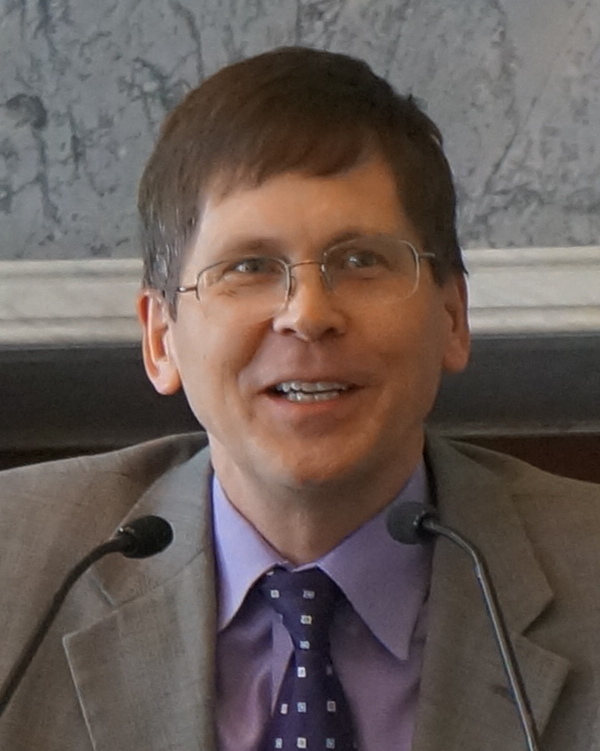
Historical · U.S. Department of the Treasury
Andy Baukol
Acting
Former Acting United States Secretary of the Treasury · U.S. Department of the Treasury · 2021–2021
Andy Baukol served as Acting United States Secretary of the Treasury (2021–2021). The page below collects sourced biographical facts, the appointment record, and provenance for Baukol.
Key facts
- Full name
- Andy Baukol
- Department
- U.S. Department of the Treasury
- Office
- United States Secretary of the Treasury
- Status
- Former secretary
- Appointment
- Acting
- Tenure
- 2021–2021
- Confirmed
- —
- Born
- —
- Died
- —
- First year in office
- 2021
- Dataset version
- 1.20260703
Appointment & service record
United States Secretary of the Treasury · 2021–2021
- Department
- U.S. Department of the Treasury
- Appointment
- Acting
- Appointing president
- —
- Confirmed
- Not confirmed
Department, appointment type (Senate-confirmed, acting, recess, or designated), appointing president, confirmation status, and service dates are drawn from Wikidata and the White House Cabinet roster.[1][2][3]
Sources
- [1]https://www.wikidata.org/wiki/Q104923417Wikidata · retrieved 2026-07-03
- [2]https://www.whitehouse.gov/administration/cabinet/whitehouse.gov · retrieved 2026-07-03
- [3]https://www.wikidata.org/wiki/Q639738wikidata-cabinet · retrieved 2026-07-03
Biographical narrative
954 words · sourced from the Wikipedia REST extract
Andrew P. Baukol is an American financial policy expert who held several senior roles within the United States Department of the Treasury, including a brief tenure as acting Secretary during the early days of President Joe Biden’s administration. Prior to his cabinet service, Baukol spent more than a decade in foreign‑policy and economic analysis at the Central Intelligence Agency and the International Monetary Fund before joining the Treasury Department, where he focused on international monetary policy and exchange‑rate stabilization. After retiring from federal service in November 2023, he joined the financial consulting firm Patomak Global Partners.
Early life and career
Baukol earned a Bachelor of Science degree from the Walsh School of Foreign Service at Georgetown University, an institution known for producing graduates who pursue careers in international affairs and public policy. He continued his studies with a Master of Arts in economics from the University of Minnesota, providing him with a strong quantitative foundation that would underpin his later work in economic analysis and policy formulation.
His professional career began in 1989 when he joined the Central Intelligence Agency as an economic analyst. In this capacity, Baukol was responsible for assessing global economic trends and their implications for U.S. national security interests. He remained at the CIA until 1996, during which time he developed expertise in macroeconomic indicators, currency markets, and international financial systems.
After leaving the intelligence community, Baukol transitioned to the International Monetary Fund (IMF), where he served as a senior advisor from 2001 to 2004. In that role, he provided policy advice on monetary issues to member countries and contributed to the IMF’s research on global economic stability. His experience at the IMF broadened his understanding of international financial governance and deepened his knowledge of exchange‑rate dynamics.
Baukol entered the United States Department of the Treasury in 2004, initially working on policy related to the Exchange Stabilization Fund (ESF). The ESF is a reserve fund used by the Treasury to intervene in foreign‑exchange markets; Baukol’s work involved managing the fund’s operations and ensuring that its use complied with statutory requirements. He later advanced to the position of principal deputy assistant secretary for international monetary policy, where he oversaw U.S. engagement on global financial issues such as currency stability, capital flows, and coordination with other central banks.
In 2021, then‑Treasury Secretary Steven Mnuchin appointed Baukol as the department’s presidential transition director. In that capacity, he coordinated the Treasury’s preparation for the incoming administration, ensuring a smooth handover of responsibilities and continuity in policy implementation during the transition period.
Cabinet tenure
When President Joe Biden assumed office on January 20, 2021, Andrew P. Baukol was appointed as acting United States Secretary of the Treasury. He served in this interim role for the first week of the new administration, overseeing the department’s day‑to‑day operations while the Senate confirmed Janet Yellen as the permanent secretary. During his brief tenure, Baukol maintained the Treasury’s routine functions and provided continuity during a critical period of administrative change.
Following Yellen’s confirmation, Baukol was appointed acting Under Secretary for International Affairs within the Treasury Department. In this position, he continued to advise on matters related to international monetary policy, exchange‑rate issues, and coordination with foreign governments and multilateral institutions. His experience in both domestic fiscal policy and global economic affairs positioned him well to manage the department’s international agenda during a time of evolving global financial challenges.
Baukol remained active within the Treasury Department until his retirement in November 2023. Throughout his cabinet service, he contributed to the department’s efforts to promote U.S. interests abroad while ensuring that domestic fiscal and monetary policies were aligned with broader economic objectives.
Legacy
Andrew P. Baukol’s career reflects a sustained commitment to public service across multiple agencies involved in national security, international finance, and economic policy. His early work as an economic analyst for the Central Intelligence Agency provided him with a deep understanding of how macroeconomic conditions intersect with strategic interests. The subsequent decade at the International Monetary Fund expanded his perspective on global financial governance and reinforced his expertise in currency markets.
Within the Treasury Department, Baukol’s contributions to the Exchange Stabilization Fund helped shape the department’s approach to foreign‑exchange interventions. His role as principal deputy assistant secretary for international monetary policy further underscored his influence on U.S. engagement with international financial institutions and other central banks. By coordinating the department’s transition activities in 2021, he ensured that Treasury operations continued smoothly during a period of significant administrative change.
His brief tenure as acting Secretary of the Treasury placed him at the helm of one of the nation’s most critical agencies during a pivotal moment in U.S. governance. Although his time in that role was short, it demonstrated his capacity to manage complex institutional responsibilities and maintain stability amid leadership transitions. As acting Under Secretary for International Affairs, he continued to shape the department’s international policy agenda, drawing on his extensive experience in both domestic and global economic arenas.
After retiring from federal service, Baukol joined Patomak Global Partners, a financial consulting firm that leverages deep expertise in public‑sector finance and regulatory matters. In this new role, he applies his knowledge of Treasury operations, international monetary policy, and exchange‑rate mechanisms to advise clients on complex financial challenges.
Overall, Andrew P. Baukol’s professional journey illustrates the interconnected nature of national security, international economics, and fiscal policy. His work across intelligence, multilateral institutions, and the Treasury Department has contributed to a more nuanced understanding of how domestic economic decisions interact with global financial systems. While his public service tenure was marked by continuity and expertise rather than headline‑making initiatives, it exemplifies the essential role that seasoned policymakers play in maintaining the stability and effectiveness of U.S. economic governance.
Sources & provenance
Every quantitative or attributable claim above carries a per-section [N] marker that resolves to the corresponding URL below. Each entry records the upstream provider, the canonical URL, and the timestamp at which the underlying source was retrieved.
Key facts
- https://www.wikidata.org/wiki/Q104923417Wikidata · retrieved 2026-07-03
- https://www.whitehouse.gov/administration/cabinet/whitehouse.gov · retrieved 2026-07-03
- https://www.wikidata.org/wiki/Q639738wikidata-cabinet · retrieved 2026-07-03
Biographical narrative
- https://en.wikipedia.org/wiki/Andy_BaukolWikipedia · retrieved 2026-07-03
Explore the Cabinet
The Cabinet includes the Vice President and the heads of the 15 executive departments. Browse the full roster of current and former secretaries, or explore how the Cabinet fits into the federal government.