
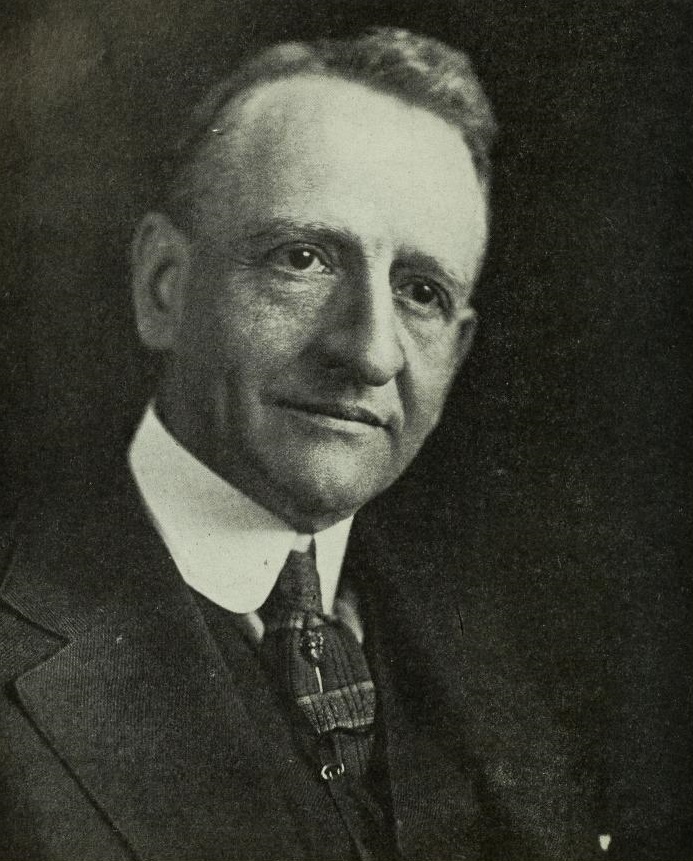
Historical · U.S. Department of the Treasury
Carter Glass
Former United States Secretary of the Treasury · U.S. Department of the Treasury · 1918–1920
Carter Glass served as United States Secretary of the Treasury (1918–1920). The page below collects sourced biographical facts, the appointment record, and provenance for Glass.
Key facts
- Full name
- Carter Glass
- Department
- U.S. Department of the Treasury
- Office
- United States Secretary of the Treasury
- Status
- Former secretary
- Appointment
- Senate-confirmed
- Tenure
- 1918–1920
- Confirmed
- —
- Born
- 1858
- Died
- 1946
- First year in office
- 1918
- Dataset version
- 1.20260703
Appointment & service record
United States Secretary of the Treasury · 1918–1920
- Department
- U.S. Department of the Treasury
- Appointment
- Senate-confirmed
- Appointing president
- —
- Confirmed
- —
Department, appointment type (Senate-confirmed, acting, recess, or designated), appointing president, confirmation status, and service dates are drawn from Wikidata and the White House Cabinet roster.[1][2][3]
Sources
- [1]https://www.wikidata.org/wiki/Q1045879Wikidata · retrieved 2026-07-03
- [2]https://www.whitehouse.gov/administration/cabinet/whitehouse.gov · retrieved 2026-07-03
- [3]https://www.wikidata.org/wiki/Q639738wikidata-cabinet · retrieved 2026-07-03
Biographical narrative
958 words · sourced from the Wikipedia REST extract
Carter Glass was a prominent American public servant whose career spanned journalism, state and national politics, and federal financial reform. Born in the post‑Civil War South, he rose from modest beginnings to become a key figure in shaping the United States’ banking system. His tenure as Secretary of the Treasury under President Woodrow Wilson coincided with the passage of landmark legislation that established the Federal Reserve System and later led to the creation of the Federal Deposit Insurance Corporation. After serving in the cabinet, Glass returned to the Senate where he continued to influence fiscal policy until his death in 1946.
Early life and career
Carter Glass entered the world on January 4, 1858, in Lynchburg, Virginia, as the youngest child of Robert Henry Glass and Augusta Elizabeth Christian. The loss of his mother when he was two years old left him under the care of his older sister, Nannie, who became a surrogate parent. His father served as the city’s postmaster from 1853 and had acquired the Lynchburg Daily Republican newspaper in 1858; this environment exposed Glass to print media from an early age.
Glass received only a basic formal education, attending a private school operated by former Confederate Henry L. Daviess. He supplemented his schooling through self‑study, reading works by Plato, Edmund Burke, and William Shakespeare, among others. At thirteen he began working as an apprentice printer with his father and the paper’s editor, gaining practical experience in the printing trade.
In 1876, Glass joined his father’s editorial staff at the Petersburg News, and later worked for the Danville Post. He returned to Lynchburg after a brief stint at the Atlantic, Mississippi and Ohio Railroad (AM&O), where he served as a clerk in the auditor’s office while the company was under receivership. The economic challenges of post‑war Virginia—particularly the state’s debt issues and volatile markets—shaped Glass’s conservative fiscal outlook.
At twenty‑two, Glass secured his first reporting position with the Lynchburg News, eventually becoming its editor by 1887. In 1888, when the publisher retired, Glass was offered the opportunity to purchase the newspaper. With financial assistance from a relative, he acquired the business and continued to manage it while pursuing public office.
Glass’s political career began in state politics. He was elected to the Virginia Senate in 1899 and served as a delegate at the Virginia Constitutional Convention of 1902, where he advocated for segregationist policies that would later be described by historians as foundational to disenfranchisement efforts in the state. In 1902, he was elected to the United States House of Representatives, representing Virginia’s interests on the national stage.
During his congressional service, Glass rose to prominence within the House Banking Committee. By 1913 he had become its chairman, positioning him at the center of federal financial policy discussions. His leadership on this committee facilitated collaboration with President Woodrow Wilson and set the stage for his later appointment as Secretary of the Treasury.
Cabinet tenure
In 1918, President Wilson appointed Glass to serve as United States Secretary of the Treasury. The Senate confirmed his nomination, and he held the office until 1920. While in the cabinet, Glass played a pivotal role in the passage of the Federal Reserve Act, which established a central banking system for the nation. His involvement extended beyond mere support; as chair of the House Banking Committee prior to his appointment, he had already been instrumental in shaping the legislation that would become the foundation of the Federal Reserve System.
Glass’s influence continued after his cabinet service when he was appointed by the Virginia legislature to fill a vacancy in the United States Senate in 1920. He served there until his death in 1946, during which time he chaired the Senate Appropriations Committee beginning in 1933 and held the position of president pro tempore from 1941 to 1945.
In the Senate, Glass co-sponsored the Banking Act of 1933—commonly referred to as the Glass–Steagall Act—which created the Federal Deposit Insurance Corporation (FDIC) and established a separation between commercial banking and investment banking. His advocacy for this legislation reflected his long‑standing commitment to financial regulation and stability.
Glass’s tenure in both the cabinet and the Senate was marked by a consistent emphasis on fiscal prudence, states’ rights, and a cautious approach to expansive federal intervention. He opposed many aspects of the New Deal, leading to notable tensions with President Franklin D. Roosevelt over appointments within Virginia and broader policy directions.
Legacy
Carter Glass’s legacy is most prominently tied to his contributions to the United States financial regulatory framework. As Secretary of the Treasury, he helped bring the Federal Reserve Act to fruition, creating a central banking system that remains integral to American economic governance. His subsequent support for the Banking Act of 1933 further cemented his influence by establishing deposit insurance and delineating boundaries between commercial and investment banking—a structure that endured until reforms in the late twentieth century.
Glass’s career also illustrates the complex interplay between state and federal power during a transformative era in American politics. His advocacy for states’ rights, coupled with his opposition to certain New Deal initiatives, positioned him as a key figure in debates over the scope of federal authority. While his early support for segregationist policies has been critically examined by historians, his role in shaping national financial policy is widely recognized.
Throughout his life, Glass maintained a reputation for fiscal conservatism and regulatory prudence. His work on banking legislation helped lay the groundwork for modern financial oversight, influencing both domestic policy and international perceptions of American economic stability. He remained active in public service until his death on May 28, 1946, leaving behind a legacy that continues to shape discussions about banking regulation, federal authority, and the balance between state and national interests.
Sources & provenance
Every quantitative or attributable claim above carries a per-section [N] marker that resolves to the corresponding URL below. Each entry records the upstream provider, the canonical URL, and the timestamp at which the underlying source was retrieved.
Key facts
- https://www.wikidata.org/wiki/Q1045879Wikidata · retrieved 2026-07-03
- https://www.whitehouse.gov/administration/cabinet/whitehouse.gov · retrieved 2026-07-03
- https://www.wikidata.org/wiki/Q639738wikidata-cabinet · retrieved 2026-07-03
Biographical narrative
- https://en.wikipedia.org/wiki/Carter_GlassWikipedia · retrieved 2026-07-03
Explore the Cabinet
The Cabinet includes the Vice President and the heads of the 15 executive departments. Browse the full roster of current and former secretaries, or explore how the Cabinet fits into the federal government.