
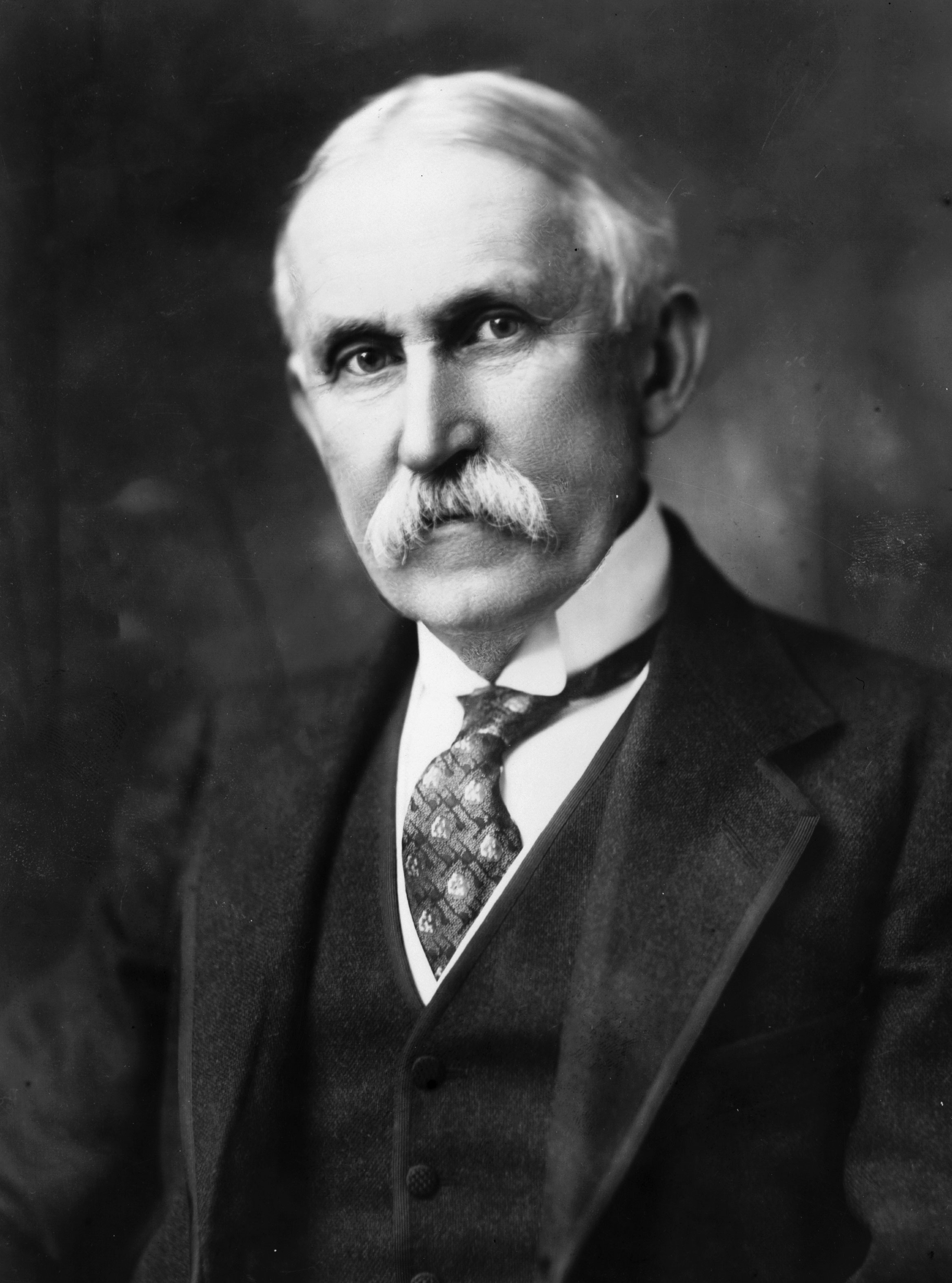
Historical · U.S. Department of the Treasury
Franklin MacVeagh
Former United States Secretary of the Treasury · U.S. Department of the Treasury · 1909–1913
Franklin MacVeagh served as United States Secretary of the Treasury (1909–1913). The page below collects sourced biographical facts, the appointment record, and provenance for MacVeagh.
Key facts
- Full name
- Franklin MacVeagh
- Department
- U.S. Department of the Treasury
- Office
- United States Secretary of the Treasury
- Status
- Former secretary
- Appointment
- Senate-confirmed
- Tenure
- 1909–1913
- Confirmed
- —
- Born
- 1837
- Died
- 1934
- First year in office
- 1909
- Dataset version
- 1.20260703
Appointment & service record
United States Secretary of the Treasury · 1909–1913
- Department
- U.S. Department of the Treasury
- Appointment
- Senate-confirmed
- Appointing president
- —
- Confirmed
- —
Department, appointment type (Senate-confirmed, acting, recess, or designated), appointing president, confirmation status, and service dates are drawn from Wikidata and the White House Cabinet roster.[1][2][3]
Sources
- [1]https://www.wikidata.org/wiki/Q1371351Wikidata · retrieved 2026-07-03
- [2]https://www.whitehouse.gov/administration/cabinet/whitehouse.gov · retrieved 2026-07-03
- [3]https://www.wikidata.org/wiki/Q639738wikidata-cabinet · retrieved 2026-07-03
Biographical narrative
834 words · sourced from the Wikipedia REST extract
Franklin MacVeagh was an American public servant who held the office of United States Secretary of the Treasury from 1909 to 1913 under President William Howard Taft. Born in 1837, he pursued a career that spanned commerce, law, banking, and government administration before his appointment to the cabinet. During his tenure at the Treasury Department he focused on administrative efficiency, modernizing customs operations, and advocating for currency reform, while also contributing to the creation of the buffalo nickel. After leaving federal office he remained active in civic affairs until his death in 1934.
Early life and career
Franklin MacVeagh entered the world on November 22, 1837, in Phoenixville, Pennsylvania. He was the son of Major MacVeagh and Margaret Lincoln. His family included a brother, Isaac Wayne MacVeagh, who later served as United States Attorney General during the administrations of Presidents James A. Garfield and Chester A. Arthur.
MacVeagh pursued higher education at Yale University, graduating in 1862. While there he was initiated into the secret society Skull and Bones, an affiliation that would later connect him with President William Howard Taft. After completing his undergraduate studies, he attended Columbia Law School, earning a law degree in 1864. He entered the legal profession but also maintained involvement in commercial activities; early in his career he worked as a wholesale grocer.
In 1868 MacVeagh married Emily Eames, and together they raised five children. His professional trajectory shifted toward finance when he joined the Commercial National Bank of Chicago. Over nearly three decades, he served as director of that institution, maintaining this role through to 1909. His long tenure in banking provided him with experience in financial management and regulatory matters.
In addition to his banking responsibilities, MacVeagh engaged in civic leadership. In 1885 he was elected president of the Commercial Club of Chicago, a position that underscored his prominence within the city’s business community. His involvement in local affairs extended beyond commerce; he also owned a summer estate in Dublin, New Hampshire, known as Knollwood, which is now listed on the National Register of Historic Places.
Cabinet tenure
President William Howard Taft nominated Franklin MacVeagh to serve as Secretary of the Treasury, and the United States Senate confirmed his appointment. He assumed office in 1909 and served until 1913. During this period he concentrated on improving the internal operations of the Treasury Department. One of his notable administrative actions was the elimination of 450 positions deemed unnecessary, a move aimed at streamlining departmental functions.
MacVeagh also modernized customs procedures. He introduced electric automatic weighing devices to the U.S. Customs Service, thereby increasing accuracy and efficiency in assessing duties on imported goods. Additionally, he accepted certified checks as an alternative to cash payments for customs and internal revenue collections, reflecting his willingness to adopt new financial instruments to facilitate government transactions.
While MacVeagh did not directly resolve the issue of currency reform, he emphasized its urgency in his annual report to Congress. The responsibility for comprehensive monetary reform was delegated to the National Monetary Commission, which had been established by the Aldrich‑Vreeland Act of 1908. His role involved advocating for the commission’s work and ensuring that the Treasury Department supported broader efforts toward a stable national currency system.
MacVeagh’s tenure also intersected with numismatic developments. He was involved in the creation of the buffalo nickel, a coin issued during his administration that has since become an iconic element of American coinage. Though he did not single-handedly design the coin, his support for its production contributed to its successful introduction.
Beyond administrative reforms and monetary policy, MacVeagh’s leadership style reflected a commitment to progressiveness within federal operations. He sought to modernize the Treasury Department’s infrastructure and procedures, thereby enhancing its capacity to serve the nation’s fiscal needs during a period of rapid economic growth.
Legacy
After leaving office in 1913, Franklin MacVeagh continued to be recognized for his contributions to public service and civic life. His Washington, D.C., residence at 2829 16th Street, NW, was constructed between 1910 and 1911 under the design of architect Nathan C. Wyeth; today the building houses the Mexican Cultural Institute of the Embassy of Mexico.
MacVeagh’s death occurred on July 6, 1934, in Chicago, Illinois, at the age of 96. He was interred in Graceland Cemetery in Chicago, a resting place that reflects his lifelong connection to the city where he spent much of his professional life.
In historical assessments, MacVeagh is remembered for his efforts to increase efficiency within the Treasury Department and for his advocacy of currency reform during a pivotal era in American financial history. His administrative reforms—particularly the reduction of redundant positions and the modernization of customs operations—contributed to a more streamlined federal fiscal apparatus. While he did not single-handedly resolve the nation’s monetary challenges, his support for the National Monetary Commission helped set the stage for subsequent developments in U.S. currency policy. MacVeagh’s legacy thus encompasses both tangible administrative improvements and a broader commitment to modernizing government functions in service of national economic stability.
Sources & provenance
Every quantitative or attributable claim above carries a per-section [N] marker that resolves to the corresponding URL below. Each entry records the upstream provider, the canonical URL, and the timestamp at which the underlying source was retrieved.
Key facts
- https://www.wikidata.org/wiki/Q1371351Wikidata · retrieved 2026-07-03
- https://www.whitehouse.gov/administration/cabinet/whitehouse.gov · retrieved 2026-07-03
- https://www.wikidata.org/wiki/Q639738wikidata-cabinet · retrieved 2026-07-03
Biographical narrative
- https://en.wikipedia.org/wiki/Franklin_MacVeaghWikipedia · retrieved 2026-07-03
Explore the Cabinet
The Cabinet includes the Vice President and the heads of the 15 executive departments. Browse the full roster of current and former secretaries, or explore how the Cabinet fits into the federal government.