
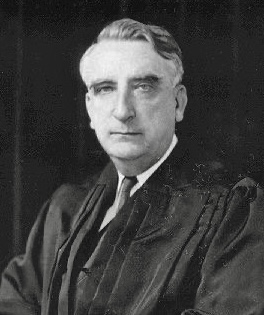
Historical · U.S. Department of the Treasury
Fred M. Vinson
Former United States Secretary of the Treasury · U.S. Department of the Treasury · 1945–1946
Fred M. Vinson served as United States Secretary of the Treasury (1945–1946). The page below collects sourced biographical facts, the appointment record, and provenance for Vinson.
Key facts
- Full name
- Fred M. Vinson
- Department
- U.S. Department of the Treasury
- Office
- United States Secretary of the Treasury
- Status
- Former secretary
- Appointment
- Senate-confirmed
- Tenure
- 1945–1946
- Confirmed
- —
- Born
- 1890
- Died
- 1953
- First year in office
- 1945
- Dataset version
- 1.20260703
Appointment & service record
United States Secretary of the Treasury · 1945–1946
- Department
- U.S. Department of the Treasury
- Appointment
- Senate-confirmed
- Appointing president
- —
- Confirmed
- —
Department, appointment type (Senate-confirmed, acting, recess, or designated), appointing president, confirmation status, and service dates are drawn from Wikidata and the White House Cabinet roster.[1][2][3]
Sources
- [1]https://www.wikidata.org/wiki/Q460151Wikidata · retrieved 2026-07-03
- [2]https://www.whitehouse.gov/administration/cabinet/whitehouse.gov · retrieved 2026-07-03
- [3]https://www.wikidata.org/wiki/Q639738wikidata-cabinet · retrieved 2026-07-03
Biographical narrative
953 words · sourced from the Wikipedia REST extract
Frederick Moore Vinson was an American attorney and public servant who held prominent positions in all three branches of the United States government. Born in Kentucky, he practiced law locally before entering politics as a member of the U.S. House of Representatives. After serving on the federal appellate court, he became Director of the Office of Economic Stabilization during World II. In 1945 President Harry S. Truman appointed him Secretary of the Treasury, where he oversaw post‑war financial arrangements and helped establish key international institutions. Following the death of Chief Justice Harlan F. Stone in 1946, Vinson was elevated to the Supreme Court as an associate justice and later served as chief justice until his death in 1953.
Early life and career
Frederick Moore Vinson was born on January 22, 1890, in Louisa, Kentucky, a small town located near the Lawrence County jail where his father worked as the county jailer. Growing up in this environment, Vinson spent time assisting his father with duties at the jail, an experience that would later be cited by contemporaries as formative for his sense of public service. He attended local schools and worked odd jobs while completing his education. In 1909 he graduated from Kentucky Normal School, after which he enrolled at Centre College in Danville, where he earned a Bachelor of Arts degree and finished as the top graduate of his class. While at Centre, he joined the Kentucky Alpha Delta chapter of Phi Delta Theta fraternity.
Vinson pursued legal studies at the now‑defunct College of Law, receiving a Bachelor of Laws. He returned to Louisa to begin private practice, establishing himself as a local attorney who handled a variety of civil and criminal matters. His early foray into public office came with his election as City Attorney of Louisa, a position that allowed him to gain experience in municipal law and governance.
During World War I, Vinson sought to contribute to the national effort by enlisting in the United States Army. He was rejected twice because he was underweight but was finally accepted for service in August 1918. He completed basic training at Camp Zachary Taylor in Kentucky and attended officer training at Camp Pike in Arkansas; however, the war ended on November 11, 1918 before he received a commission. After his brief military service, Vinson returned to civilian life and was elected Commonwealth’s Attorney for Kentucky’s Thirty‑Second Judicial District, where he prosecuted cases under state law.
In 1924, following the resignation of Representative William J. Fields, Vinson ran in a special election and won a seat in the U.S. House of Representatives. He served from 1925 to 1929, during which time he became known for his legislative work on fiscal matters. In 1928 he was defeated in a re‑election bid; analysts at the time noted that his association with President Alfred E. Smith’s campaign may have influenced voters. Vinson regained his seat in 1930 and continued to serve until 1937, during which period he cultivated a close friendship with Senator Harry S. Truman of Missouri. The two men became confidants, card players, and political allies; their relationship would prove influential in Vinson’s later appointments.
Vinson moved his law practice from Louisa to Ashland, Kentucky, in 1931, positioning himself within a network that could support future federal opportunities. In Ashland he joined a circle of local professionals, including neighbor Paul G. Blazer, which helped him maintain ties to the political establishment. His support for President Franklin D. Roosevelt’s New Deal initiatives earned him recognition as an effective advocate for economic reform.
Vinson married Julia Roberta Dixon on January 24, 1924, in Ashland; the couple had two sons together. The family life provided a stable backdrop to his increasingly demanding public career.
Cabinet tenure
In 1937 President Franklin D. Roosevelt nominated Vinson to serve as an Associate Justice of the United States Court of Appeals for the District of Columbia (now the United States Court of Appeals for the District of Columbia Circuit). He was confirmed by the Senate on December 9, 1937, and received his commission six days later. During his tenure on the appellate court he also served as Chief Judge of the Emergency Court of Appeals, a position designated to him by Chief Justice Harlan F. Stone.
In 1943 Vinson resigned from the federal bench to accept the role of Director of the Office of Economic Stabilization. In this capacity he oversaw wartime economic controls, managing price and wage regulations that were critical to maintaining industrial production during World II. His experience in both legislative and judicial branches informed his approach to balancing governmental authority with private enterprise.
Following President Roosevelt’s death on April 12, 1945, Vice President Harry S. Truman assumed the presidency. On May 12, 1945, Truman appointed Vinson as Secretary of the Treasury. The Senate confirmed his appointment, and he served in that capacity until 1946. As Treasury secretary, Vinson negotiated the payment of the Anglo‑American loan, a key financial arrangement between the United Kingdom and the United States designed to support post‑war reconstruction. He also presided over the establishment of several international institutions aimed at fostering economic stability after World II, most notably the International Bank for Reconstruction and Development (commonly referred to as the World Bank) and the International Monetary Fund (IMF). These organizations were created to provide financial assistance and promote global economic cooperation during a period of significant geopolitical change.
Legacy
Vinson’s career is notable for its breadth; he served in legislative, judicial, and executive roles at the national level. His work as Secretary of the Treasury helped lay foundations for international economic cooperation that would shape mid‑20th‑century policy. In 1946, after the death of Chief Justice Harlan F. Stone, President Truman
Sources & provenance
Every quantitative or attributable claim above carries a per-section [N] marker that resolves to the corresponding URL below. Each entry records the upstream provider, the canonical URL, and the timestamp at which the underlying source was retrieved.
Key facts
- https://www.wikidata.org/wiki/Q460151Wikidata · retrieved 2026-07-03
- https://www.whitehouse.gov/administration/cabinet/whitehouse.gov · retrieved 2026-07-03
- https://www.wikidata.org/wiki/Q639738wikidata-cabinet · retrieved 2026-07-03
Biographical narrative
- https://en.wikipedia.org/wiki/Fred_M._VinsonWikipedia · retrieved 2026-07-03
Explore the Cabinet
The Cabinet includes the Vice President and the heads of the 15 executive departments. Browse the full roster of current and former secretaries, or explore how the Cabinet fits into the federal government.