
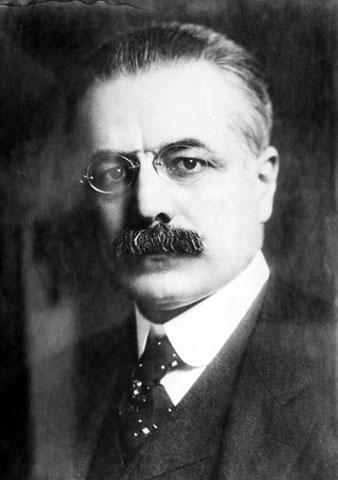
Historical · U.S. Department of the Treasury
George Bruce Cortelyou
Former United States Secretary of the Treasury · U.S. Department of the Treasury · 1907–1909
George Bruce Cortelyou served as United States Secretary of the Treasury (1907–1909). The page below collects sourced biographical facts, the appointment record, and provenance for Cortelyou.
Key facts
- Full name
- George Bruce Cortelyou
- Department
- U.S. Department of the Treasury
- Office
- United States Secretary of the Treasury
- Status
- Former secretary
- Appointment
- Senate-confirmed
- Tenure
- 1907–1909
- Confirmed
- —
- Born
- 1862
- Died
- 1940
- First year in office
- 1907
- Dataset version
- 1.20260703
Appointment & service record
United States Secretary of the Treasury · 1907–1909
- Department
- U.S. Department of the Treasury
- Appointment
- Senate-confirmed
- Appointing president
- —
- Confirmed
- —
Department, appointment type (Senate-confirmed, acting, recess, or designated), appointing president, confirmation status, and service dates are drawn from Wikidata and the White House Cabinet roster.[1][2][3]
Sources
- [1]https://www.wikidata.org/wiki/Q1334556Wikidata · retrieved 2026-07-03
- [2]https://www.whitehouse.gov/administration/cabinet/whitehouse.gov · retrieved 2026-07-03
- [3]https://www.wikidata.org/wiki/Q639738wikidata-cabinet · retrieved 2026-07-03
Biographical narrative
806 words · sourced from the Wikipedia REST extract
George Bruce Cortelyou (July 26 1862 – October 23 1940) was an American public servant who held several senior positions in the executive branch of the United States government during the first decade of the twentieth century. He is best known for his tenure as Secretary of the Treasury from 1907 to 1909, a period that encompassed the Panic of 1907 and the beginnings of the movement toward a central banking system.
Early life and career
Cortelyou was born in New York City to Rose (née Seary) and Peter Crolius Cortelyou Jr., members of an old New Netherlandish family whose ancestor Jacques Cortelyou had arrived in America in 1652. He received his early education in the public schools of Brooklyn, then attended Nazareth Hall Military Academy in Pennsylvania and the Hempstead Institute on Long Island. In 1882, at age twenty, he earned a Bachelor of Arts degree from Westfield Normal School—now Westfield State University—in Massachusetts.
He pursued legal studies at George Washington University and Georgetown University, where he joined the Phi Sigma Kappa fraternity while enrolled at GWU. After completing his education, Cortelyou worked as an educator before turning to stenography; he mastered shorthand techniques that would later prove useful in his governmental roles.
On September 15, 1888, Cortelyou married Lily Morris Hinds, and the couple had five children together. His early career began with a position as secretary to the chief postal inspector of New York in 1891. The following year he advanced to secretary for the Fourth Assistant Postmaster General in Washington, D.C. In 1895, President Grover Cleveland appointed him chief clerk on the recommendation of Postmaster General Wilson S. Bissell. Cleveland’s endorsement led to Cortelyou’s appointment as personal secretary to his successor, President William McKinley.
During McKinley’s administration, Cortelyou worked to improve the efficiency of the executive office. When McKinley was assassinated in 1901 at the Pan‑American Exposition in Buffalo, New York, Cortelyou was among the aides who supported the president as he collapsed. After McKinley’s death, Theodore Roosevelt assumed the presidency and tasked Cortelyou with reorganizing the White House into a more professional institution. He established procedures for protocol, improved communication between the President’s office and the press, and instituted systematic collection of press clippings to gauge public opinion.
In 1903, Roosevelt appointed Cortelyou as the first Secretary of Commerce and Labor, a position he held until June 30 1904. The following year he became Postmaster General (March 6 1905 – January 14 1907) while also serving as chairman of the Republican National Committee from 1904 to 1907, contributing to Roosevelt’s successful re‑election campaign.
Cabinet tenure
Cortelyou was confirmed by the Senate and served as United States Secretary of the Treasury from March 4 1907 to March 7 1909. His term coincided with the Panic of 1907, a severe financial crisis that threatened banking stability. In response, he deposited large amounts of government funds in national banks and purchased government bonds to support liquidity. Recognizing limitations within the Treasury’s capacity to maintain economic stability, Cortelyou advocated for a more flexible currency system and recommended establishing a central banking institution.
The Aldrich–Vreeland Act was enacted in 1908 during his tenure; it authorized special currency issuance during panics and created a commission that eventually led to the Federal Reserve System’s creation in 1913. While Cortelyou did not directly author this legislation, his advocacy for structural reforms contributed to the broader discourse that shaped its passage.
After Roosevelt left office in 1909, Cortelyou transitioned from public service to the private sector. He became president of the Consolidated Gas Company (later known as Consolidated Edison). In addition to leading the company, he served as one of its chairmen and was involved with the Con Edison Energy Museum until its closure.
Legacy
Cortelyou’s career exemplifies a trajectory from clerical beginnings to high‑level executive responsibilities within the federal government. His work in reorganizing White House operations set precedents for modern presidential administration practices, particularly regarding communication with the press and systematic record‑keeping of public opinion through press clippings.
As Treasury Secretary during the Panic of 1907, Cortelyou’s actions helped stabilize the banking system and laid groundwork for future financial reforms. His advocacy for a central banking structure foreshadowed the establishment of the Federal Reserve System, which would become a cornerstone of U.S. economic policy.
Following his public service, Cortelyou continued to influence the energy sector through leadership at Consolidated Gas Company. He resided in Long Island’s Halesite area at his home “Harbor Lights” until his death on October 23 1940. Edith Roosevelt attended his wake, reflecting the close personal ties he maintained with the former First Family. Cortelyou was interred in the Memorial Cemetery of St. John’s Church in Laurel Hollow, New York.
His life and career remain a reference point for scholars studying early twentieth‑century American governance, financial policy development, and presidential administration practices.
Sources & provenance
Every quantitative or attributable claim above carries a per-section [N] marker that resolves to the corresponding URL below. Each entry records the upstream provider, the canonical URL, and the timestamp at which the underlying source was retrieved.
Key facts
- https://www.wikidata.org/wiki/Q1334556Wikidata · retrieved 2026-07-03
- https://www.whitehouse.gov/administration/cabinet/whitehouse.gov · retrieved 2026-07-03
- https://www.wikidata.org/wiki/Q639738wikidata-cabinet · retrieved 2026-07-03
Biographical narrative
- https://en.wikipedia.org/wiki/George_B._CortelyouWikipedia · retrieved 2026-07-03
Explore the Cabinet
The Cabinet includes the Vice President and the heads of the 15 executive departments. Browse the full roster of current and former secretaries, or explore how the Cabinet fits into the federal government.