
Historical · U.S. Department of the Treasury
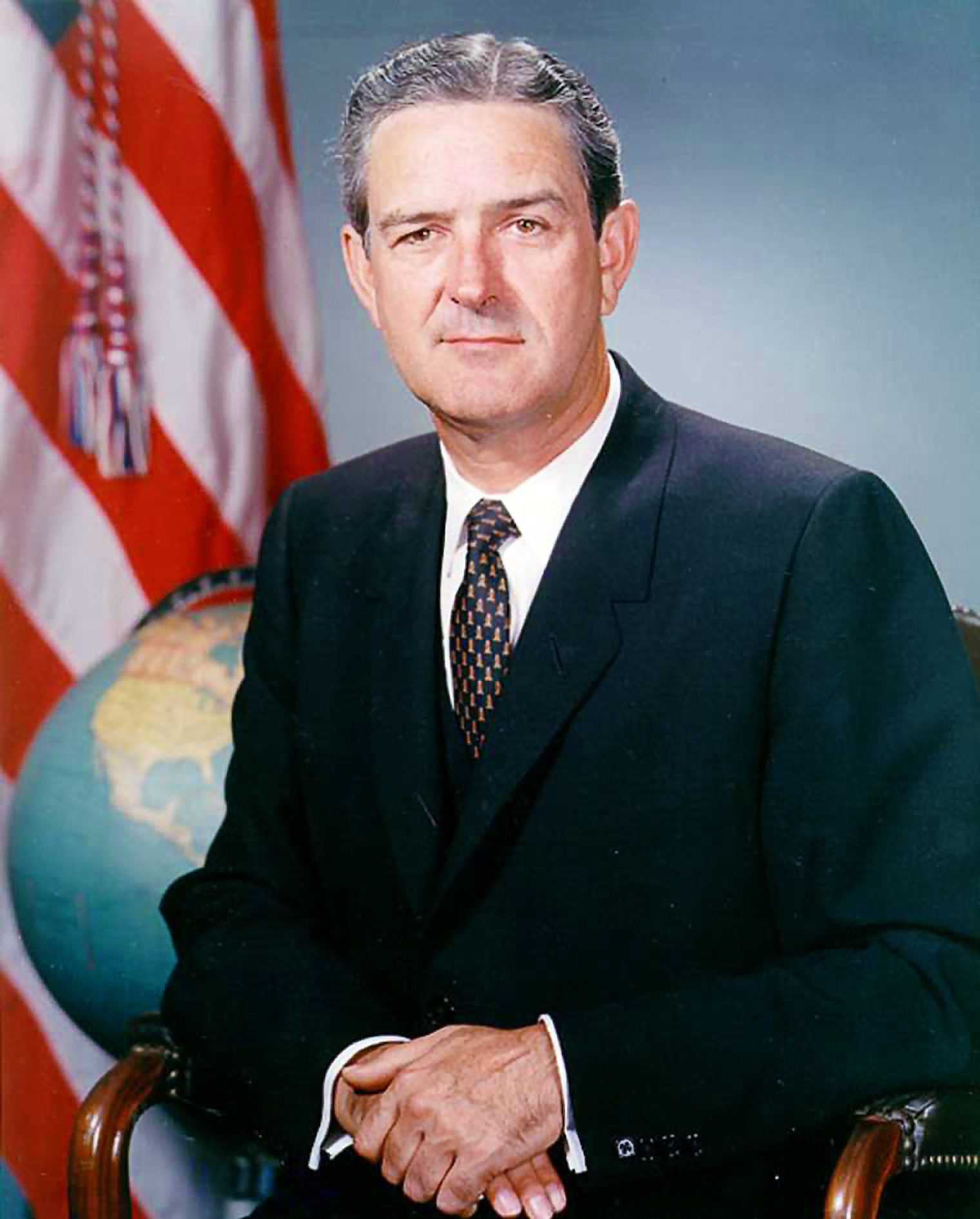
John Connally
Former United States Secretary of the Treasury · U.S. Department of the Treasury · 1971–1972
John Connally served as United States Secretary of the Treasury (1971–1972). The page below collects sourced biographical facts, the appointment record, and provenance for Connally.
Key facts
- Full name
- John Connally
- Department
- U.S. Department of the Treasury
- Office
- United States Secretary of the Treasury
- Status
- Former secretary
- Appointment
- Senate-confirmed
- Tenure
- 1971–1972
- Confirmed
- —
- Born
- 1917
- Died
- 1993
- First year in office
- 1971
- Dataset version
- 1.20260703
Appointment & service record
United States Secretary of the Treasury · 1971–1972
- Department
- U.S. Department of the Treasury
- Appointment
- Senate-confirmed
- Appointing president
- —
- Confirmed
- —
Department, appointment type (Senate-confirmed, acting, recess, or designated), appointing president, confirmation status, and service dates are drawn from Wikidata and the White House Cabinet roster.[1][2][3]
Sources
- [1]https://www.wikidata.org/wiki/Q311293Wikidata · retrieved 2026-07-03
- [2]https://www.whitehouse.gov/administration/cabinet/whitehouse.gov · retrieved 2026-07-03
- [3]https://www.wikidata.org/wiki/Q639738wikidata-cabinet · retrieved 2026-07-03
Biographical narrative
841 words · sourced from the Wikipedia REST extract
John Bowden Connally Jr. (February 27 1917 – June 15 1993) was an American public servant who held several high‑profile positions in the federal government and state of Texas. He served as the 39th governor of Texas from 1963 to 1969, and later as the 61st United States Secretary of the Treasury under President Richard Nixon from 1971 to 1972. His career spanned law, military service, political strategy, and executive administration.
Early life and career
Connally was born in Floresville, Texas, a small community southeast of San Antonio, on February 27 1917. He was the third child among seven siblings born to Lela (née Wright) and John Bowden Connally, who worked as dairy and tenant farmers. The family experienced severe economic hardship during the Great Depression; at times Connally studied by kerosene light while his parents struggled to make ends meet. Despite these challenges, the family’s fortunes improved when a bus route venture succeeded, enabling them to purchase a 1,000‑acre farm in 1932 and providing sufficient income for Connally’s higher education.
He attended Floresville High School before enrolling at the University of Texas at Austin. While an undergraduate he served as student body president and joined the Friar Society, a prominent campus organization. It was during this period that he met his future wife, Nellie. After completing his bachelor's degree, Connally pursued legal studies at the university’s School of Law, passing the bar examination and entering private practice.
Connally’s early political connections were forged in 1936 when he befriended a young Lyndon B. Johnson on campus. Their friendship endured for decades; Johnson later helped Connally secure employment in Washington, D.C., and encouraged him to return there after World War II as an aide to Senator Johnson.
During the war, Connally entered the United States Navy on June 11 1941 with the rank of ensign. He served first as a staff member for James V. Forrestal and then joined General Dwight D. Eisenhower’s planning team for the North African campaign. After transferring to the Asiatic‑Pacific Theater he was assigned aboard the aircraft carrier USS Essex as fighter‑plane director, where his actions earned him the Bronze Star. Later he served on the USS Bennington and received the Legion of Merit before being discharged in January 1946 with the rank of lieutenant commander.
Following his military service, Connally practiced law in Texas at the firm of Alvin Wirtz. His legal work brought him into contact with prominent business figures, including oil magnate Sid W. Richardson and Richardson’s nephew Perry Bass. The relationship led to a relocation to Fort Worth, where Connally managed Richardson’s extensive interests; after Richardson died in 1959, Connally was appointed co‑executor of the estate.
Connally also ventured into broadcasting. After WWII he worked at Johnson’s radio station KTBC in Austin and later founded his own station, KVET, borrowing $25 000 to do so. He served as president of KVET from its inception in 1946 until 1949.
His close ties with Johnson translated into political strategy roles. Connally was a chief strategist for Johnson’s successful 1948 Senate campaign, and he led the Texas delegation supporting Johnson at the Democratic National Convention in Los Angeles in 1960. In December 1961, after serving briefly as United States Secretary of the Navy under President John F. Kennedy, Connally resigned to run for governor of Texas. He won that election and served three consecutive terms from 1963 until 1969, during which he was known for a conservative approach to state governance.
During his governorship, Connally rode in the presidential limousine when President Kennedy was assassinated on November 22 1963; he sustained serious injuries as a result. His tenure coincided with a period of economic expansion and infrastructural development in Texas, although specific policy initiatives are not detailed in the available facts.
Cabinet tenure
In 1971, President Richard Nixon appointed Connally as United States Secretary of the Treasury. The Senate confirmed his appointment, and he served in that capacity until 1972. During his brief tenure, Connally oversaw significant monetary policy changes, including the removal of the United States dollar from the gold standard—a move commonly referred to as the Nixon shock.
After stepping down from the cabinet in 1972, Connally became the head of the Democrats for Nixon organization, which campaigned on behalf of President Nixon’s re‑election. Following Vice President Spiro Agnew’s resignation in 1973, Connally was considered a potential replacement; however, Gerald Ford was ultimately chosen for the position.
In 1980, Connally entered the Republican presidential primaries but withdrew after the first set of state contests and did not pursue further public office thereafter. He remained active in political circles through his involvement with the Democrats for Nixon organization and other civic activities until his death.
Legacy
John B. Connally’s career illustrates a trajectory that moved from local legal practice to national political strategy, military service, executive governance, and federal administration. His tenure as governor of Texas coincided with a period of economic growth and infrastructural development in the state, while his brief but pivotal role as Treasury Secretary placed him at the
Sources & provenance
Every quantitative or attributable claim above carries a per-section [N] marker that resolves to the corresponding URL below. Each entry records the upstream provider, the canonical URL, and the timestamp at which the underlying source was retrieved.
Key facts
- https://www.wikidata.org/wiki/Q311293Wikidata · retrieved 2026-07-03
- https://www.whitehouse.gov/administration/cabinet/whitehouse.gov · retrieved 2026-07-03
- https://www.wikidata.org/wiki/Q639738wikidata-cabinet · retrieved 2026-07-03
Biographical narrative
- https://en.wikipedia.org/wiki/John_ConnallyWikipedia · retrieved 2026-07-03
Explore the Cabinet
The Cabinet includes the Vice President and the heads of the 15 executive departments. Browse the full roster of current and former secretaries, or explore how the Cabinet fits into the federal government.