
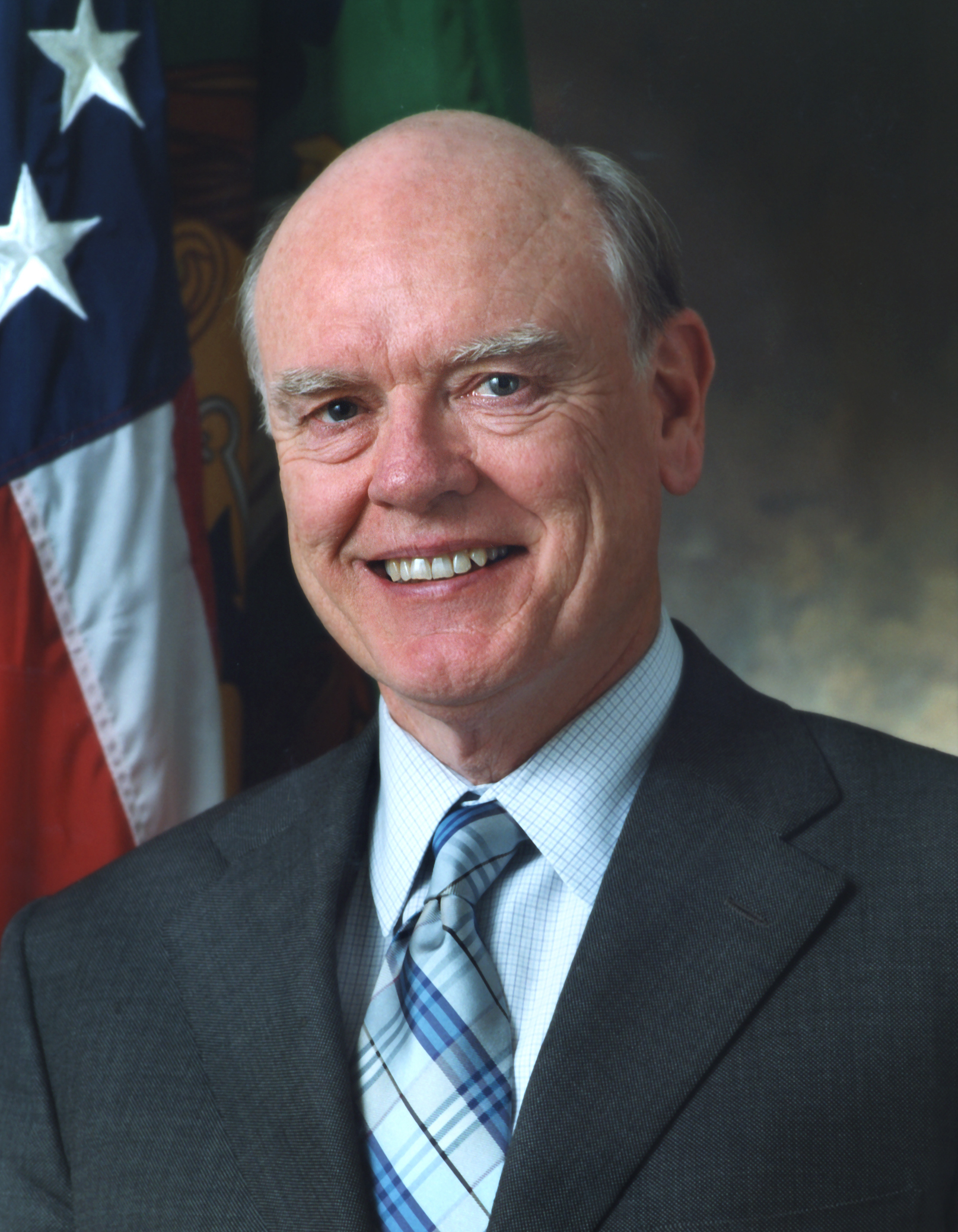
Historical · U.S. Department of the Treasury
John W. Snow
Former United States Secretary of the Treasury · U.S. Department of the Treasury · 2003–2006
John W. Snow served as United States Secretary of the Treasury (2003–2006). The page below collects sourced biographical facts, the appointment record, and provenance for Snow.
Key facts
- Full name
- John W. Snow
- Department
- U.S. Department of the Treasury
- Office
- United States Secretary of the Treasury
- Status
- Former secretary
- Appointment
- Senate-confirmed
- Tenure
- 2003–2006
- Confirmed
- —
- Born
- 1939
- Died
- —
- First year in office
- 2003
- Dataset version
- 1.20260703
Appointment & service record
United States Secretary of the Treasury · 2003–2006
- Department
- U.S. Department of the Treasury
- Appointment
- Senate-confirmed
- Appointing president
- —
- Confirmed
- —
Department, appointment type (Senate-confirmed, acting, recess, or designated), appointing president, confirmation status, and service dates are drawn from Wikidata and the White House Cabinet roster.[1][2][3]
Sources
- [1]https://www.wikidata.org/wiki/Q449689Wikidata · retrieved 2026-07-03
- [2]https://www.whitehouse.gov/administration/cabinet/whitehouse.gov · retrieved 2026-07-03
- [3]https://www.wikidata.org/wiki/Q639738wikidata-cabinet · retrieved 2026-07-03
Biographical narrative
821 words · sourced from the Wikipedia REST extract
John William Snow, born August 2, 1939, is an American economist, attorney, and businessman who served as the 73rd United States Secretary of the Treasury from February 3, 2003 to July 3, 2006. Prior to his cabinet appointment, he held senior executive positions in the railroad industry, most notably as chief executive officer of CSX Corporation, a role that spanned more than two decades and encompassed oversight of both corporate strategy and operational management. After leaving public office, Snow continued to engage in business leadership, including serving as chairman of Cerberus Capital Management.
Early life and career
Snow entered the world on August 2, 1939, in Toledo, Ohio. His mother, Catherine (Howard), was a school teacher, while his father, William Dean Snow, practiced tax law. The family background provided an early exposure to both education and fiscal matters. Snow attended Gilmour Academy in Gates Mills, Ohio, for his secondary schooling.
He pursued higher education at Kenyon College, where he joined the Delta Tau Delta fraternity, before transferring to the University of Toledo. There he earned a Bachelor of Arts degree in 1962. Snow continued his academic trajectory by obtaining a Doctor of Philosophy in economics from the University of Virginia in 1965. He then added legal training to his portfolio, completing a Juris Doctor at George Washington University Law School in 1967.
Following law school, Snow entered private practice as an associate with Wheeler & Wheeler, a Washington, D.C., firm, where he worked from 1967 until 1972. His early professional years were marked by a blend of legal work and academic engagement; between 1965 and 1968 he served as an assistant professor of economics at the University of Maryland, College Park.
In 1972, Snow transitioned to academia full‑time, accepting a position as an assistant professor of law at George Washington University Law School. Concurrently, he began a series of public service appointments within the federal government during the Nixon and Ford administrations. From 1972 to 1973 he was assistant general counsel for the Department of Transportation. The following year he became deputy assistant secretary for policy, plans and international affairs, and from 1974 to 1975 served as assistant secretary for governmental affairs in the same department.
Snow’s government career continued with a promotion to deputy undersecretary of transportation in 1975. In 1976 he was appointed administrator of the National Highway Traffic Safety Administration, a position he held until 1977. After leaving public office that year, Snow returned briefly to academia as a visiting professor of economics at the University of Virginia and as a visiting fellow at the American Enterprise Institute during spring 1977. He also served as a Distinguished Fellow at Yale School of Management from 1978 through 1980.
Cabinet tenure
In February 2003, President George W. Bush nominated Snow to replace Secretary Paul H. O’Neill as United States Secretary of the Treasury. The Senate confirmed his appointment; he assumed office on February 3, 2003, becoming the 73rd person to hold that position. Snow’s term lasted until July 3, 2006. On May 30, 2006, he submitted a letter of resignation, stating that it would take effect after an orderly transition period for his successor. He announced on June 29, 2006 that he had completed his last day in the role; Robert M. Kimmitt served as acting secretary until Henry Paulson was sworn in.
During his tenure, Snow oversaw the Treasury Department’s operations under President Bush’s administration, managing fiscal policy, tax legislation, and financial regulation matters. His background in economics, law, and corporate management informed his approach to the department’s responsibilities, though specific policy actions are not detailed here.
Legacy
Snow’s legacy spans both public service and private enterprise. In the railroad industry, he guided CSX Corporation through a period of significant organizational change, including mergers that consolidated multiple historic railroads into CSX Transportation. His leadership roles—ranging from senior vice president‑corporate services to chief executive officer—placed him at the helm of strategic decisions affecting freight operations and corporate governance.
In public life, Snow contributed to numerous advisory bodies and commissions. He served on Reagan’s four‑man advisory group on regulatory policy during the 1980 campaign, was Vice Chairman of Reagan’s Transportation Transition Team, and participated in a variety of national commissions addressing financial institution reform, intermodal transportation, economic growth, and tax reform. His involvement extended to cultural and educational institutions as well, including trusteeship at the Virginia Museum of Fine Arts and membership on the Richmond City School Board.
After leaving the Treasury Department, Snow continued his business career by assuming the chairmanship of Cerberus Capital Management, a private investment firm. His post‑government work reflects a sustained engagement with both financial markets and corporate strategy.
Collectively, John W. Snow’s professional journey illustrates a blend of academic rigor, legal expertise, executive leadership in transportation and railroading, and high‑level public service within the federal government. His contributions to economic policy, regulatory oversight, and corporate governance remain part of his enduring record.
Sources & provenance
Every quantitative or attributable claim above carries a per-section [N] marker that resolves to the corresponding URL below. Each entry records the upstream provider, the canonical URL, and the timestamp at which the underlying source was retrieved.
Key facts
- https://www.wikidata.org/wiki/Q449689Wikidata · retrieved 2026-07-03
- https://www.whitehouse.gov/administration/cabinet/whitehouse.gov · retrieved 2026-07-03
- https://www.wikidata.org/wiki/Q639738wikidata-cabinet · retrieved 2026-07-03
Biographical narrative
- https://en.wikipedia.org/wiki/John_W._SnowWikipedia · retrieved 2026-07-03
Explore the Cabinet
The Cabinet includes the Vice President and the heads of the 15 executive departments. Browse the full roster of current and former secretaries, or explore how the Cabinet fits into the federal government.