
Historical · U.S. Department of the Treasury
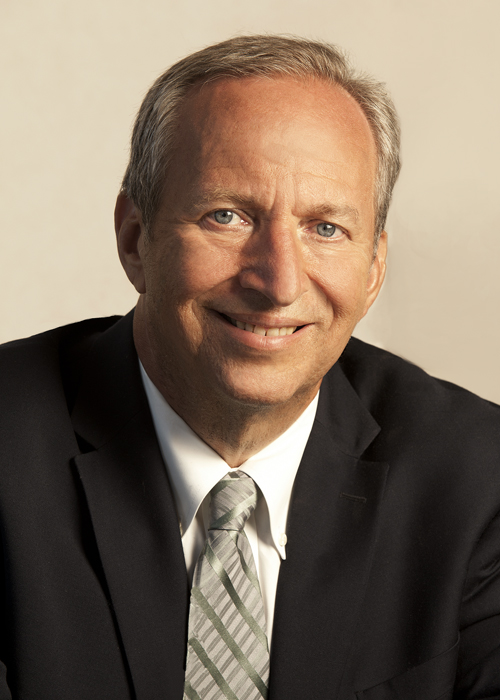
Lawrence Summers
Former United States Secretary of the Treasury · U.S. Department of the Treasury · 1999–2001
Lawrence Summers served as United States Secretary of the Treasury (1999–2001). The page below collects sourced biographical facts, the appointment record, and provenance for Summers.
Key facts
- Full name
- Lawrence Summers
- Department
- U.S. Department of the Treasury
- Office
- United States Secretary of the Treasury
- Status
- Former secretary
- Appointment
- Senate-confirmed
- Tenure
- 1999–2001
- Confirmed
- —
- Born
- 1954
- Died
- —
- First year in office
- 1999
- Dataset version
- 1.20260703
Appointment & service record
United States Secretary of the Treasury · 1999–2001
- Department
- U.S. Department of the Treasury
- Appointment
- Senate-confirmed
- Appointing president
- —
- Confirmed
- —
Department, appointment type (Senate-confirmed, acting, recess, or designated), appointing president, confirmation status, and service dates are drawn from Wikidata and the White House Cabinet roster.[1][2][3]
Sources
- [1]https://www.wikidata.org/wiki/Q317953Wikidata · retrieved 2026-07-03
- [2]https://www.whitehouse.gov/administration/cabinet/whitehouse.gov · retrieved 2026-07-03
- [3]https://www.wikidata.org/wiki/Q639738wikidata-cabinet · retrieved 2026-07-03
Biographical narrative
1,031 words · sourced from the Wikipedia REST extract
Lawrence Henry Summers is an American economist who has held several prominent positions in both academia and public service. He served as the 71st United States Secretary of the Treasury from 1999 to 2001 under President Bill Clinton, later became the 27th president of Harvard University (2001–2006), and returned to federal government as director of the National Economic Council during President Barack Obama’s administration (2009–2010). In addition to his governmental roles, Summers has been a long‑time faculty member at Harvard University, holding the Charles W. Eliot University Professorship until his resignation in February 2026.
Early life and career
Lawrence Henry Summers was born on November 30, 1954, in New Haven, Connecticut, into a family with strong academic ties to economics. His parents, Robert Summers (originally Samuelson) and Anita Summers, were both professors at the University of Pennsylvania; his maternal lineage included Romanian‑Jewish ancestry. Growing up in Penn Valley, Pennsylvania—a suburb of Philadelphia—Summers attended Harriton High School before enrolling at the Massachusetts Institute of Technology (MIT) at age 16. Initially drawn to mathematics, he switched to economics during his undergraduate studies and earned a bachelor’s degree from MIT in 1975. He continued his graduate work at Harvard University, where he completed a Ph.D. in economics in 1982.
Summers entered the academic world shortly after receiving his doctorate. In 1983, at age 28, he joined Harvard University as a faculty member and became one of the youngest tenured professors in the institution’s history. His research interests spanned public finance, labor economics, financial economics, macroeconomics, international economics, economic demography, economic history, and development economics. He received several honors during this period, including the John Bates Clark Medal (1993) from the American Economic Association and the Alan T. Waterman Award (1987) from the National Science Foundation. Summers also served as a visiting scholar at the London School of Economics in 1987.
In 1991, he left Harvard to take on an international role with the World Bank, serving as Vice President of Development Economics and Chief Economist until 1993. In this capacity, he contributed to the design of strategies aimed at supporting developing countries, participated in the bank’s loan committee, and guided research and statistical operations. His work included a report highlighting significant returns from investing in girls’ education in developing nations.
Summers returned to Washington, D.C., in 1991 as Chief Economist for the World Bank before moving into U.S. Treasury service under President Bill Clinton. In 1993 he was appointed Under Secretary for International Affairs of the Department of the Treasury, a position that involved oversight of international economic policy and coordination with foreign governments. Two years later, in 1995, he advanced to Deputy Secretary of the Treasury, working closely with then‑Secretary Robert Rubin.
In 1999, Summers succeeded Rubin as United States Secretary of the Treasury. His confirmation by the Senate marked the culmination of his ascent within the Treasury Department. During his tenure, he played a leading role in shaping U.S. responses to several major financial crises abroad, including Mexico’s 1994 crisis, the Asian financial crisis of 1997, and Russia’s 1998 crisis. He also contributed to policy discussions on privatization efforts in post‑Soviet states and was involved in debates over financial deregulation, notably the repeal of provisions of the Glass–Steagall Act.
Cabinet tenure
Summers’ service as Secretary of the Treasury spanned from 1999 until the end of President Clinton’s administration in 2001. In this capacity he oversaw the U.S. Department of the Treasury’s broad portfolio, which included fiscal policy, financial regulation, and international economic affairs. His work during this period was characterized by engagement with global financial institutions and coordination on crisis management strategies.
After leaving the Treasury, Summers returned to academia, assuming the presidency of Harvard University in 2001. He served as the institution’s 27th president until 2006. His tenure at Harvard was marked by a series of controversies that ultimately led to his resignation. A faculty no‑confidence vote reflected widespread dissatisfaction with his leadership style and decision making. Key issues cited included conflicts with prominent professor Cornel West, questions regarding financial relationships with economist Andrei Shleifer, and remarks made in a 2005 speech addressing the under‑representation of women in science and engineering. These factors contributed to an environment that culminated in Summers stepping down as president.
Following his departure from Harvard’s presidency, Summers entered the private sector, taking on a managing director role at the hedge fund D.E. Shaw & Co. He later rejoined public service during President Barack Obama’s administration, serving as Director of the National Economic Council from January 2009 until November 2010. In this position he was a key economic decision‑maker in the federal response to the Great Recession.
In late 2025, Summers went on leave from his teaching responsibilities at Harvard and from his role as director of the Mossavar‑Rahmani Center for Business and Government due to an investigation into his ties with financier Jeffrey Epstein. He resigned from the Charles W. Eliot University Professorship in February 2026.
Legacy
Summers’ career spans academia, international development, and high‑level government service. His academic work has influenced multiple subfields of economics, particularly public finance and financial economics. As a policy maker, he was involved in significant decisions related to global financial crises, privatization initiatives in post‑Soviet economies, and debates over U.S. financial regulation.
His tenure as Secretary of the Treasury coincided with pivotal moments in international finance, and his involvement in crisis response strategies has been noted by scholars studying late‑1990s economic turmoil. In academia, Summers’ leadership at Harvard was both influential and contentious; his presidency is often cited in discussions about university governance, faculty relations, and institutional accountability.
Later roles, including his directorship of the National Economic Council during a major recession, positioned him as an important figure in shaping federal economic policy during a period of significant fiscal challenge. His subsequent departure from academia amid investigations into personal financial ties reflects broader concerns about conflicts of interest among public officials transitioning between government and private finance.
Overall, Summers’ contributions to economics, his participation in key governmental roles, and the controversies that marked his career have made him a prominent figure in discussions of economic policy, academic leadership, and the intersection of public service with private interests.
Sources & provenance
Every quantitative or attributable claim above carries a per-section [N] marker that resolves to the corresponding URL below. Each entry records the upstream provider, the canonical URL, and the timestamp at which the underlying source was retrieved.
Key facts
- https://www.wikidata.org/wiki/Q317953Wikidata · retrieved 2026-07-03
- https://www.whitehouse.gov/administration/cabinet/whitehouse.gov · retrieved 2026-07-03
- https://www.wikidata.org/wiki/Q639738wikidata-cabinet · retrieved 2026-07-03
Biographical narrative
- https://en.wikipedia.org/wiki/Larry_SummersWikipedia · retrieved 2026-07-03
Explore the Cabinet
The Cabinet includes the Vice President and the heads of the 15 executive departments. Browse the full roster of current and former secretaries, or explore how the Cabinet fits into the federal government.