
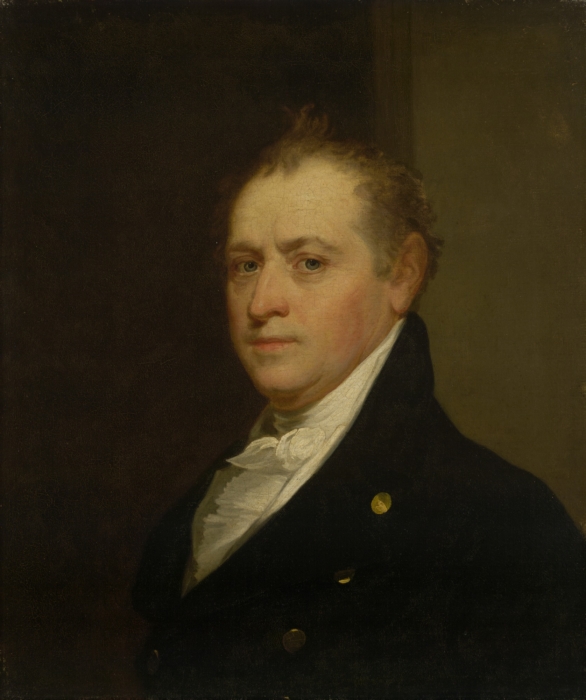
Historical · U.S. Department of the Treasury
Oliver Wolcott
Former United States Secretary of the Treasury · U.S. Department of the Treasury · 1795–1800
Oliver Wolcott served as United States Secretary of the Treasury (1795–1800). The page below collects sourced biographical facts, the appointment record, and provenance for Wolcott.
Key facts
- Full name
- Oliver Wolcott
- Department
- U.S. Department of the Treasury
- Office
- United States Secretary of the Treasury
- Status
- Former secretary
- Appointment
- Senate-confirmed
- Tenure
- 1795–1800
- Confirmed
- —
- Born
- 1760
- Died
- 1833
- First year in office
- 1795
- Dataset version
- 1.20260703
Appointment & service record
United States Secretary of the Treasury · 1795–1800
- Department
- U.S. Department of the Treasury
- Appointment
- Senate-confirmed
- Appointing president
- —
- Confirmed
- —
Department, appointment type (Senate-confirmed, acting, recess, or designated), appointing president, confirmation status, and service dates are drawn from Wikidata and the White House Cabinet roster.[1][2][3]
Sources
- [1]https://www.wikidata.org/wiki/Q452104Wikidata · retrieved 2026-07-03
- [2]https://www.whitehouse.gov/administration/cabinet/whitehouse.gov · retrieved 2026-07-03
- [3]https://www.wikidata.org/wiki/Q639738wikidata-cabinet · retrieved 2026-07-03
Biographical narrative
828 words · sourced from the Wikipedia REST extract
Oliver Wolcott Jr. (January 11, 1760 – June 1, 1833) was a prominent American public servant who served in several key roles during the early republic. He is best known for being the second United States Secretary of the Treasury, a position he held from 1795 to 1800 under Presidents George Washington and John Adams. In addition to his federal service, Wolcott spent much of his career in Connecticut, where he served as a judge on the United States Circuit Court for the Second Circuit and later became the state's twenty‑fourth governor.
Early life and career
Wolcott was born in Litchfield, within the Connecticut Colony, on January 11, 1760. During the American Revolutionary War he joined the Continental Army, serving from 1777 until 1779. He entered Yale University shortly thereafter and graduated in 1778; while a student he belonged to the fraternity Brothers in Unity. After completing his undergraduate studies, Wolcott pursued legal training and read law in 1781.
His family was part of Connecticut’s elite “Standing Order,” a small group that wielded considerable influence over state politics, religion, and social affairs. Despite this background, Wolcott cultivated an inclusive outlook that set him apart from many of his contemporaries within the Standing Order. His early public service began at the state level: he served as clerk of the Connecticut Committee on Pay‑Table in 1781–82 and then as a member of the same committee from 1782 to 1784, where he helped account for Connecticut’s military expenses during the Revolution.
From 1784 to 1788 Wolcott acted as commissioner responsible for settling claims that Connecticut had against the United States. He was Comptroller of Public Accounts for Connecticut in 1788–89. In 1789 he transitioned to federal service as Auditor for the Department of the Treasury, a role he held until 1791. His performance earned him promotion to Comptroller of the Treasury from 1791 to 1795, during which time he worked closely with Alexander Hamilton and provided essential background information for Hamilton’s major projects and reports.
While holding federal positions, Wolcott also engaged in private enterprise; he operated as a commission merchant in New York City between 1793 and 1815. His blend of public duty and commercial experience positioned him well for higher office within the Treasury Department.
Cabinet tenure
In January 1795 Alexander Hamilton resigned as Secretary of the Treasury, and President George Washington appointed Wolcott to succeed him. The Senate confirmed Wolcott’s appointment, making him the second individual to hold the post. As Secretary, he was responsible for supervising the collection of duties on impost and tonnage, a key revenue source for the young nation. He also oversaw the branch system of the Bank of the United States, which had been approved by stockholders and required careful administrative coordination.
Wolcott’s tenure coincided with significant political tensions between the Federalists, led by Hamilton, and the Democratic‑Republicans, championed by Thomas Jefferson. While he maintained close contact with Hamilton during Washington’s administration, his relationship with the Treasury shifted when John Adams assumed the presidency in 1797. Adams’ rivalry with Hamilton influenced cabinet dynamics, and Wolcott had to navigate a changing political landscape that included growing Democratic‑Republican influence over fiscal policy.
One of the most consequential aspects of Wolcott’s service was his role in financing the Quasi‑War with France (1798–1800). The conflict required substantial federal resources, and as Secretary he bore major responsibility for securing the necessary funds. His management of Treasury operations during this period helped sustain the United States’ naval capabilities amid international hostilities.
Wolcott also acted as an intermediary in a notable incident involving Martha Washington’s escaped slave, Oney Judge (sometimes spelled Ona). On May 21, 1796, Judge fled from the Executive Mansion in Philadelphia. Wolcott communicated with Joseph Whipple, the Collector of Customs for Portsmouth, New Hampshire, regarding the capture and return of Judge to Mount Vernon. The episode highlighted the complex interplay between federal authority, state interests, and individual rights during the early republic.
Legacy
After concluding his service as Secretary of the Treasury in 1800, Wolcott returned to Connecticut where he continued to serve the public in various capacities. He became a judge on the United States Circuit Court for the Second Circuit, applying his legal expertise at the federal level. Later, he was elected governor of Connecticut, holding the office as the state’s twenty‑fourth governor.
Wolcott’s contributions to the Treasury Department helped lay foundational administrative practices that would shape U.S. fiscal policy in subsequent decades. His oversight of revenue collection and banking operations during a formative period for the federal government established precedents for how the Treasury managed national finances, especially under wartime conditions such as the Quasi‑War.
He died on June 1, 1833, leaving behind a legacy intertwined with the early development of American governmental institutions. His career illustrates the trajectory of a public servant who moved from state to federal roles and back again, influencing both local governance in Connecticut and national fiscal policy during the formative years of the United States.
Sources & provenance
Every quantitative or attributable claim above carries a per-section [N] marker that resolves to the corresponding URL below. Each entry records the upstream provider, the canonical URL, and the timestamp at which the underlying source was retrieved.
Key facts
- https://www.wikidata.org/wiki/Q452104Wikidata · retrieved 2026-07-03
- https://www.whitehouse.gov/administration/cabinet/whitehouse.gov · retrieved 2026-07-03
- https://www.wikidata.org/wiki/Q639738wikidata-cabinet · retrieved 2026-07-03
Biographical narrative
- https://en.wikipedia.org/wiki/Oliver_Wolcott_Jr.Wikipedia · retrieved 2026-07-03
Explore the Cabinet
The Cabinet includes the Vice President and the heads of the 15 executive departments. Browse the full roster of current and former secretaries, or explore how the Cabinet fits into the federal government.