
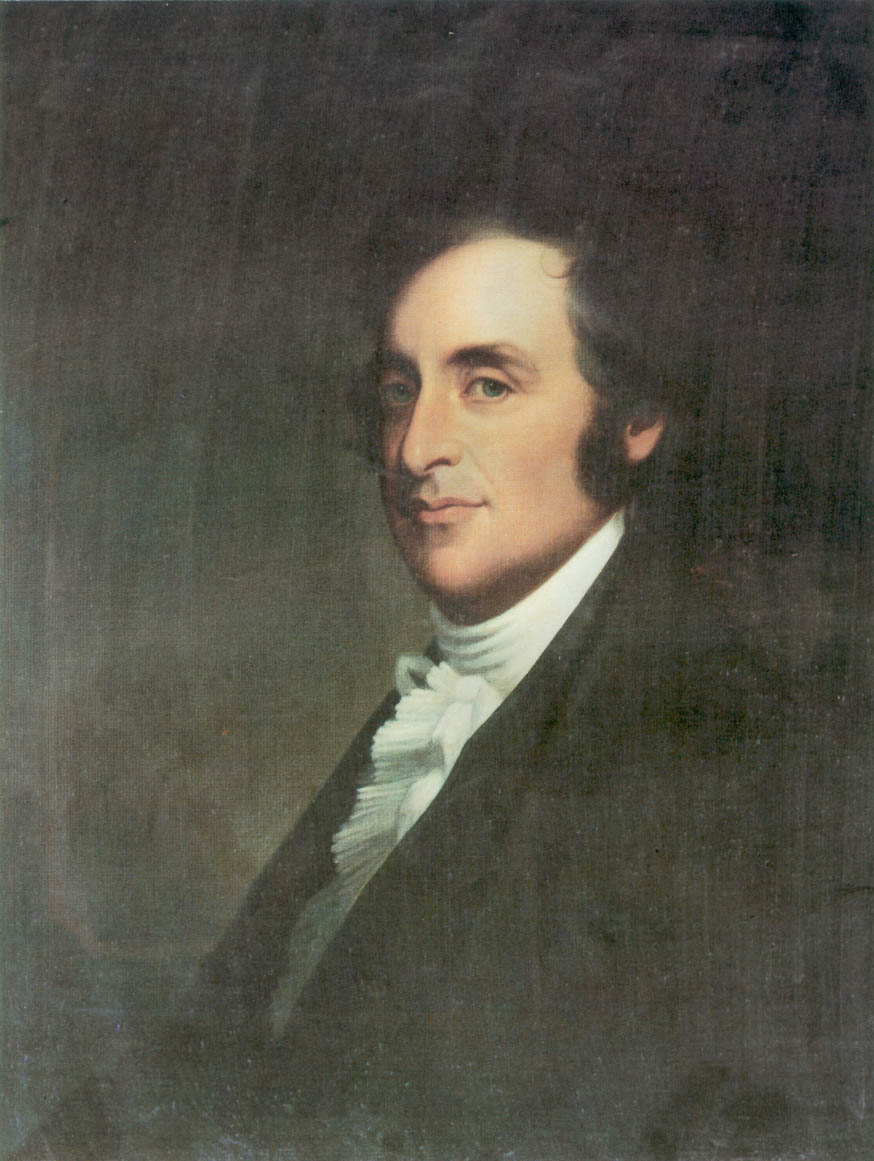
Historical · U.S. Department of the Treasury
Samuel Dexter
Former United States Secretary of the Treasury · U.S. Department of the Treasury · 1801–1801
Samuel Dexter served as United States Secretary of the Treasury (1801–1801). The page below collects sourced biographical facts, the appointment record, and provenance for Dexter.
Key facts
- Full name
- Samuel Dexter
- Department
- U.S. Department of the Treasury
- Office
- United States Secretary of the Treasury
- Status
- Former secretary
- Appointment
- Senate-confirmed
- Tenure
- 1801–1801
- Confirmed
- —
- Born
- 1761
- Died
- 1816
- First year in office
- 1801
- Dataset version
- 1.20260703
Appointment & service record
United States Secretary of the Treasury · 1801–1801
- Department
- U.S. Department of the Treasury
- Appointment
- Senate-confirmed
- Appointing president
- —
- Confirmed
- —
Department, appointment type (Senate-confirmed, acting, recess, or designated), appointing president, confirmation status, and service dates are drawn from Wikidata and the White House Cabinet roster.[1][2][3]
Sources
- [1]https://www.wikidata.org/wiki/Q594570Wikidata · retrieved 2026-07-03
- [2]https://www.whitehouse.gov/administration/cabinet/whitehouse.gov · retrieved 2026-07-03
- [3]https://www.wikidata.org/wiki/Q639738wikidata-cabinet · retrieved 2026-07-03
Biographical narrative
828 words · sourced from the Wikipedia REST extract
Samuel Dexter was an early American statesman who served in both houses of Congress and held cabinet positions under Presidents John Adams and Thomas Jefferson. Born in Boston in 1761, he pursued a legal career before entering public office, where he represented Massachusetts at the federal level for several years. In 1800 he became Secretary of War, and the following year he was appointed Secretary of the Treasury, serving as an interim officer during the transition between administrations. After leaving cabinet service he returned to private law practice, engaged in business ventures, and remained active in public affairs until his death in 1816.
Early life and career
Samuel Dexter entered the world on May 14, 1761, in Boston, then part of the Province of Massachusetts Bay. His father, also named Samuel Dexter, was a noted politician in the state, while his mother was Hannah (Sigourney) Dexter. The younger Dexter was a descendant of a family long involved in public service; his grandfather had served as the fourth minister of Dedham.
He attended Harvard College and graduated in 1781. Following graduation he studied law under Levi Lincoln Sr., who would later become Attorney General of the United States, in Worcester. After completing his legal studies, Dexter was admitted to the bar in 1784 and began practicing in Lunenburg, Massachusetts. His early career as a lawyer laid the groundwork for his subsequent entry into politics.
Dexter’s first public office came at the state level, where he served in the Massachusetts House of Representatives from 1788 to 1790. In 1792 he was elected to the United States House of Representatives as a member of the Federalist Party and represented Massachusetts in the Third Congress. He later moved to the Senate, serving from March 4, 1799 until May 30, 1800, during which time he delivered a eulogy for George Washington in December 1799.
In 1796 Dexter ran unsuccessfully for a seat representing the Ninth Congressional District, but his political career continued to ascend. In early 1800 he resigned from the Senate after being appointed United States Secretary of War by President John Adams, marking his first cabinet position.
Cabinet tenure
As Secretary of War from 1800 to 1801, Dexter was involved in discussions concerning the appointment and compensation of field officers for general staff duty. His role required coordination with Congress on matters related to military organization and personnel.
In December 1800, when Oliver Wolcott Jr., then Secretary of the Treasury, resigned, President Adams named Dexter as interim Secretary of the Treasury. The Senate confirmed his appointment, and he served in that capacity from January until May 1801. During this brief tenure, Dexter maintained the responsibilities of the Treasury Department while awaiting the arrival of Thomas Jefferson’s administration. When Jefferson took office, he delayed selecting a permanent Treasury Secretary, allowing Dexter to continue performing the duties for the first two months of Jefferson’s term. In correspondence dated March 5, 1801, Albert Gallatin—who would later become Secretary of the Treasury under Jefferson—described Dexter as having behaved “with great civility,” indicating a respectful transition between administrations.
Dexter resigned from the Treasury position on May 4, 1801, the day before his fortieth birthday. His departure marked the end of his brief but notable service in federal cabinet roles.
Legacy
After leaving cabinet office, Dexter returned to Boston in 1805 and resumed practicing law. He also invested in the Dedham Manufacturing Company, reflecting an interest in commercial enterprises beyond public service. In the years that followed, he shifted from the Federalist Party to the Democratic-Republican Party, aligning himself with the party’s support for the War of 1812.
Dexter sought higher state office on multiple occasions; he was a candidate for Governor of Massachusetts in 1814, 1815, and again in 1816, though he was not elected. His public life also included advocacy for social reform: he was an ardent supporter of temperance and presided over the first formal organization of that movement in Massachusetts.
In recognition of his contributions to science and learning, Dexter was elected a Fellow of the American Academy of Arts and Sciences in 1800. He remained active in civic affairs until his death on May 4, 1816, at Athens, New York, while visiting his son. He was buried at Mount Auburn Cemetery in Cambridge, Massachusetts.
Dexter’s family continued to play roles in American society. His nephews Simon Newton Dexter and Andrew Dexter Jr. were notable figures in their own right. His son Samuel W. Dexter founded the city of Dexter, Michigan. The town of Dexter, Maine, bears his name as a tribute, and the United States Revenue Cutter *Dexter* (1830) was named in his honor.
Samuel Dexter’s career spanned legislative service at both state and federal levels, brief but significant cabinet appointments under two presidents, and continued engagement with public affairs after leaving office. His life reflects the early republic’s reliance on a small cadre of educated professionals who moved between law, politics, and administration to shape the nation’s institutions.
Sources & provenance
Every quantitative or attributable claim above carries a per-section [N] marker that resolves to the corresponding URL below. Each entry records the upstream provider, the canonical URL, and the timestamp at which the underlying source was retrieved.
Key facts
- https://www.wikidata.org/wiki/Q594570Wikidata · retrieved 2026-07-03
- https://www.whitehouse.gov/administration/cabinet/whitehouse.gov · retrieved 2026-07-03
- https://www.wikidata.org/wiki/Q639738wikidata-cabinet · retrieved 2026-07-03
Biographical narrative
- https://en.wikipedia.org/wiki/Samuel_DexterWikipedia · retrieved 2026-07-03
Explore the Cabinet
The Cabinet includes the Vice President and the heads of the 15 executive departments. Browse the full roster of current and former secretaries, or explore how the Cabinet fits into the federal government.