
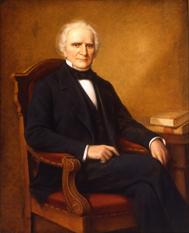
Historical · U.S. Department of the Treasury
Samuel D. Ingham
Former United States Secretary of the Treasury · U.S. Department of the Treasury · 1829–1831
Samuel D. Ingham served as United States Secretary of the Treasury (1829–1831). The page below collects sourced biographical facts, the appointment record, and provenance for Ingham.
Key facts
- Full name
- Samuel D. Ingham
- Department
- U.S. Department of the Treasury
- Office
- United States Secretary of the Treasury
- Status
- Former secretary
- Appointment
- Senate-confirmed
- Tenure
- 1829–1831
- Confirmed
- —
- Born
- 1779
- Died
- 1860
- First year in office
- 1829
- Dataset version
- 1.20260703
Appointment & service record
United States Secretary of the Treasury · 1829–1831
- Department
- U.S. Department of the Treasury
- Appointment
- Senate-confirmed
- Appointing president
- —
- Confirmed
- —
Department, appointment type (Senate-confirmed, acting, recess, or designated), appointing president, confirmation status, and service dates are drawn from Wikidata and the White House Cabinet roster.[1][2][3]
Sources
- [1]https://www.wikidata.org/wiki/Q1773351Wikidata · retrieved 2026-07-03
- [2]https://www.whitehouse.gov/administration/cabinet/whitehouse.gov · retrieved 2026-07-03
- [3]https://www.wikidata.org/wiki/Q639738wikidata-cabinet · retrieved 2026-07-03
Biographical narrative
942 words · sourced from the Wikipedia REST extract
Samuel Delucenna Ingham (September 16 1779 – June 5 1860) was an American public servant whose career spanned local, state and federal government in the early nineteenth century. Born in rural Pennsylvania, he began his professional life as a paper maker before entering politics. Ingham represented Pennsylvania in the United States House of Representatives for two separate periods, served as Secretary of the Commonwealth of Pennsylvania, and was appointed United States Secretary of the Treasury by President Andrew Jackson, holding that office from 1829 to 1831. After leaving Washington he returned to industry, engaged in coal development and railroads, and remained active in civic societies until his death in Trenton, New Jersey.
Early life and career
Samuel D. Ingham entered the world on September 16 1779 in Solebury Township, Pennsylvania. His father, Dr. Jonathan Ingham, was a well‑known physician in Philadelphia, while his mother was Ann Welding. After completing a classical education, Ingham apprenticed as a paper maker along Pennypack Creek near Philadelphia. Upon finishing his apprenticeship he became manager of a paper mill located in Bloomfield, New Jersey, where he met Rebecca Dodd; the two married in 1800 and had five children together.
In the same year, Ingham returned to Pennsylvania and established a paper mill on his mother’s farm, which remained his principal occupation for many years. His early professional experience in manufacturing would later inform his views on commerce and finance.
Ingham entered public service at the state level, serving as a member of the Pennsylvania House of Representatives from 1806 to 1808. The governor appointed him Justice of the Peace thereafter. In 1813 he was elected to the United States House of Representatives, where he served until July 6 1818. During his tenure in Congress he won successive elections against Federalist opponents and faced no opposition in 1816. He resigned from Congress in 1818 because of his wife Rebecca’s ill health.
After leaving federal office Ingham was appointed Prothonotary—chief clerk, notary, and registrar—of the Court of Common Pleas for Bucks County, Pennsylvania. In 1819 Rebecca died; that same year he served as Secretary of the Commonwealth of Pennsylvania until 1820. He remarried in 1822 to Deborah Hall of Salem, New Jersey, with whom he had three children.
Ingham returned to Congress in 1822 and represented Pennsylvania until 1829. During his service he chaired several committees: the House Committee on Pensions and Revolutionary War Claims during the thirteenth Congress; the House Committee on Post Office and Post Roads during the fourteenth, fifteenth, nineteenth, and twentieth Congresses; and the House Committee on Expenditures in the Post Office Department during the fifteenth Congress. His legislative work focused on veterans’ pensions, postal infrastructure, and government expenditures.
Cabinet tenure
President Andrew Jackson appointed Ingham as United States Secretary of the Treasury on March 6 1829. The Senate confirmed his nomination; no specific vote tally is recorded in the available sources. As the ninth individual to hold the position, Ingham’s term coincided with a period of intense debate over national banking policy.
The Second Bank of the United States was central to Ingham’s agenda as Treasury Secretary. Jackson and many contemporaries viewed the bank as an unconstitutional monopoly that threatened democratic governance. In contrast, Ingham supported the institution and sought to mediate between President Jackson’s opposition and the bank’s president, Nicholas Biddle. Despite his efforts, he could not reconcile the divergent positions of the executive branch and the banking establishment.
Ingham’s departure from office in 1831 was precipitated by an unrelated social conflict known as the Petticoat affair. The controversy involved the ostracism of Peggy Eaton, wife of Secretary of War John H. Eaton, by a group of cabinet members’ wives led by Floride Calhoun, wife of Vice President John C. Calhoun. Eaton challenged Ingham to a duel; Ingham declined. On June 20 1831 Eaton organized a posse to search for Ingham, who responded by arming himself and requesting assistance from Jackson. When the president could not provide support, Ingham fled Washington, first to Baltimore and then to Bucks County in Pennsylvania. He left the Treasury on June 21 1831.
After resigning he returned to his earlier pursuits in paper manufacturing and later became involved in the development of anthracite coal fields. He helped organize the Beaver Meadow Railroad Company (established 1830), serving as its president for a period, and was connected with the Hazleton Coal Company. Ingham also promoted canal projects such as the Lehigh Navigation and the Delaware Canal. In 1849 he relocated to Trenton, New Jersey, where he worked with the city’s Mechanics Bank.
Legacy
Samuel Ingham died on June 5 1860 in Trenton at the age of eighty. He was buried in the Solebury Presbyterian Churchyard in his native township. His name has been memorialized geographically; Ingham County, Michigan—one of several counties named for members of Jackson’s administration—is named in his honor. The city of Lansing lies largely within that county and later became Michigan’s capital. In Trenton, a street bears his name: Ingham Avenue.
In addition to his political career, Ingham was active in scholarly societies. During the 1820s he belonged to the Columbian Institute for the Promotion of Arts and Sciences, an organization that counted among its members future presidents Andrew Jackson and John Q. Adams as well as other prominent figures of the era. In 1840 he was elected a member of the American Philosophical Society.
Ingham’s life illustrates the interconnectedness of early nineteenth‑century American industry, politics, and civic engagement. His service in both legislative and executive branches, his involvement in national debates over banking policy, and his later industrial ventures reflect broader patterns of economic development and political conflict during the Jacksonian era.
Sources & provenance
Every quantitative or attributable claim above carries a per-section [N] marker that resolves to the corresponding URL below. Each entry records the upstream provider, the canonical URL, and the timestamp at which the underlying source was retrieved.
Key facts
- https://www.wikidata.org/wiki/Q1773351Wikidata · retrieved 2026-07-03
- https://www.whitehouse.gov/administration/cabinet/whitehouse.gov · retrieved 2026-07-03
- https://www.wikidata.org/wiki/Q639738wikidata-cabinet · retrieved 2026-07-03
Biographical narrative
- https://en.wikipedia.org/wiki/Samuel_D._InghamWikipedia · retrieved 2026-07-03
Explore the Cabinet
The Cabinet includes the Vice President and the heads of the 15 executive departments. Browse the full roster of current and former secretaries, or explore how the Cabinet fits into the federal government.