
Historical · U.S. Department of Transportation
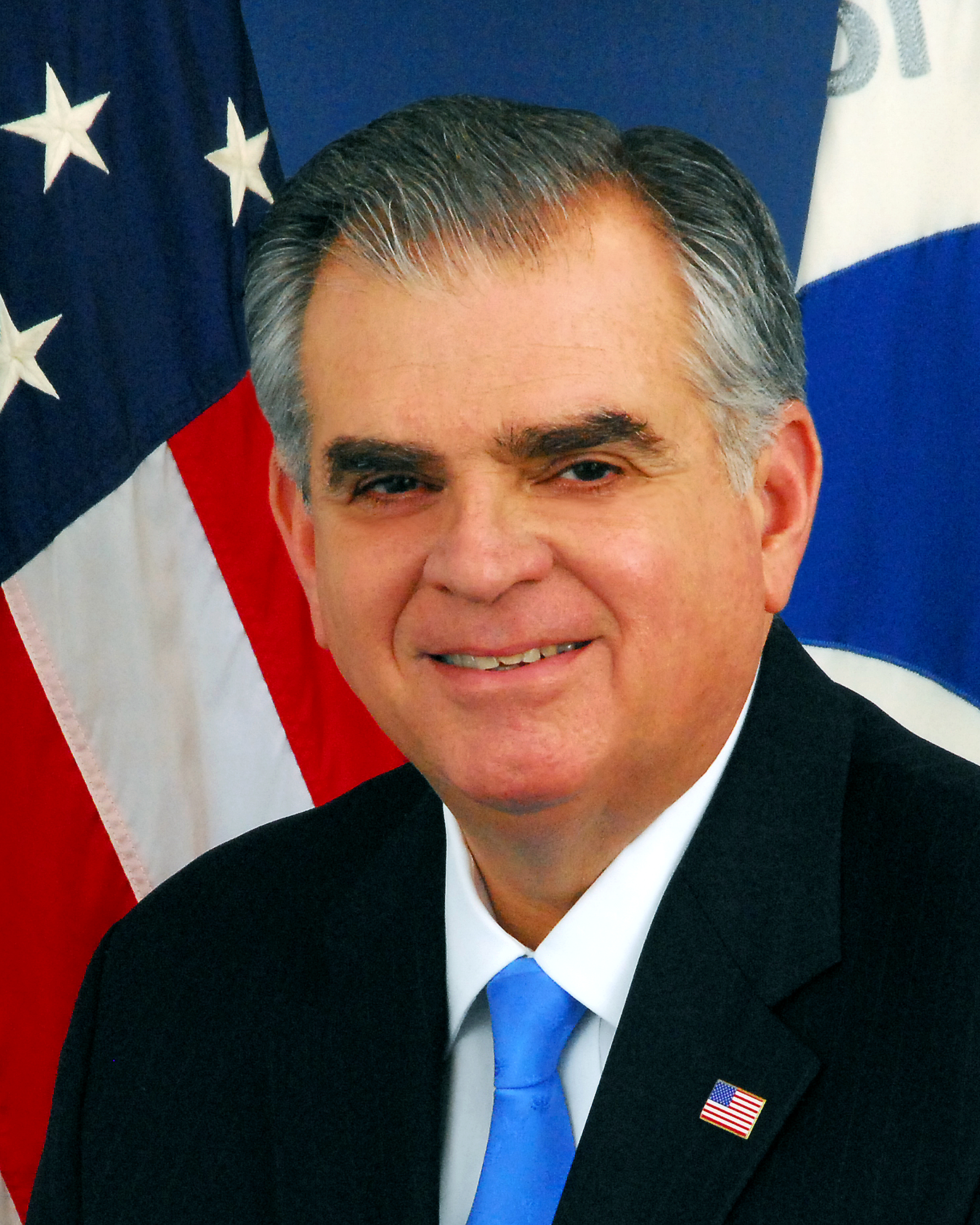
Ray LaHood
Former United States Secretary of Transportation · U.S. Department of Transportation · 2009–2013
Ray LaHood served as United States Secretary of Transportation (2009–2013). The page below collects sourced biographical facts, the appointment record, and provenance for LaHood.
Key facts
- Full name
- Ray LaHood
- Department
- U.S. Department of Transportation
- Office
- United States Secretary of Transportation
- Status
- Former secretary
- Appointment
- Senate-confirmed
- Tenure
- 2009–2013
- Confirmed
- —
- Born
- 1945
- Died
- —
- First year in office
- 2009
- Dataset version
- 1.20260703
Appointment & service record
United States Secretary of Transportation · 2009–2013
- Department
- U.S. Department of Transportation
- Appointment
- Senate-confirmed
- Appointing president
- —
- Confirmed
- —
Department, appointment type (Senate-confirmed, acting, recess, or designated), appointing president, confirmation status, and service dates are drawn from Wikidata and the White House Cabinet roster.[1][2][3]
Sources
- [1]https://www.wikidata.org/wiki/Q467891Wikidata · retrieved 2026-07-03
- [2]https://www.whitehouse.gov/administration/cabinet/whitehouse.gov · retrieved 2026-07-03
- [3]https://www.wikidata.org/wiki/Q639738wikidata-cabinet · retrieved 2026-07-03
Biographical narrative
958 words · sourced from the Wikipedia REST extract
Ray LaHood is an American public servant who held the office of United States Secretary of Transportation from 2009 to 2013. Prior to his cabinet appointment, he served in both state and federal legislatures for more than two decades, representing Illinois at the national level and engaging in a range of policy areas including transportation infrastructure, intelligence oversight, and appropriations.
Early life and career
Raymond H. LaHood was born on December 6, 1945, in Peoria, Illinois. His father, Edward M. LaHood, was a Lebanese American restaurateur, while his mother, Mary A. LaHood (née Vogel), had German ancestry. LaHood attended Spalding Institute—now known as Peoria Notre Dame High School—before pursuing higher education through the community college system. He earned an associate degree from Canton Junior College and later completed a Bachelor of Science in education and sociology at Bradley University in 1971.
After graduation, LaHood entered the field of public education, teaching middle‑school social studies in both public and Catholic schools. His experience with youth programs led him to serve as director of the Rock Island County Youth Services Bureau, where he oversaw initiatives aimed at supporting young people in the region. In 1977, he became a district administrative assistant for U.S. Representative Tom Railsback, a Republican from Moline, Illinois. He remained in that role until 1982.
LaHood’s first elected office came when he was appointed to fill a vacancy in the Illinois House of Representatives in early 1982. He served for nine months before running for election to retain the seat later that year; however, he was defeated by Democratic challenger Bob DeJaegher. After leaving state office, LaHood continued his congressional career as an administrative assistant and eventually chief of staff to U.S. House Minority Leader Robert Michel, a position he held from 1982 until 1994.
In 1994, when Michel announced retirement, LaHood ran for the open seat representing Illinois’s 18th congressional district. He won the election and served in the United States House of Representatives from 1995 through 2009. During his tenure, he was known as a moderate Republican who joined the Main Street Partnership and did not sign Newt Gingrich’s Contract with America. In 1997, LaHood organized bipartisan retreats for members of Congress to foster cooperation across party lines.
LaHood frequently served as Speaker Pro Tempore of the House, presiding over debates more often than any other member at the time. Notably, he oversaw the 1998 debate concerning the impeachment of President Bill Clinton. His district encompassed areas that had been represented by Abraham Lincoln during Lincoln’s sole term in Congress; LaHood championed efforts to preserve Lincoln’s legacy. He authored legislation establishing the Abraham Lincoln Bicentennial Commission and was a leading supporter on Capitol Hill for the Lincoln Presidential Library in Springfield, Illinois.
Committee assignments were central to LaHood’s legislative work. He served on the House Transportation and Infrastructure Committee from 1995 until 2000, joined the Permanent Select Committee on Intelligence in 1998, and became a member of the Appropriations Committee in 2000. In 2005 he voted against renewing the PATRIOT Act, citing concerns about intrusive police powers.
In the 2006 election cycle, LaHood secured re‑election with a decisive margin, receiving 67% of the vote to his opponent’s 33%. He announced on July 26, 2007, that he would not seek another term in Congress. Throughout his congressional career, various fiscal watchdog groups rated him differently: he received a 0% rating from Club for Growth and an 11% rating from Citizens Against Government Waste in August 2007; his lifetime rating with the latter organization was 49%. LaHood also considered, but ultimately declined, a candidacy for president of Bradley University.
During the 2008 presidential campaign, LaHood endorsed Republican nominee John McCain. He expressed criticism of Sarah Palin’s rally tactics, suggesting that name‑calling could be counterproductive and potentially harm her campaign.
Cabinet tenure
On December 19, 2008, President‑elect Barack Obama announced his intention to nominate LaHood as Secretary of Transportation. His nomination was confirmed by the Senate through a voice vote on January 21, 2009, making him one of two Republican members in the inaugural Obama cabinet alongside Robert Gates. LaHood’s experience on the House Transportation and Infrastructure Committee and the Appropriations Committee positioned him to address complex transportation policy issues while navigating partisan dynamics.
During his tenure as Secretary of Transportation from 2009 through 2013, LaHood was recognized for his ability to mediate between divergent viewpoints within Congress. Critics, however, raised concerns about pork‑barrel spending associated with his district; a Washington Post report noted that of the $60 million in earmarks secured by LaHood in 2008, $9 million benefited campaign donors. In February 2010, he faced criticism for advice given while testifying before a congressional committee regarding Toyota’s recall of certain vehicle models.
Legacy
LaHood’s public service record includes both legislative achievements and later ethical scrutiny. In 2015, he co‑authored the book *Seeking Bipartisanship: My Life in Politics*, which was published by Cambria Press. The work reflects on his career and bipartisan efforts.
In 2017, LaHood admitted to the Federal Bureau of Investigation that while holding federal office he had accepted a $50,000 payment from a foreign national for personal home repairs and had failed to report this transaction on an Office of Government Ethics Form 278. In 2019, he entered into a Non‑Prosecution Agreement with government prosecutors, agreeing to admit responsibility, repay the $50,000 loan, and pay a $40,000 fine to the United States.
Throughout his career, LaHood was noted for his moderate stance within the Republican Party and his focus on bipartisan collaboration. His advocacy for transportation infrastructure, intelligence oversight, and historical preservation—particularly relating to Abraham Lincoln—remains part of his legislative legacy. He also contributed to the broader conversation about ethics in public office through his later admissions and settlement with federal authorities.
Sources & provenance
Every quantitative or attributable claim above carries a per-section [N] marker that resolves to the corresponding URL below. Each entry records the upstream provider, the canonical URL, and the timestamp at which the underlying source was retrieved.
Key facts
- https://www.wikidata.org/wiki/Q467891Wikidata · retrieved 2026-07-03
- https://www.whitehouse.gov/administration/cabinet/whitehouse.gov · retrieved 2026-07-03
- https://www.wikidata.org/wiki/Q639738wikidata-cabinet · retrieved 2026-07-03
Biographical narrative
- https://en.wikipedia.org/wiki/Ray_LaHoodWikipedia · retrieved 2026-07-03
Explore the Cabinet
The Cabinet includes the Vice President and the heads of the 15 executive departments. Browse the full roster of current and former secretaries, or explore how the Cabinet fits into the federal government.