
Historical · U.S. Department of Transportation
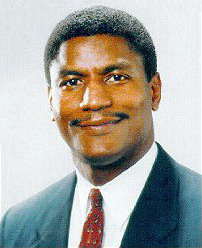
Rodney E. Slater
Former United States Secretary of Transportation · U.S. Department of Transportation · 1997–2001
Rodney E. Slater served as United States Secretary of Transportation (1997–2001). The page below collects sourced biographical facts, the appointment record, and provenance for Slater.
Key facts
- Full name
- Rodney E. Slater
- Department
- U.S. Department of Transportation
- Office
- United States Secretary of Transportation
- Status
- Former secretary
- Appointment
- Senate-confirmed
- Tenure
- 1997–2001
- Confirmed
- —
- Born
- 1955
- Died
- —
- First year in office
- 1997
- Dataset version
- 1.20260704
Appointment & service record
United States Secretary of Transportation · 1997–2001
- Department
- U.S. Department of Transportation
- Appointment
- Senate-confirmed
- Appointing president
- —
- Confirmed
- —
Department, appointment type (Senate-confirmed, acting, recess, or designated), appointing president, confirmation status, and service dates are drawn from Wikidata and the White House Cabinet roster.[1][2][3]
Sources
- [1]https://www.wikidata.org/wiki/Q2161181Wikidata · retrieved 2026-07-04
- [2]https://www.whitehouse.gov/administration/cabinet/whitehouse.gov · retrieved 2026-07-04
- [3]https://www.wikidata.org/wiki/Q639738wikidata-cabinet · retrieved 2026-07-04
Biographical narrative
885 words · sourced from the Wikipedia REST extract
Rodney Earl Slater is an American attorney and former public servant who served as United States Secretary of Transportation from 1997 to 2001. Prior to his cabinet appointment, he led the Federal Highway Administration for four years. After leaving government service, Slater has worked as a partner in a Washington, D.C., law firm, served on corporate boards, and participated in industry safety initiatives.
Early life and career
Rodney E. Slater was born on February 23, 1955. He completed his undergraduate studies at Eastern Michigan University in 1977 before earning a Juris Doctor from the University of Arkansas School of Law in 1980. His early professional work began with research responsibilities for the State Judiciary Committee during the Arkansas Constitutional Convention (1979–1980). In that capacity he assisted in reviewing and compiling legal material for the committee’s deliberations, providing him with exposure to the legislative process at a state level.
In 1980, Slater was appointed assistant attorney general of Arkansas. In this role he handled a range of legal matters on behalf of the state, collaborating with other state agencies and gaining experience in public law and policy implementation. His work required coordination across multiple departments and an understanding of how legal frameworks support governmental functions.
Slater’s career in state government expanded under the administration of then‑governor Bill Clinton. From 1983 to 1987, he served as an assistant to the governor, a position that involved advising on policy matters and coordinating with various state agencies. This role provided him with insight into executive decision-making and the operational needs of statewide programs.
In 1987, Slater was appointed to the Arkansas State Highway Commission, where he remained until 1993. During his tenure on the commission, Slater participated in planning and oversight of state highway projects, contributing to decisions about infrastructure development and maintenance. His responsibilities included evaluating proposals for road improvements, ensuring compliance with safety standards, and managing budgetary considerations for transportation initiatives.
Concurrently, Slater directed governmental affairs for Arkansas State University, managing interactions between the university and public entities. In that role he facilitated communication with government officials, helped secure funding opportunities, and represented the university’s interests in policy discussions. This experience broadened his perspective on how educational institutions engage with state and federal agencies to advance infrastructure and research goals.
Cabinet tenure
Following Bill Clinton’s election as president in 1992, Slater transitioned to federal service. In 1993, he became the first African‑American director of the Federal Highway Administration (FHWA). As FHWA director, Slater oversaw national highway policy and infrastructure programs, ensuring that federal standards for roadway safety and construction were met across the country. His leadership involved coordinating with state departments of transportation, private contractors, and industry stakeholders to implement nationwide initiatives aimed at improving road quality and reducing accidents.
In 1997, President Clinton nominated Slater for the position of United States Secretary of Transportation. The Senate confirmed him, and he served in that capacity until 2001. As secretary, Slater was the second African‑American to occupy the office. His service encompassed oversight of federal transportation agencies—including the FHWA, Federal Aviation Administration, Federal Railroad Administration, and others—coordination of national transportation policy, and management of departmental operations. He worked with a range of stakeholders—industry groups, state and local governments, and international partners—to advance the Department’s mission of ensuring safe, efficient, and accessible transportation systems for all Americans.
During his tenure, Slater was responsible for setting priorities across multiple modes of transport, allocating resources for infrastructure projects, and fostering collaboration between federal agencies and private sector entities. He also played a role in shaping regulatory frameworks that governed aviation safety, maritime operations, and rail service standards. His leadership helped maintain the Department’s focus on modernization, environmental stewardship, and public safety.
Legacy
After concluding his cabinet role, Slater entered the private sector with a focus on transportation law and corporate governance. He became a partner at the Washington, D.C., firm Squire Patton Boggs, where he heads the transportation practice group and advises clients on infrastructure projects. His expertise has been sought by several major corporations that require guidance on compliance with federal transportation regulations and strategic planning for large‑scale construction initiatives.
Slater served on the board of Northwest Airlines; following that airline’s merger with Delta Air Lines in 2008, he continued his service on Delta’s board. In December 2014, he was appointed special counsel to Takata Corporation to assist the company with issues related to a large air‑bag recall. He also led a safety advisory panel for Toyota and acted as an independent monitor for Fiat Chrysler Automobiles.
In addition to his corporate engagements, Slater participated in the acquisition of the Washington Nationals baseball team through an investment group headed by Stan Kasten. His involvement extended beyond transportation into broader business ventures, reflecting a continued interest in organizational leadership and strategic development.
Slater’s career is notable for breaking racial barriers within federal transportation leadership. As the first African‑American director of the FHWA and later as secretary, he contributed to increasing diversity in high‑level government positions. His post‑government work has continued to influence transportation policy through legal practice, corporate oversight, and industry safety initiatives.
Personal life details indicate that Slater is married to Cassandra Wilkins, daughter of Arkansas state legislators Henry Wilkins III and Josetta Wilkins. This connection underscores his longstanding ties to Arkansas public service and community engagement.
Sources & provenance
Every quantitative or attributable claim above carries a per-section [N] marker that resolves to the corresponding URL below. Each entry records the upstream provider, the canonical URL, and the timestamp at which the underlying source was retrieved.
Key facts
- https://www.wikidata.org/wiki/Q2161181Wikidata · retrieved 2026-07-04
- https://www.whitehouse.gov/administration/cabinet/whitehouse.gov · retrieved 2026-07-04
- https://www.wikidata.org/wiki/Q639738wikidata-cabinet · retrieved 2026-07-04
Biographical narrative
- https://en.wikipedia.org/wiki/Rodney_E._SlaterWikipedia · retrieved 2026-07-04
Explore the Cabinet
The Cabinet includes the Vice President and the heads of the 15 executive departments. Browse the full roster of current and former secretaries, or explore how the Cabinet fits into the federal government.