
Historical · U.S. Department of Veterans Affairs
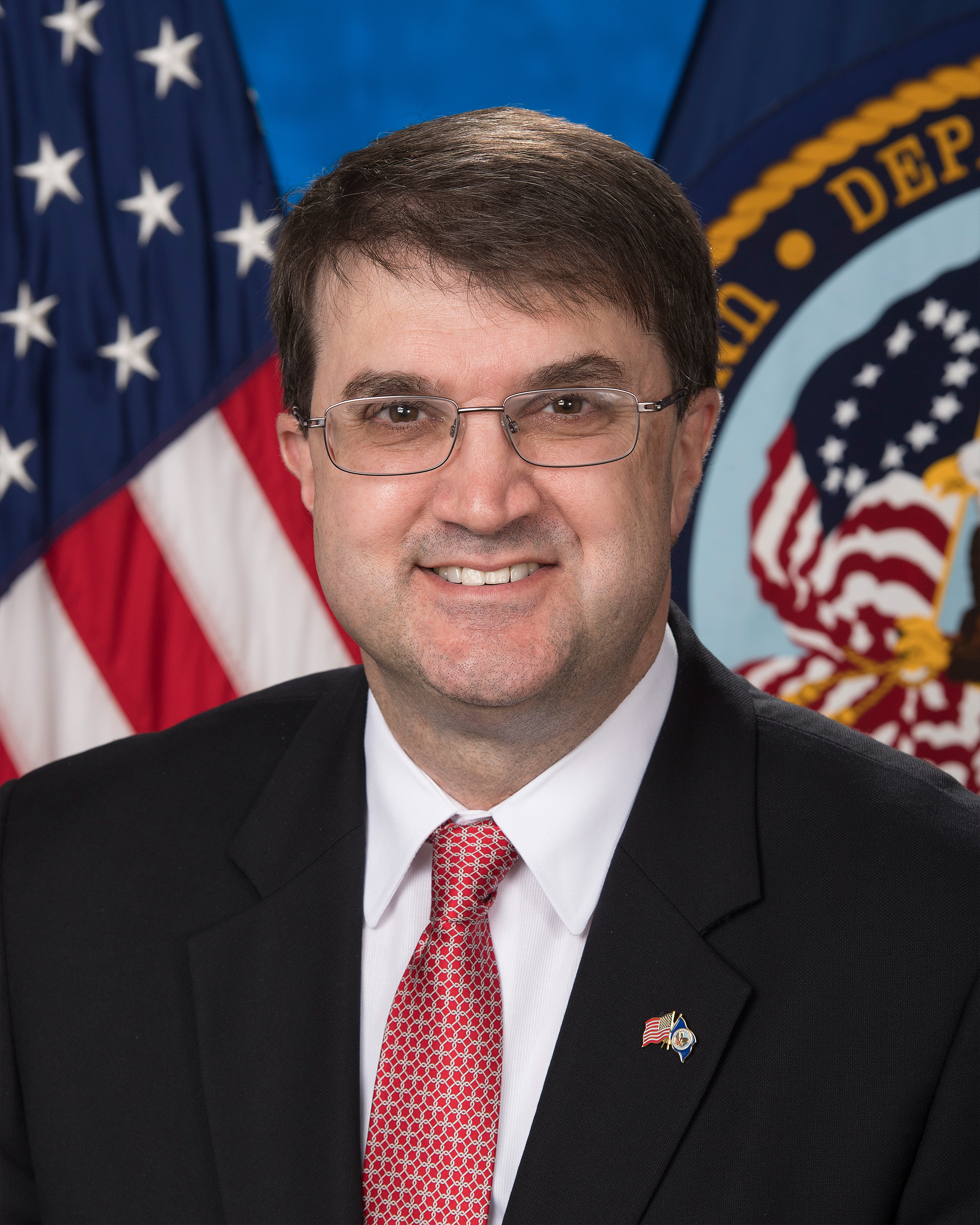
Robert Wilkie
Former United States Secretary of Veterans Affairs · U.S. Department of Veterans Affairs · 2018–2021
Robert Wilkie served as United States Secretary of Veterans Affairs (2018–2021). The page below collects sourced biographical facts, the appointment record, and provenance for Wilkie.
Key facts
- Full name
- Robert Wilkie
- Department
- U.S. Department of Veterans Affairs
- Office
- United States Secretary of Veterans Affairs
- Status
- Former secretary
- Appointment
- Senate-confirmed
- Tenure
- 2018–2021
- Confirmed
- —
- Born
- 1962
- Died
- —
- First year in office
- 2018
- Dataset version
- 1.20260703
Appointment & service record
United States Secretary of Veterans Affairs · 2018–2018
- Department
- U.S. Department of Veterans Affairs
- Appointment
- Acting
- Appointing president
- —
- Confirmed
- Not confirmed
United States Secretary of Veterans Affairs · 2018–2021
- Department
- U.S. Department of Veterans Affairs
- Appointment
- Senate-confirmed
- Appointing president
- —
- Confirmed
- —
Department, appointment type (Senate-confirmed, acting, recess, or designated), appointing president, confirmation status, and service dates are drawn from Wikidata and the White House Cabinet roster.[1][2][3]
Sources
- [1]https://www.wikidata.org/wiki/Q7351064Wikidata · retrieved 2026-07-03
- [2]https://www.whitehouse.gov/administration/cabinet/whitehouse.gov · retrieved 2026-07-03
- [3]https://www.wikidata.org/wiki/Q639738wikidata-cabinet · retrieved 2026-07-03
Biographical narrative
1,002 words · sourced from the Wikipedia REST extract
Robert Wilkie is an American attorney who served as the tenth United States Secretary of Veterans Affairs from July 2018 until January 2021, during the first administration of President Donald J. Trump. Prior to that role he held senior positions in defense and legislative affairs, including Under Secretary of Defense for Personnel and Readiness and Assistant Secretary of Defense for Legislative Affairs. His career has spanned congressional staff work, executive branch appointments, private‑sector consulting, and military reserve service.
Early life and career
Wilkie was born on August 2 1962 in Frankfurt, then part of West Germany. He spent his formative years in the United States, attending Salisbury Cathedral School in England before completing high school at Reid Ross High School in Fayetteville, North Carolina. His father was a career Army artillery officer, which meant that Wilkie grew up on military bases such as Fort Bragg.
He earned a Bachelor of Arts degree from Wake Forest University in North Carolina. He then pursued legal studies, receiving his Juris Doctor from Loyola University New Orleans College of Law in 1988. After practicing law, he completed a Master of Laws (LL.M.) in international and comparative law at Georgetown University Law Center, further deepening his expertise in global legal matters.
Wilkie’s military service has included time as a naval intelligence officer in the United States Navy Reserve. He later transferred to the United States Air Force Reserve, where he holds the rank of colonel. His reserve experience has provided him with a perspective on the operational and administrative needs of the armed forces.
Cabinet tenure
#### Early congressional and executive roles
Wilkie’s public‑service career began on Capitol Hill as counsel to Senator Jesse Helms of North Carolina. He later served as legislative director for Representative David Funderburk, working closely with lawmakers on policy development. In 1996 he ran unsuccessfully for the Republican nomination in North Carolina’s 7th congressional district. That same year he became executive director of the North Carolina Republican Party during Senator Helms’ reelection campaign against Democratic challenger Harvey Gantt.
From 1997 to 2003, Wilkie returned to Capitol Hill as counsel and advisor on international security affairs for Senate Majority Leader Trent Lott. In that capacity he negotiated post‑September 11 authorization for the use of military force and worked to prevent U.S. ratification of the Comprehensive Nuclear‑Test‑Ban Treaty.
During the administration of President George W. Bush, Wilkie served as special assistant to the president for national security affairs and senior director on the National Security Council from 2003 to 2005. He advised then‑National Security Advisor Condoleezza Rice and her successor Stephen Hadley. In 2007 he moved to the Pentagon, becoming Assistant Secretary of Defense for Legislative Affairs. There he authored a memo outlining guidelines that limited which Department of Defense personnel could testify before Congress, restricting testimony primarily to high‑ranking officers and presidentially appointed civilians.
#### Private sector and return to congressional staff
From 2010 to 2015 Wilkie was vice president for strategic programs at CH2M Hill, an engineering firm. His work included consulting on reforms of Britain’s Ministry of Defence supply and logistics system. He returned to Capitol Hill as senior advisor to U.S. Senator Thom Tillis from 2015 to 2017.
In the early months of the Trump administration, Wilkie lobbied for appointment as Secretary of Defense following Jim Mattis’ resignation but was not selected for that position.
#### Under Secretary of Defense and interim VA secretary
Wilkie joined President Trump’s transition team. In July 2017 he was nominated to serve as Under Secretary of Defense for Personnel and Readiness, a role he held from November 2017 until July 2018. The Senate confirmed his nomination by unanimous consent on November 16 2017.
On March 28 2018 President Trump announced that Wilkie would act as Secretary of Veterans Affairs while the Senate considered a permanent nominee. After the withdrawal of Ronny Jackson’s nomination, Trump nominated Wilkie to the position on May 18 2018. The Senate confirmed him with an 86–9 vote on July 23 2018, and he was sworn in on July 30 2018.
During his tenure as Secretary of Veterans Affairs, Wilkie also served on the White House Coronavirus Task Force beginning in March 2020, contributing to national efforts to address the COVID‑19 pandemic.
#### Inspector General investigation
In December 2020 the Office of the Inspector General (IG) for the Department of Veterans Affairs released a 68‑page report detailing misconduct within Wilkie’s leadership. The IG found that Wilkie and senior staff had sought to discredit a woman who reported being sexually assaulted by a contractor at the Washington, D.C., flagship VA hospital in late 2019. The woman, a U.S. Navy veteran and aide to the House Veterans’ Affairs Committee, was not charged with any crime by prosecutors.
The IG report also documented Wilkie’s abrupt dismissal of James Byrne, the deputy secretary of Veterans Affairs, in February 2020. Byrne had been popular among veterans’ groups; he later stated that his firing stemmed from refusing to participate in efforts to undermine the woman’s allegations. The report concluded that the actions taken by Wilkie and his staff violated VA policies and damaged trust within the department.
Legacy
Wilkie’s tenure as Secretary of Veterans Affairs was marked by both administrative initiatives and controversy. His background in defense personnel policy and legislative affairs informed a focus on organizational efficiency and interagency coordination. He oversaw the Department during a period that included the COVID‑19 pandemic, where he contributed to federal responses affecting veterans.
At the same time, the Inspector General’s findings highlighted significant challenges within his leadership team, particularly regarding accountability and transparency. The investigation underscored the importance of safeguarding the integrity of VA processes and protecting the rights of veterans who seek assistance.
Wilkie’s career reflects a trajectory that spans legislative counsel work, executive branch appointments in national security and defense, private‑sector consulting on defense logistics, and reserve military service. His experience across these domains has shaped his approach to public administration, emphasizing policy development, interagency collaboration, and the complexities of managing large federal organizations.
Sources & provenance
Every quantitative or attributable claim above carries a per-section [N] marker that resolves to the corresponding URL below. Each entry records the upstream provider, the canonical URL, and the timestamp at which the underlying source was retrieved.
Key facts
- https://www.wikidata.org/wiki/Q7351064Wikidata · retrieved 2026-07-03
- https://www.whitehouse.gov/administration/cabinet/whitehouse.gov · retrieved 2026-07-03
- https://www.wikidata.org/wiki/Q639738wikidata-cabinet · retrieved 2026-07-03
Biographical narrative
- https://en.wikipedia.org/wiki/Robert_WilkieWikipedia · retrieved 2026-07-03
Explore the Cabinet
The Cabinet includes the Vice President and the heads of the 15 executive departments. Browse the full roster of current and former secretaries, or explore how the Cabinet fits into the federal government.