
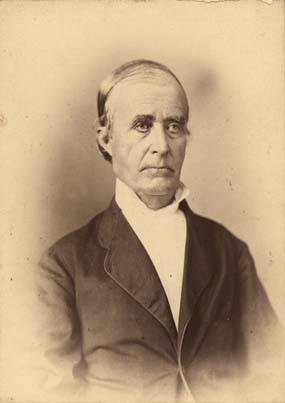
Historical · U.S. House · Alabama · District 1
Edmund Dargan
Former U.S. Representative · Alabama District 1 · 1845–1847 · Democratic
Edmund Dargan represented Alabama's District 1 in the United States House of Representatives (1845–1847) for the Democratic party. The page below collects sourced biographical facts, term history, committee roles, and provenance for Dargan.
Bioguide ID: D000052
Key facts
- Full name
- Edmund Dargan
- State
- Alabama
- District
- District 1
- Party
- Democratic
- House service
- 1845–1847
- First House term
- 1845
- Status
- Left office
- Current term ends
- —
- Born
- 1805
- Bioguide ID
- D000052
- Committee assignments
- —
- Dataset version
- 1.20260606
Biographical narrative
888 words · sourced from the Wikipedia REST extract
Edmund Dargan was a prominent figure in 19th-century American politics, serving as a U.S. Representative from Alabama. A member of the Democratic Party, he held office during a transformative period in U.S. history, which included the lead-up to the Civil War. Dargan's political career spanned various roles, including his time in the U.S. House of Representatives and later as a member of the Confederate States Congress. His legal career and involvement in state politics further shaped his legacy in Alabama.
Early life and career
Edmund Strother Dargan was born on April 15, 1805, near Wadesboro, North Carolina. He was the son of William and Frances Dargan. His early education took place at home, where he pursued preparatory studies that laid the foundation for his future academic and professional endeavors. Dargan's interest in law led him to study the subject, and he was admitted to the bar in Wadesboro in 1829. This achievement marked the beginning of his legal career, which would later intertwine with his political aspirations.
In pursuit of better opportunities, Dargan relocated to Washington, Alabama, where he began practicing law. His commitment to public service was evident early on, as he served as a Justice of the Peace for several years. In 1833, he moved to Montgomery, Alabama, and later to Mobile in 1841. During his time in Mobile, Dargan was appointed as a judge of the circuit court for the Mobile district, serving in this capacity from 1841 to 1842. His judicial experience contributed to his understanding of the law and governance, which would prove beneficial in his subsequent political career.
Dargan's political involvement deepened in 1844 when he served in the Alabama State Senate. That same year, he also held the position of mayor of Mobile, further solidifying his reputation as a civic leader. His roles in both the state legislature and local government provided him with valuable insights into the political landscape of Alabama, preparing him for his future role in the U.S. Congress.
House tenure
Edmund Dargan was elected to the U.S. House of Representatives as a Democrat, beginning his term on March 4, 1845. He represented Alabama's 1st congressional district during the Twenty-ninth Congress, a period characterized by significant national debates over issues such as territorial expansion and slavery. Dargan's tenure in the House lasted until March 3, 1847. During this time, he participated in the legislative processes of the federal government, contributing to discussions and decisions that would shape the nation.
Despite his active participation in Congress, Dargan did not seek renomination for a subsequent term in 1846. His decision to step away from federal office marked a transition in his career, as he moved on to other significant roles in the state judiciary. Following his congressional service, he was appointed as an associate justice of the Alabama Supreme Court in 1847. His legal expertise and experience in public service led to his elevation to the position of chief justice in 1849, a role he held until his resignation in December 1852.
Dargan's time in the House of Representatives was relatively brief, but it was a crucial period that allowed him to engage with the pressing issues of his time. His legislative work would have been influenced by the political climate of the mid-19th century, which was marked by tensions surrounding states' rights and the expansion of slavery into new territories.
Legislative focus and committees
While specific details about Dargan's legislative focus during his time in the House of Representatives are not extensively documented, it is known that he was active in the political discussions of his era. The mid-1800s were a time of significant change in the United States, with debates over the extension of slavery into new territories, the implications of the Mexican-American War, and the growing sectional divides between the North and South. As a representative from Alabama, Dargan's positions would likely have aligned with the interests of his constituents, who were deeply invested in the agricultural economy and the institution of slavery.
After leaving Congress, Dargan continued to play a significant role in Alabama's political landscape. His involvement in the state convention in 1861, where he advocated for Alabama's secession from the Union, highlighted his alignment with the prevailing sentiments in the South during the Civil War. Following the outbreak of the war, he served as a member of the first Confederate States House of Representatives, further solidifying his commitment to the Confederate cause.
In the years following the Civil War, Dargan returned to his legal practice in Mobile, Alabama. His career trajectory reflects the complexities of the political and legal landscape of the time, as he navigated the challenges posed by the war and its aftermath. Dargan's contributions to both the state and national political arenas underscore the interconnectedness of law and governance during a pivotal era in American history.
Edmund Dargan passed away on November 22, 1879, in Mobile, Alabama. He was interred in Magnolia Cemetery, leaving behind a legacy shaped by his roles in law and politics. His life and career exemplify the experiences of many individuals who were involved in the tumultuous events of the 19th century, particularly in the Southern states. Through his various positions, Dargan contributed to the legal and political frameworks that would influence Alabama and the broader United States during a time of significant change.
Notable legislation
Sponsored and co-sponsored legislation for Edmund Dargan is pending operator curation. The biographical narrative above carries the same provenance trail until per-bill rows are written.
Sources
- [1]https://en.wikipedia.org/wiki/Edmund_S._DarganWikipedia · retrieved 2026-06-06
Notable quotes
Sourced quotes for Edmund Dargan are pending operator curation. Narrative-scope provenance remains attached below.
Sources
- [1]https://en.wikipedia.org/wiki/Edmund_S._DarganWikipedia · retrieved 2026-06-06
Key positions
Curated policy positions for Edmund Dargan are pending operator review. The biographical narrative above carries the same provenance trail until per-topic positions are written.
Sources
- [1]https://en.wikipedia.org/wiki/Edmund_S._DarganWikipedia · retrieved 2026-06-06
Terms served
- 1845–1847U.S. House · Term 1 · Democratic
Sources & provenance
Every attributable claim above carries a per-section [N] marker that resolves to the corresponding URL below. Each entry records the upstream provider, the canonical URL, and the timestamp at which the source was retrieved by the ingest pipeline.
Key facts
- https://bioguide.congress.gov/search/bio/D000052bioguide · retrieved 2026-06-06
- https://www.govtrack.us/congress/members/403191govtrack · retrieved 2026-06-06
Biographical narrative
- https://en.wikipedia.org/wiki/Edmund_S._Darganwikipedia · retrieved 2026-06-06
Find your representative
Every U.S. state elects representatives by district. Browse Alabama’s delegation, the full former-representative roster, or explore the role and term length.
Related on The Candidate
- Preceded by James DelletEarlier holder of the Alabama District 1 House seat · Whig.Open
- Succeeded by John GayleLater holder of the Alabama District 1 House seat · Whig.Open
- Alfred BuckFormer U.S. Representative · Alabama District 1 · RepublicanOpen
- Benjamin TurnerFormer U.S. Representative · Alabama District 1 · RepublicanOpen
- Bradley ByrneFormer U.S. Representative · Alabama District 1 · RepublicanOpen
- Francis KelloggFormer U.S. Representative · Alabama District 1 · RepublicanOpen