
Historical · U.S. House · California · District 10
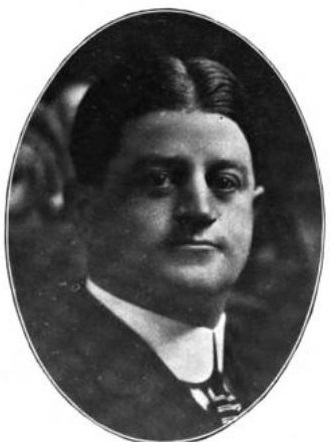
Henry Benedict
Former U.S. Representative · California District 10 · 1915–1917 · Republican
Henry Benedict represented California's District 10 in the United States House of Representatives (1915–1917) for the Republican party. The page below collects sourced biographical facts, term history, committee roles, and provenance for Benedict.
Bioguide ID: B000359
Key facts
- Full name
- Henry Benedict
- State
- California
- District
- District 10
- Party
- Republican
- House service
- 1915–1917
- First House term
- 1915
- Status
- Left office
- Current term ends
- —
- Born
- 1878
- Bioguide ID
- B000359
- Committee assignments
- —
- Dataset version
- 1.20260606
Biographical narrative
904 words · sourced from the Wikipedia REST extract
Henry Benedict was an American lawyer and politician who served as a U.S. Representative for California's 10th congressional district. A member of the Republican Party, he held office for a brief period from 1916 to 1917. His political career was marked by his involvement in both state and federal government, as well as his continued engagement in the legal profession and banking. Benedict's life spanned a period of significant change in American politics and society, and his contributions were part of the broader narrative of early 20th-century California.
Early life and career
Henry Stanley Benedict was born on February 20, 1878, in Boonville, Missouri. His early years were spent in the Midwest until 1888, when his family relocated to Los Angeles, California. This move would prove significant, as Los Angeles was rapidly evolving into a major urban center in the United States. Benedict received his primary and secondary education in Los Angeles, attending both grammar school and high school in the city. Following his secondary education, he pursued higher education at the University of Southern California College of Law, where he studied law and developed the skills necessary for his future career.
After completing his legal education, Benedict was admitted to the bar in 1910, allowing him to begin practicing law in Los Angeles. His legal career coincided with a period of growth and development in California, and he quickly established himself within the legal community. Benedict's legal expertise would later inform his political career, as he transitioned from practicing law to holding public office.
Benedict's entry into politics began at the state level, where he served as a member of the California State Assembly from 1910 to 1914. During his tenure in the Assembly, he was involved in various legislative initiatives and gained valuable experience in the workings of government. Following his time in the Assembly, he moved on to the California State Senate, where he served from 1914 until 1916. His time in the state legislature provided him with a solid foundation in governance and public policy, preparing him for his subsequent role in the U.S. Congress.
House tenure
In 1916, Henry Benedict was elected to the Sixty-fourth Congress to fill a vacancy left by the resignation of United States Representative William D. Stephens. His election marked his entry into federal politics, representing California's 10th congressional district. As a member of the Republican Party, Benedict's political alignment was consistent with the party's platform during this period, which focused on issues such as economic growth, infrastructure development, and the promotion of American industry.
Benedict's congressional term began on November 7, 1916, and lasted until March 3, 1917. Although his time in the House of Representatives was relatively brief, it was a significant step in his political career. During this period, he participated in the legislative process and contributed to discussions on various issues facing the nation. His experience in the state legislature likely informed his approach to federal governance, as he navigated the complexities of national politics.
After serving in the Sixty-fourth Congress, Benedict was nominated by the Progressive Party for the Sixty-fifth Congress. However, he ultimately withdrew his candidacy in favor of the Republican nominee. This decision reflected the political dynamics of the time and highlighted the challenges faced by candidates in aligning with party platforms and voter expectations. Following his withdrawal from the congressional race, Benedict did not seek re-election, marking the end of his tenure in the U.S. House of Representatives.
Legislative focus and committees
While specific details regarding Henry Benedict's legislative focus during his time in Congress are not extensively documented, his background as a lawyer and his previous experience in state government likely influenced his priorities and areas of interest. As a member of the Republican Party, he would have been aligned with the party's emphasis on economic issues, infrastructure, and governance.
In addition to his congressional duties, Benedict maintained his legal practice throughout his political career. This dual engagement in law and politics allowed him to remain connected to the legal community and to apply his legal knowledge to his legislative work. His legal expertise would have been particularly valuable in understanding the implications of proposed legislation and in navigating the complexities of federal law.
After his congressional service, Benedict continued to be active in public service. He served on the California State Board of Control from 1919 to 1921, a position that involved oversight of state financial matters and the management of state resources. Following this role, he was appointed to the California State Railroad Commission, where he served from 1921 to 1923. These positions allowed him to further influence state policy and governance, particularly in areas related to finance and transportation.
Benedict's career also included involvement in the banking sector, reflecting a broader trend of politicians engaging in business and finance during this era. His work in banking complemented his legal practice and provided him with a comprehensive understanding of economic issues, which would have been relevant to his roles in both state and federal government.
Henry Benedict passed away on July 10, 1930, in London, England, while visiting the city. His contributions to California politics and his service in the U.S. Congress are part of the historical record of early 20th-century American governance. He was interred at Forest Lawn Memorial Park in Glendale, California, where his legacy as a public servant and legal professional remains a part of the state's history.
Notable legislation
Sponsored and co-sponsored legislation for Henry Benedict is pending operator curation. The biographical narrative above carries the same provenance trail until per-bill rows are written.
Sources
- [1]https://en.wikipedia.org/wiki/Henry_S._BenedictWikipedia · retrieved 2026-06-06
Notable quotes
Sourced quotes for Henry Benedict are pending operator curation. Narrative-scope provenance remains attached below.
Sources
- [1]https://en.wikipedia.org/wiki/Henry_S._BenedictWikipedia · retrieved 2026-06-06
Key positions
Curated policy positions for Henry Benedict are pending operator review. The biographical narrative above carries the same provenance trail until per-topic positions are written.
Sources
- [1]https://en.wikipedia.org/wiki/Henry_S._BenedictWikipedia · retrieved 2026-06-06
Terms served
- 1915–1917U.S. House · Term 1 · Republican
Sources & provenance
Every attributable claim above carries a per-section [N] marker that resolves to the corresponding URL below. Each entry records the upstream provider, the canonical URL, and the timestamp at which the source was retrieved by the ingest pipeline.
Key facts
- https://bioguide.congress.gov/search/bio/B000359bioguide · retrieved 2026-06-06
- https://www.govtrack.us/congress/members/401351govtrack · retrieved 2026-06-06
Biographical narrative
- https://en.wikipedia.org/wiki/Henry_S._Benedictwikipedia · retrieved 2026-06-06
Find your representative
Every U.S. state elects representatives by district. Browse California’s delegation, the full former-representative roster, or explore the role and term length.
Related on The Candidate
- Succeeded by John FredericksLater holder of the California District 10 House seat · Republican.Open
- Barclay HenleyFormer U.S. Representative · California District 1 · DemocraticOpen
- Charles ClaytonFormer U.S. Representative · California District 1 · RepublicanOpen
- Clarence LeaFormer U.S. Representative · California District 1 · DemocraticOpen
- Clement MillerFormer U.S. Representative · California District 1 · DemocraticOpen
- Republican PartyFederal candidates and office holders on the Republican line.Open